
A benefits portal caches the signed-in account page at CloudFront. The cache policy includes no cookies, one member receives another member's page, and that page must not be cached. What should that behavior do?
Select an answer to reveal the explanation.
Short Explanation
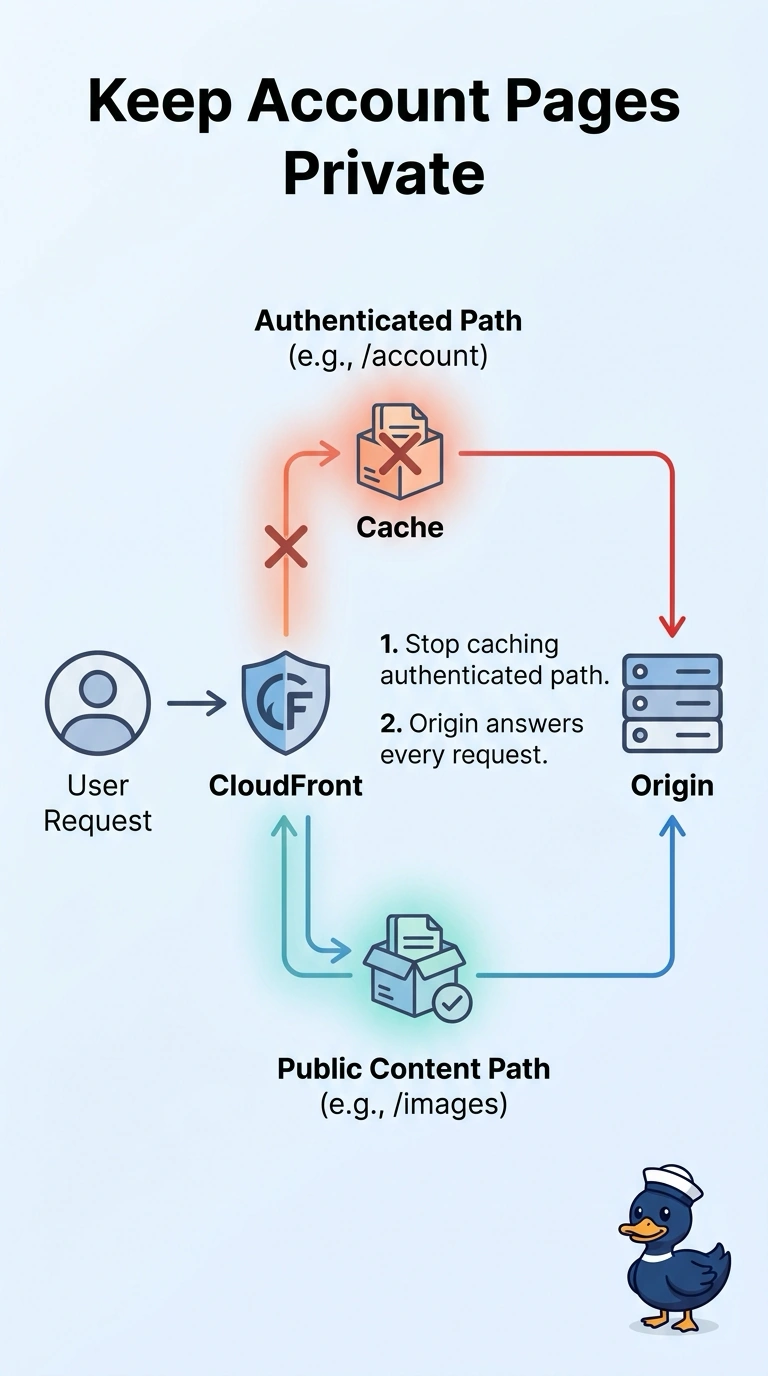
A shared coat check that ignores the ticket hands you someone else's coat. You stop caching the signed-in account path so each request is answered by the origin. A country header or compression still stores one member's page for the next member.
Full Explanation
The account page is personalized, and the cache policy includes no cookies, so the cache key does not separate members. CloudFront stores the first member's page and serves it to the next member. The requirement is that this authenticated path must not be cached, so the behavior should stop caching it and let the origin answer each request. Adding the viewer country header varies the key by country only. Members in the same country still share one cached page. Compression changes how bytes are encoded. It does not make a cached page private to one member, and a compressed copy is still a cached copy. The origin read timeout limits how long CloudFront waits for the origin to send the response. It does not expire an object that is already in the cache, and it does not stop the behavior from storing the page. Caveat: any behavior that still stores the account page, including one that only adds the viewer country or turns on compression, keeps handing one member's page to another. Operational check: request the account path as two members and confirm each response comes from the origin and matches that member.