
A media company manages 2,000 EC2, S3, and RDS resources across video and audio teams in production, staging, and development. Finance needs cost allocation by department and cost center, and security needs consistent grouping for access controls. Which tagging strategy should the governance lead enforce to organize resources by department and environment for management?
Select an answer to reveal the explanation.
Short Explanation
Loose sticky notes won't keep a studio organized when money and permissions are on the line. Standardization through tag policies gives you clean groups you can actually bill and guard.
Full Explanation
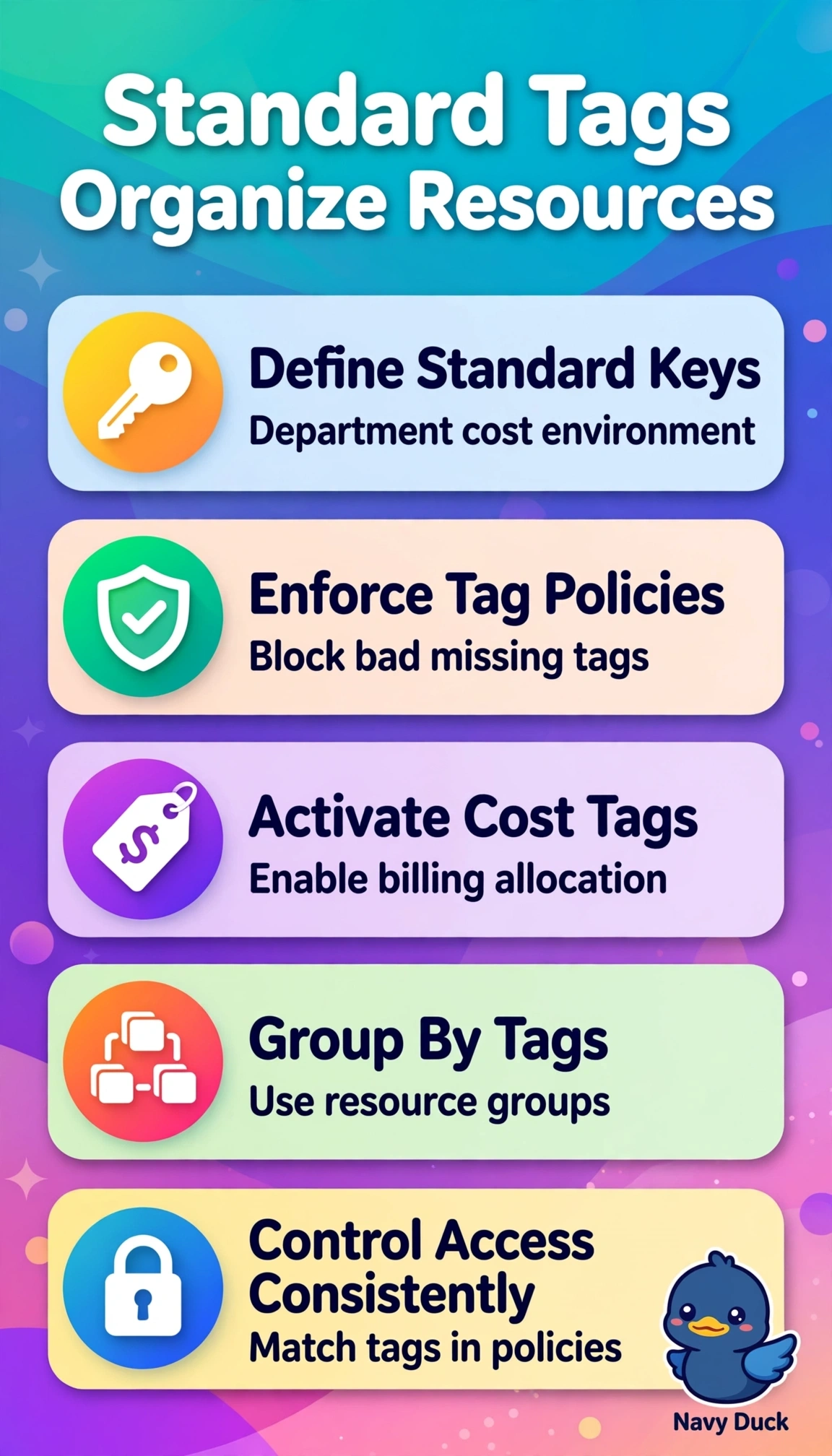
The strategy works because Organizations tag policies enforce department, cost-center, and environment values across 2,000 EC2, S3, and RDS resources for video and audio teams in production, staging, and development, activated allocation tags enable Finance chargeback by department and cost center, and tag-based resource groups give Security grouping. The separate-accounts approach using consolidated billing provides chargeback boundaries but fails resource-level management because accounts alone cannot organize resources by department, cost-center, and environment or enforce uniform values. The partial-standardization approach enforcing only department and environment tags while assigning cost-center share with Cost Explorer filters fails Finance because without a billing-activated cost-center tag attribution is approximate and breaks under omission. The billing-tags-only approach activating all three tags for reports while controlling access with IAM policies on IDs and names fails Security because ID-based control does not scale and diverges from tag-based management. For exams, account separation and Explorer filtering help billing but do not replace enforced tags when cost and access requirements apply. As a practical check, confirm the three keys are enforced, activated for billing, and that a resource-group query and tag condition return the subset.