
A bank deploys a Bedrock agent that drafts loan decisions from customer documents, but regulators require a licensed officer to review and approve any denial before notification. Reviews must pause automation, log decisions, and allow rework. Which human oversight workflow enforces approval for AI operations?
Select an answer to reveal the explanation.
Short Explanation
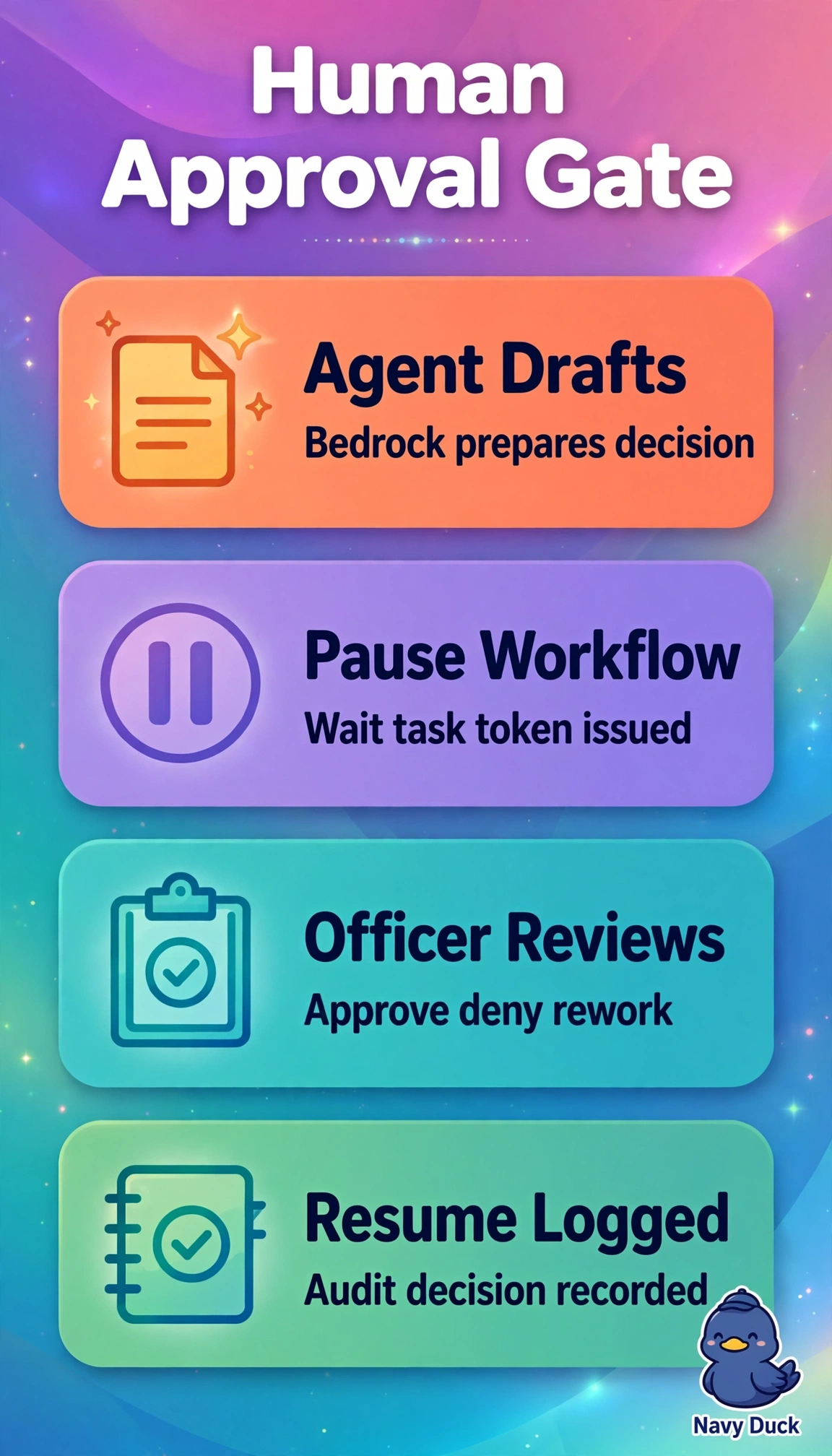
You'll keep your denials compliant by stopping automation at a red light until your officer approves or sends it back for rework. That's what Step Functions delivers when you pause the workflow with a callback task token and log every decision.
Full Explanation
The Step Functions callback pattern with TaskToken is correct because it creates a synchronous human-in-the-loop gate that blocks the state machine from advancing to notification until the licensed officer returns success, preserving the required approve-before-notify order while Step Functions history plus CloudTrail provides durable audit logging and rejection paths return the draft for agent rework before resubmission. The EventBridge parallel fan-out design fails on sequencing control because emitting review and notification events concurrently implements an asynchronous observer rather than a blocking approval, so customer notification can proceed without a decision and the regulatory ordering constraint is violated even though logging and revision handling appear complete. The Lambda in-memory flag design fails on auditability because ephemeral execution environment state can resume the workflow and support iteration but cannot provide durable tamper-evident attribution of who approved what and when, which regulators require beyond operational resumption. The immutable finalized records design fails on controllability because freezing for sign-off with audit trails enforces pause and logging but write-once finality prevents the mandated correction loop, forcing a new case instead of rework of the same denial. As an exam caveat, do not equate any human notification or review queue with enforcement unless the workflow engine technically cannot proceed without the approval signal, and as a practical check, test a denial end-to-end in staging by attempting to trigger notification without submitting approval and verifying the execution stays waiting, the approval is logged with officer identity, and a rejection correctly routes back for redrafting.