
A bank is adding an Amazon Bedrock RAG assistant for loan advice in a regulated CI/CD pipeline. Product and compliance teams must score groundedness, toxicity, and helpfulness on every model and prompt change and block unsafe releases. Recent manual spot checks missed hallucinations. Which AI output validation control provides repeatable release gating for the assistant?
Select an answer to reveal the explanation.
Short Explanation
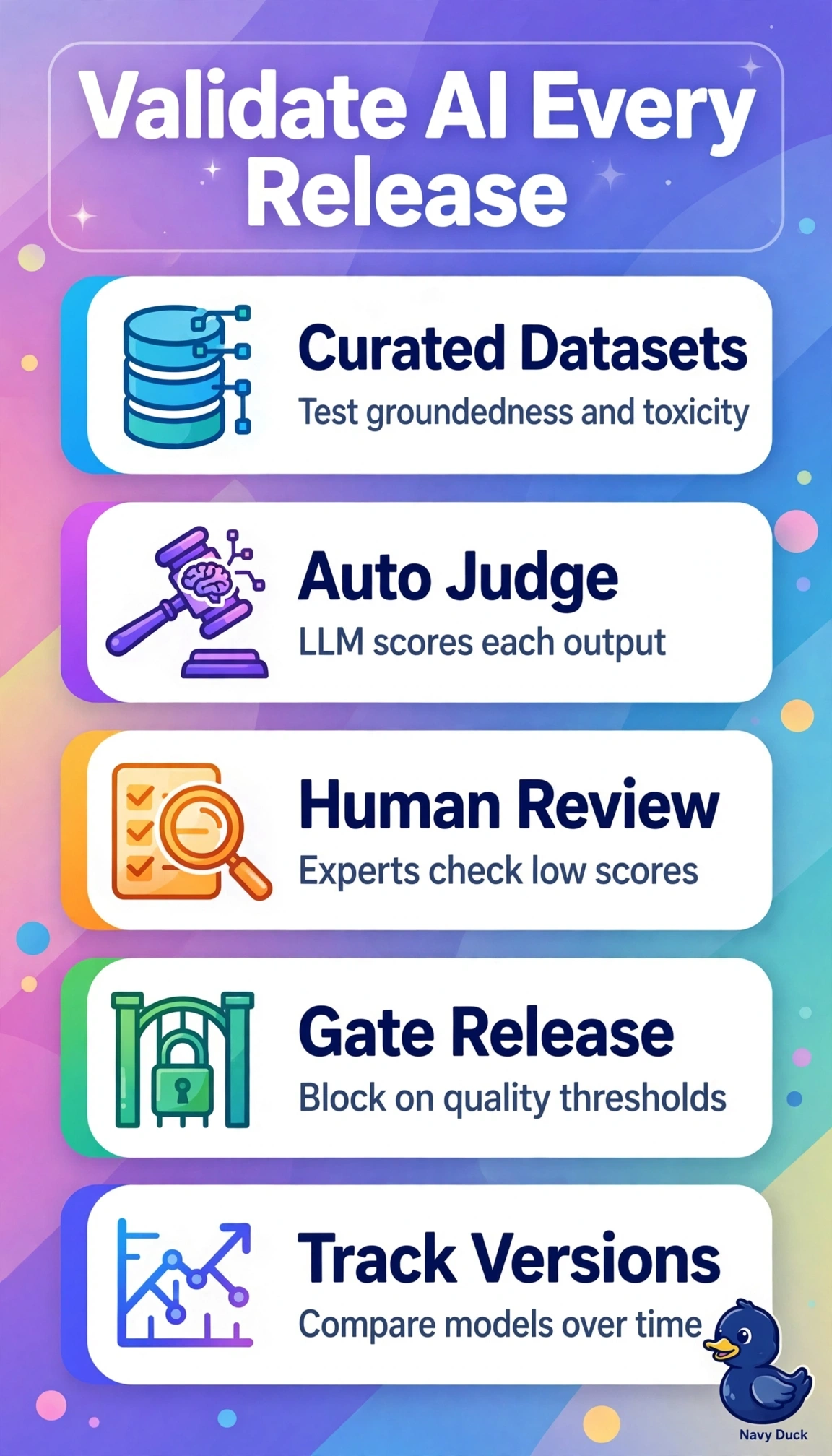
You need a referee that scores every play, not just highlights. Bedrock Evaluations gives you automated judges and human review where it matters most.
Full Explanation
Amazon Bedrock Evaluations provides repeatable, versioned scoring of groundedness, toxicity, and helpfulness with LLM-as-a-judge for every model and prompt change. Routing low-scoring responses to human review adds product and compliance oversight and creates a pass-fail signal the CI/CD pipeline can use to block unsafe releases, addressing hallucinations missed by ad hoc spot checks. Guardrails with toxicity filters and denied loan topics are preventive runtime safeguards that filter responses, but they do not provide the same scored, repeatable evaluation of faithfulness, helpfulness, and toxicity against a fixed dataset as release-gating evidence. Automated evaluations limited to relevance and completeness without human review provide frequent scoring, but miss the required metrics and human adjudication of low scores in loan advice. CloudWatch quality trends and SageMaker Model Monitor drift alerts support post-deployment observation, but cannot block a release before deployment. Exam caveat: distinguish evaluations for release decisions from Guardrails for inference enforcement and monitoring for post-release operations; a demand for scoring and blocking points to evaluations. In practice, verify the pipeline runs a fixed evaluation dataset on every change, archives scores and reviewer decisions for audit, and fails the build when groundedness, toxicity, or helpfulness violates policy.