
A regional insurer runs 400 EBS volumes and 25 RDS databases across two accounts. Finance requires 30 days of instant recovery, 1-year archive for compliance, and centralized backup reporting. Storage spend is 40% over budget. Which backup retention design delivers cost-optimized retention with AWS Backup and DLM?
Select an answer to reveal the explanation.
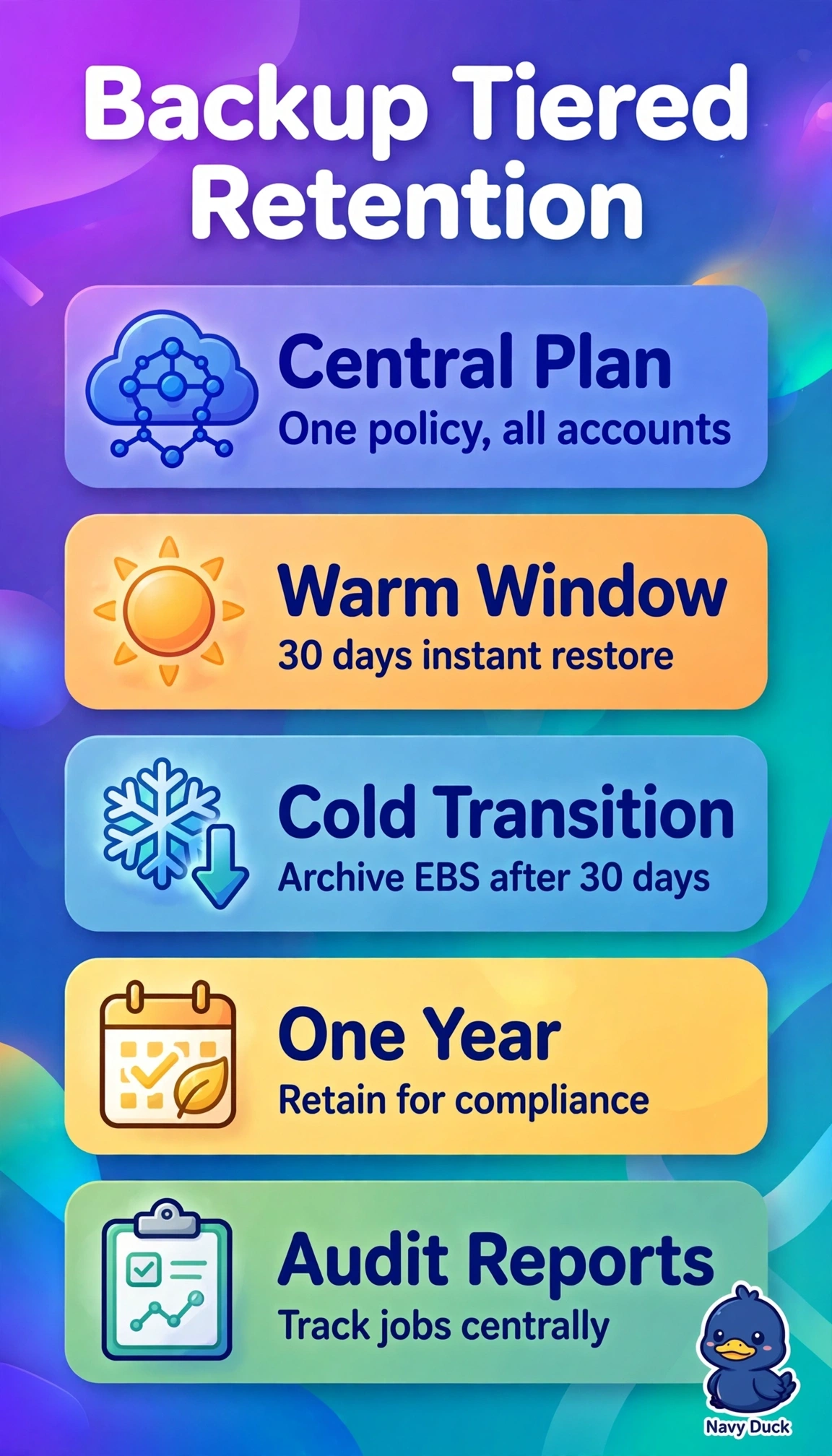
Short Explanation
You nailed the tension between instant restores and cheap archives. Cold tiering after 30 days keeps lifecycle costs low while central reports satisfy audit.
Full Explanation
The correct design meets all constraints by keeping recovery points warm for the 30-day instant-recovery window, then moving EBS recovery points to low-cost cold storage for the remainder of one-year retention while keeping RDS recovery points warm until expiration because AWS Backup cold storage does not support RDS, with centralized AWS Backup management and Backup reports providing cross-account visibility for 400 EBS volumes and 25 RDS databases to address the 40% overspend. The 90-day warm retention design fails on cost optimization by holding expensive warm storage three times longer than needed, a pattern suited to Tier-0 workloads but wasteful here. The seven-year archive design fails on retention alignment by retaining data far beyond the one-year compliance need and inflating cold-storage cost despite correct transition timing. The separate-vaults DLM design fails on governance because per-account vaults without central aggregation prevent unified reporting and cross-account management despite correct lifecycle timing. For exams, remember cold storage lowers cost but imposes restore delay, minimum retention charges, and requires at least 90 days remaining retention with support limited to resources such as EBS, and in practice validate by enabling Backup reports with cost allocation tags and performing timed test restores from warm and cold tiers to prove 30-day RTO and one-year retrievability.