
A healthcare SaaS must prove RTO of 2 hours and RPO of 15 minutes for its multi-tier workload, document repeatable failover steps, and continuously assess drift from recovery targets across accounts. Which disaster recovery assessment and procedure design meets audit requirements?
Select an answer to reveal the explanation.
Short Explanation
Auditors want proof, not promises, and this combo delivers both measurement and muscle memory. Continuous Resilience scoring plus buttoned-up runbooks turn chaos into choreography you'll actually trust.
Full Explanation
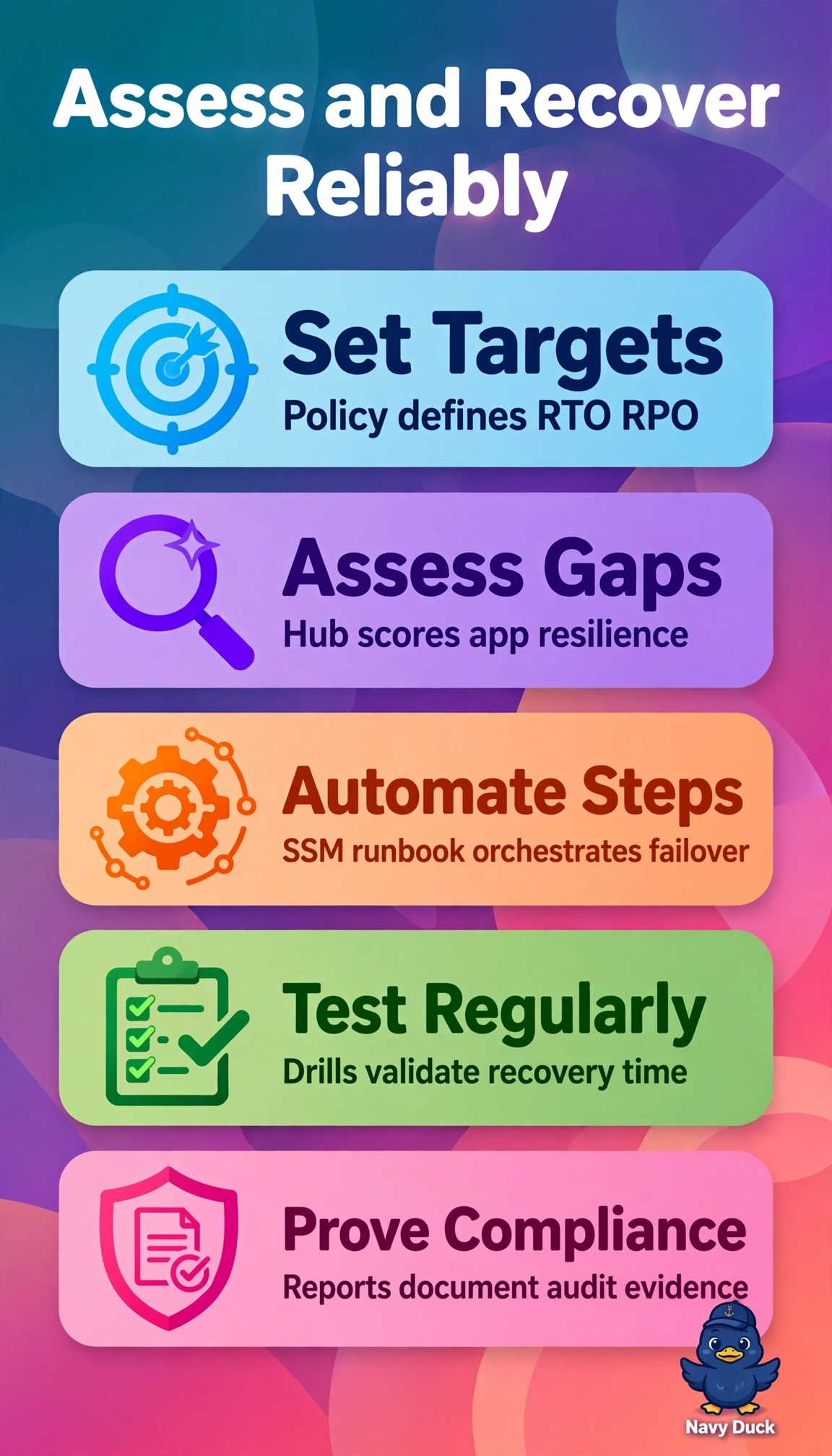
The correct approach defines RTO and RPO targets as a Resilience Hub resiliency policy, runs continuous assessments that flag missing backups, multi-AZ gaps, and drift, and implements Systems Manager Automation runbooks with approvals, testing in staging, and CloudTrail evidence for repeatable failover and failback, which satisfies measurement, procedure, and audit needs. The AWS Backup with manual restore approach improves data durability and vault protection but misses application-level assessment and orchestrated procedures because restores remain ad hoc without resiliency scoring or step automation. The CloudFormation StackSets approach helps recreate infrastructure consistently but misses recovery assessment and sequenced operational steps such as data validation, DNS promotion, and health checks. The GuardDuty plus Config approach strengthens threat detection and configuration compliance but misses disaster recovery orchestration because it does not measure RTO and RPO or execute failover workflows. Exam caveat is that Resilience Hub assesses and recommends while Systems Manager executes, so pair them when asked for assessment plus procedure, and practical check is to run game days executing the runbook and attach Resilience Hub reports to audit artifacts.