
A travel booking site reports checkout failures only from users in Asia, synthetic uptime checks pass in us-east-1, and product wants both proactive alerting and actual page-load breakdowns by browser and geography. Which user-experience monitoring strategy captures synthetic coverage and real-user detail?
Select an answer to reveal the explanation.
Short Explanation
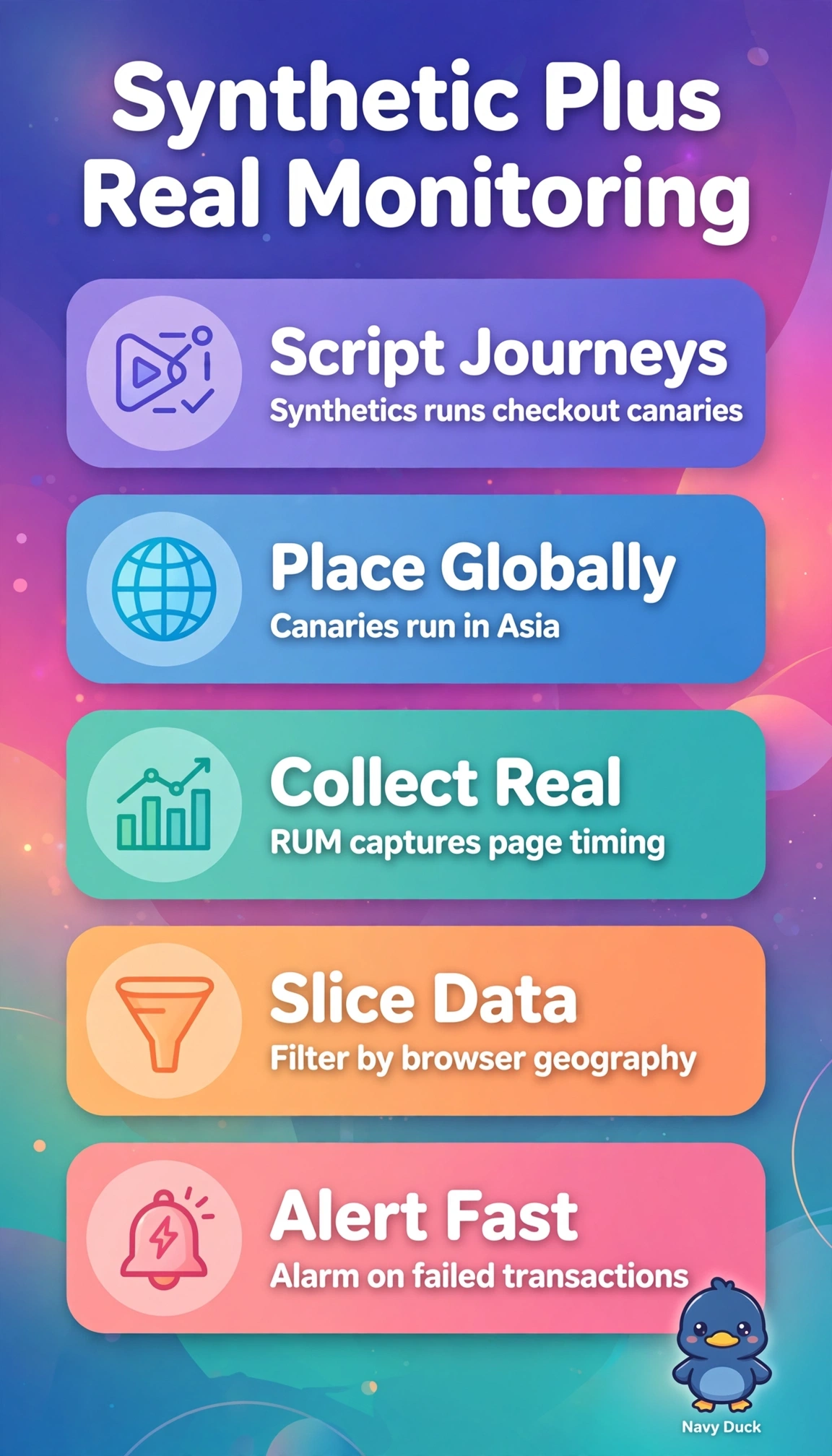
You're blind to what Asian travelers actually feel, and this pairing fixes that fast. Proactive canaries plus RUM give you both rehearsed checks and live audience feedback like dress rehearsal plus opening night.
Full Explanation
The correct approach uses CloudWatch Synthetics canaries deployed in relevant regions to run scripted checkout transactions on a schedule for proactive alerting, combined with CloudWatch RUM injected into the web app to collect real-user Core Web Vitals, JavaScript errors, and geographic and browser dimensions, which directly satisfies both proactive and actual-experience requirements. The VPC Flow Logs plus CloudTrail approach provides valuable network and API audit data but misses user-experience detail because it captures packets and API calls rather than page performance or scripted business flows. The CloudWatch agent plus X-Ray approach improves infrastructure and distributed-trace visibility for backend latency but misses scripted external probing and browser-side breakdowns since it focuses on hosts and service maps. The Route 53 health checks plus Internet Monitor approach detects endpoint availability and internet weather but misses multi-step checkout logic and page-load attribution by browser because health checks are simple pings. Exam caveat is that Synthetics proves functionality from a location while RUM proves experience from real users, so choose both when asked for proactive plus actual coverage, and practical check is to correlate canary failure alarms with RUM error spikes filtered by country and browser version.