
A SaaS connects 40 VPCs to shared services, moving 30 TB monthly east-west with bursty inspection needs, debating Transit Gateway versus PrivateLink for service consumption. Which cost-effective network architecture considering Transit Gateway processing and PrivateLink pricing models minimizes data charges?
Select an answer to reveal the explanation.
Short Explanation
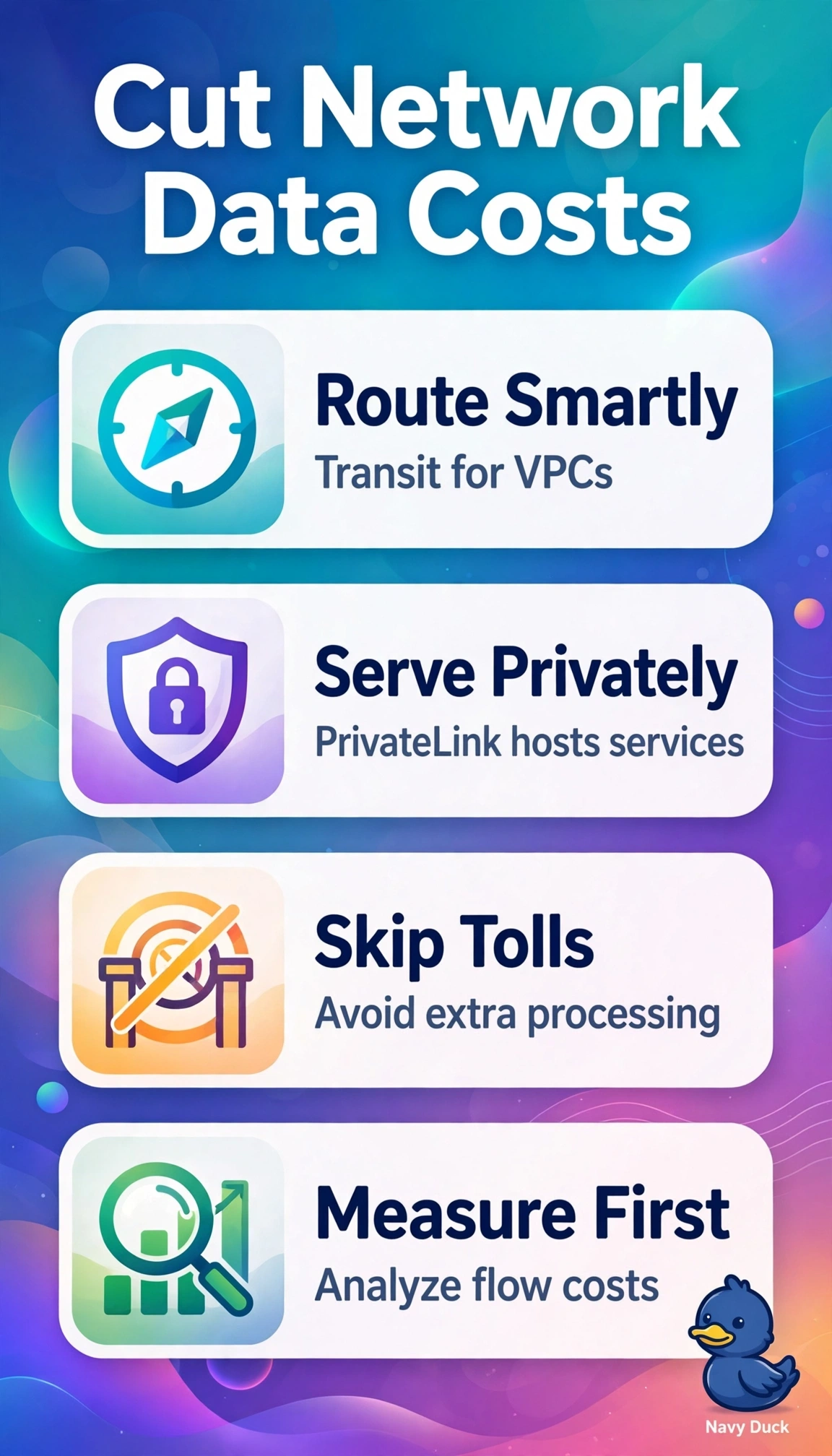
You're dodging toll booths without losing roads. Transit Gateway stays for routing while PrivateLink shortcuts service calls, and localization trims those per-gig fees.
Full Explanation
Transit Gateway incurs hourly plus per-GB data processing charges that grow quickly with high east-west volume, while AWS PrivateLink charges per endpoint hour plus per-GB but has a lower per-GB rate than Transit Gateway data processing and keeps service consumer traffic private without traversing Transit Gateway, so using Transit Gateway only for true inter-VPC routing and PrivateLink interface endpoints for shared services avoids double processing and inspection costs. Routing all service traffic through Transit Gateway with inspection maximizes processing fees and inspection scaling costs for traffic that could stay local to endpoints. A full VPC peering mesh eliminates Transit Gateway charges but creates operational explosion at 40 VPCs and public ALBs expose data to the internet with transfer and security risk. NAT gateways with public endpoints add NAT processing and internet data charges plus security exposure instead of private connectivity. For the exam, compare per-GB processing versus endpoint models at volume, and in practice measure east-west flows with VPC Flow Logs and Cost Explorer before refactoring.