
A manufacturing firm runs on-premises VMware hosting a critical order system with a 15-minute RPO and 1-hour RTO to AWS eu-central-1. The system changes constantly, has limited bandwidth, and must support non-disruptive failover drills. Which continuous replication configuration recovers quickly from incidents within objectives?
Select an answer to reveal the explanation.
Short Explanation
Recovery boils down to how fresh your copy is when chaos hits. Elastic Disaster Recovery keeps a continuous replica warmed up, so failover feels like flipping a switch.
Full Explanation
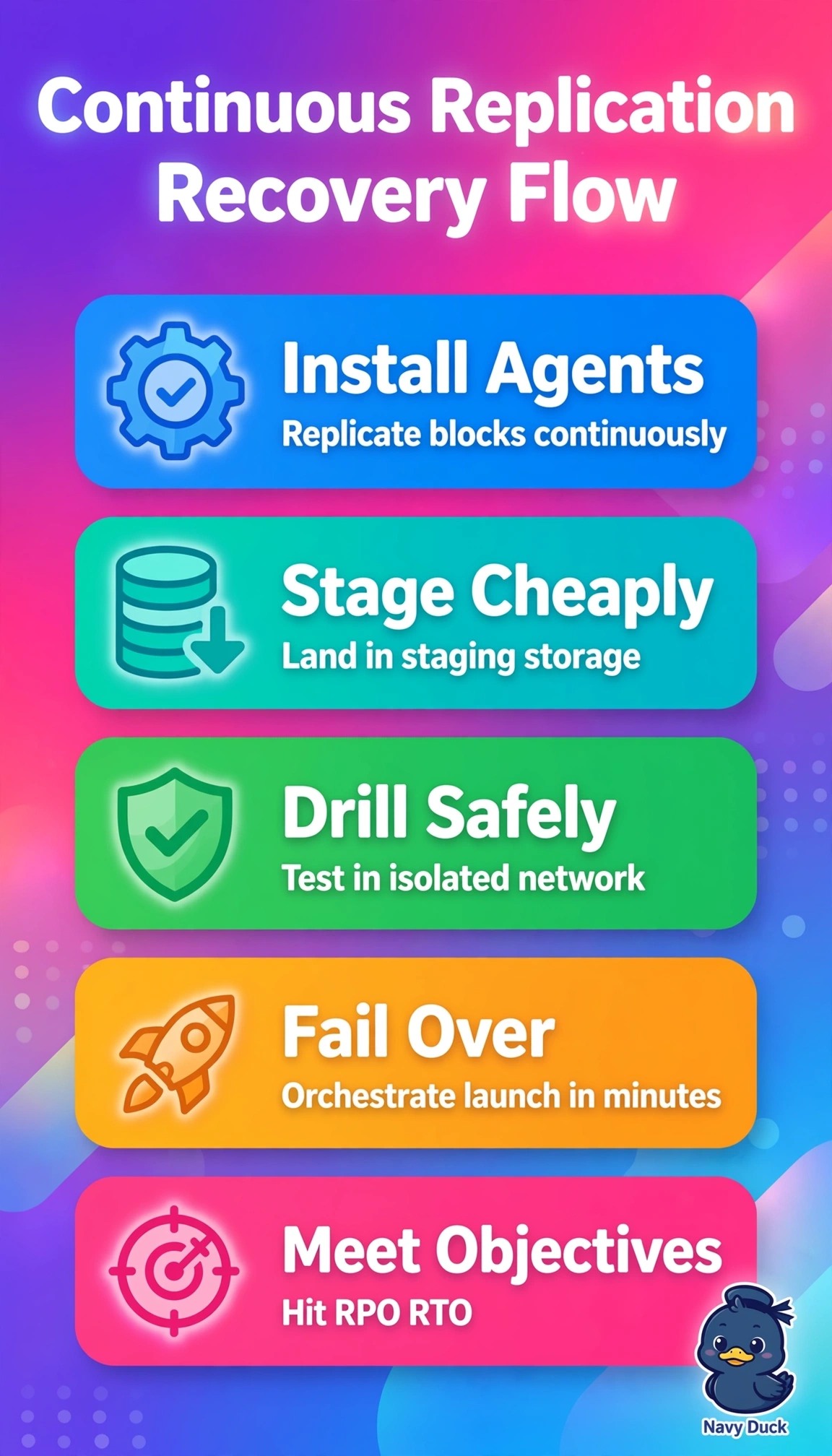
The correct approach works because AWS Elastic Disaster Recovery performs continuous block-level replication from source servers to low-cost staging storage, maintaining seconds-level RPO and enabling orchestrated failover and non-disruptive drills that meet aggressive RTO. AWS Backup scheduled snapshots fail by concept because periodic backups create hours-long gaps and require full restore sequences that cannot guarantee 15-minute RPO or fast orchestration. S3 Cross-Region Replication of nightly exports fails by concept because nightly batch exports impose 24-hour data loss windows and manual CloudFormation launches add launch and configuration time. Pilot-light instances with hourly dumps fail by concept because hourly dumps still miss continuous changes under limited bandwidth and manual database restores extend recovery beyond one hour. Exam caveat: distinguish continuous replication for hot standby versus backup-restore for tolerant RPO and RTO. Practical check: run a drill recovery in an isolated subnet and validate data currency, boot order, and DNS cutover against RPO and RTO targets.