
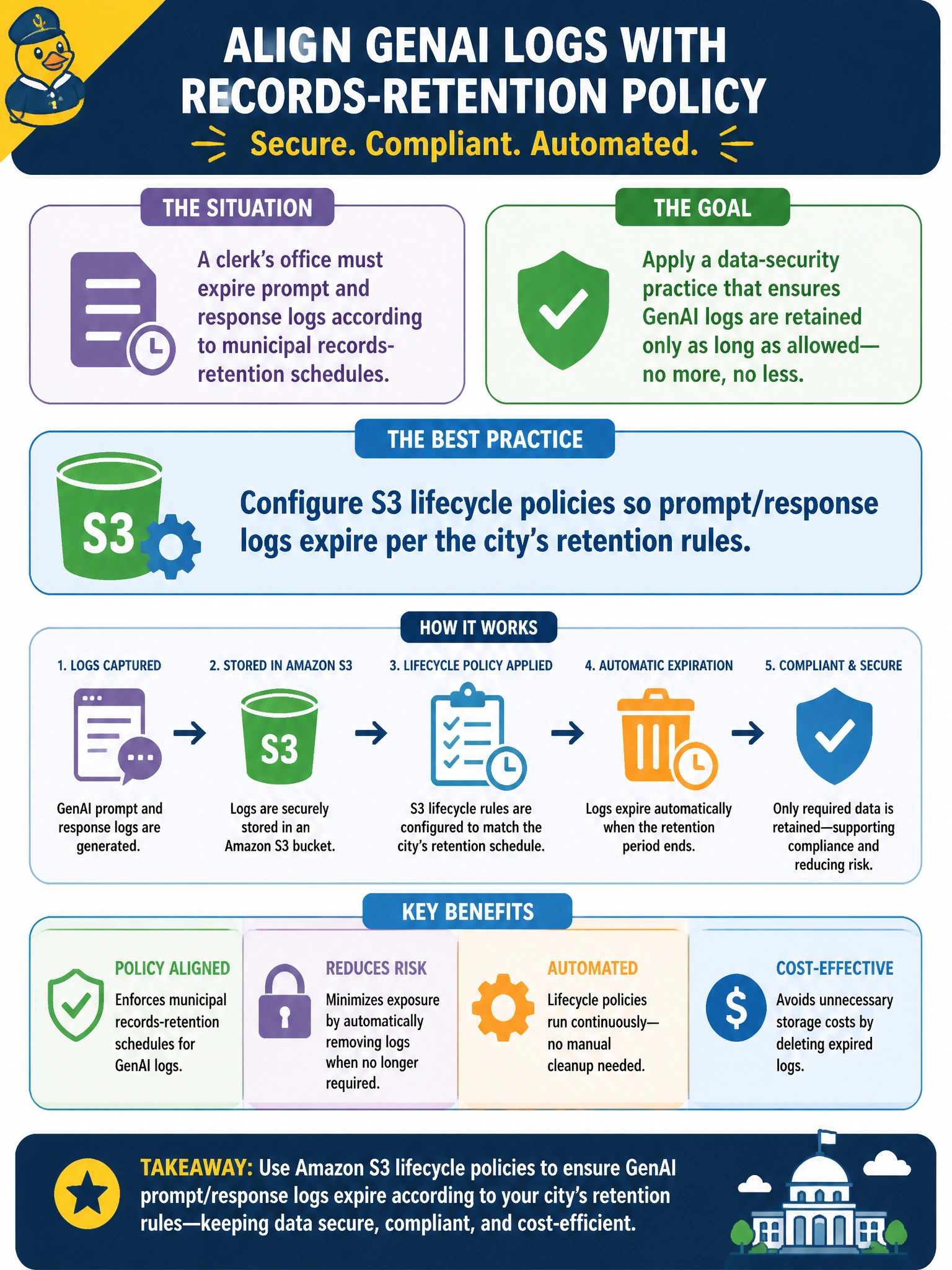
A clerk’s office must expire prompt and response logs according to municipal records-retention schedules. Which data-security practice best aligns GenAI logs to that policy?
Select an answer to reveal the explanation.
Short Explanation
Retention law is the “keep until this date, then shred” stamp on the records box. S3 lifecycle policies put that stamp on GenAI prompt/response logs so they expire on schedule instead of living forever in hot storage.
Full Explanation
Configuring S3 lifecycle policies so prompt and response logs expire according to the city’s retention rules is the data-security practice that aligns GenAI archives with municipal records-retention schedules. Clerk offices typically land FM interaction logs in S3 (directly or via logging pipelines). Lifecycle rules then expire or transition objects after N days/years matching the records schedule, producing automatic, auditable disposition instead of indefinite accumulation in the hottest tier or ad-hoc human cleanup.
Keeping every GenAI log forever in the hottest storage tier maximizes cost and expands the blast radius of any breach long after legal retention has ended. Mirroring logs to personal email inboxes makes retention optional, ungoverned, and invisible to records officers—personal mailboxes are not a records system of record. Deleting production logs randomly each week without a documented schedule fails both “keep for required period” and “dispose per policy,” creating audit gaps and potential spoliation concerns.
Exam caveat: retention is a timed policy, not “delete soon” or “keep forever.” S3 lifecycle is the AWS mechanism commonly tested for object expiration/transition aligned to compliance schedules. Distinguish lifecycle-driven disposition from backup or legal-hold exceptions that may pause expiration.
Operational check: confirm the S3 prefix used for GenAI prompt/response logs has lifecycle expiration matching the clerk’s published schedule, validate noncurrent/versioned object behavior if versioning is on, sample object ages against policy, and document legal-hold procedures when litigation requires suspending deletes.