
A transit authority wants its CRM to draft rider delay notices through GenAI when a disruption event arrives. Which application integration pattern best adds that capability?
Select an answer to reveal the explanation.
Short Explanation
When a bus line goes down, the CRM should kick off a little GenAI helper—not stash secret keys in every dispatcher’s plugin. Lambda-triggered steps draft the delay notice and keep credentials in the trusted backend.
Full Explanation
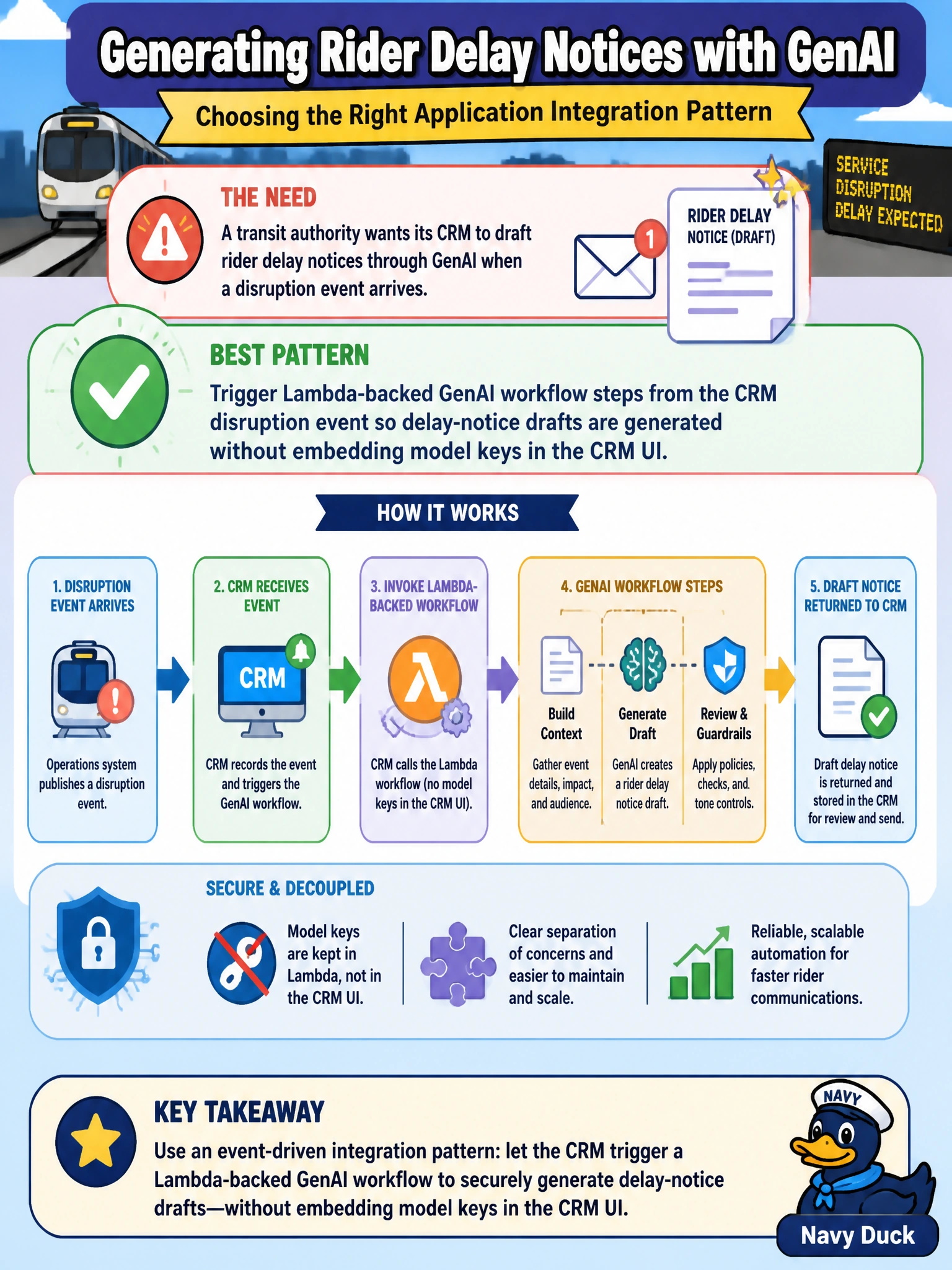
A transit authority CRM should draft rider delay notices through GenAI when a disruption event arrives. The best application integration pattern is to trigger Lambda-backed GenAI workflow steps from the CRM disruption event so drafts are generated without embedding model keys in the CRM UI. Event-driven invocation keeps secrets in the cloud execution role, creates an auditable path from disruption signal to draft notice, and leaves dispatchers in their familiar CRM rather than in a separate ungoverned chat tool.
Pasting Bedrock API keys into every dispatcher’s desktop CRM plugin fails by concept: credentials sprawl, cannot be rotated cleanly, and expose the FM account to workstation compromise. Having dispatchers manually retype delay text into an unrelated consumer chatbot with no audit trail fails operational control, privacy, and reproducibility. Replacing the CRM with a nightly printed binder of all possible delay phrases fails because static binders cannot draft context-specific notices for live disruptions.
Exam caveat: generated drafts should remain drafts until human or policy approval if rider communications are regulated or brand-sensitive; integration pattern correctness does not imply auto-send. Ensure the Lambda path logs event ids and model invocation metadata for after-action review without placing secrets in CRM configuration screens.
Operational check: publish a test disruption event from the CRM sandbox, confirm Lambda invokes Bedrock (or the city GenAI API) with the execution role—not a pasted user key—produce a delay-notice draft linked to the event id, and verify dispatcher workstations contain no Bedrock long-lived credentials.