
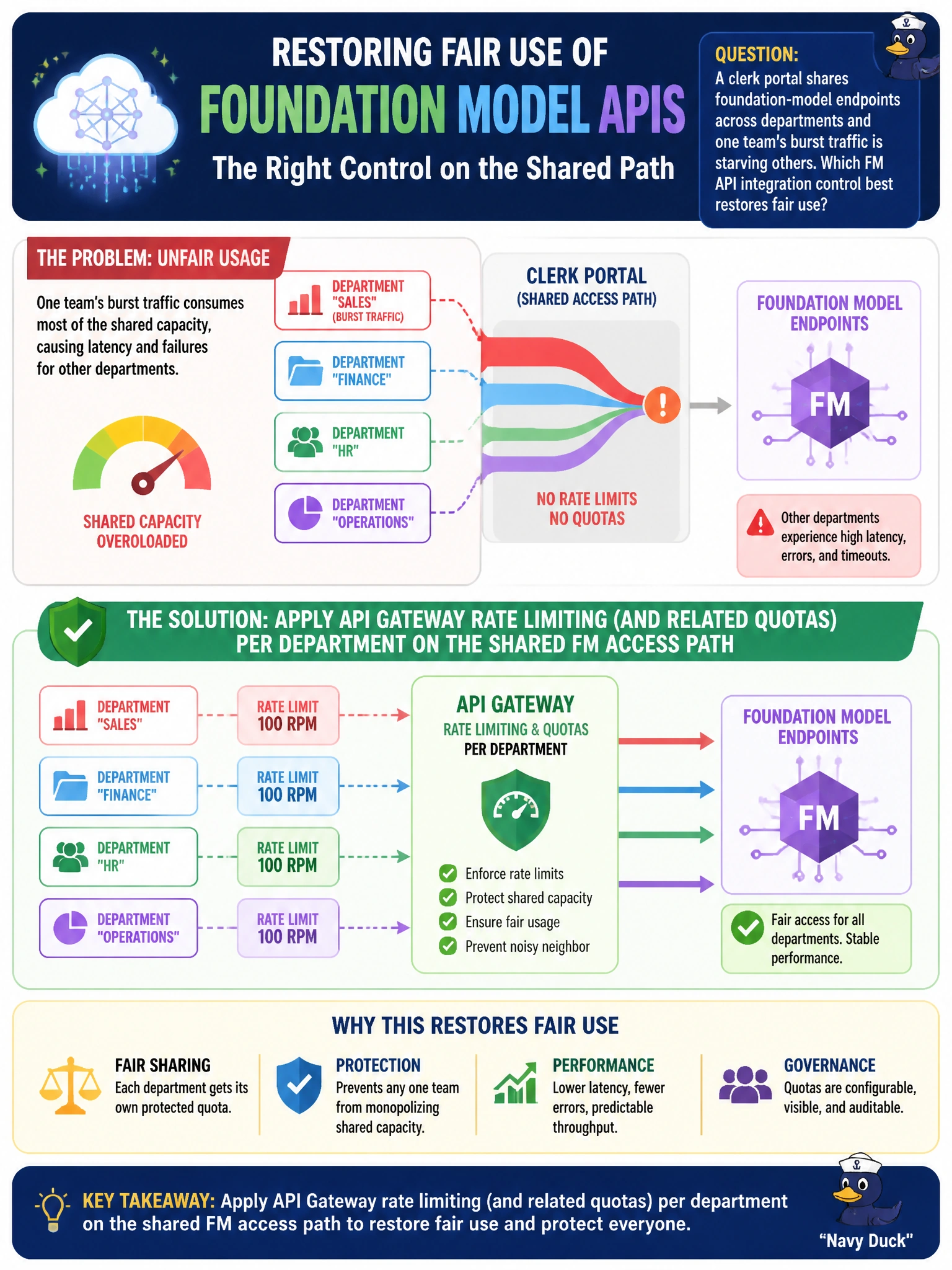
A clerk portal shares foundation-model endpoints across departments and one team’s burst traffic is starving others. Which FM API integration control best restores fair use?
Select an answer to reveal the explanation.
Short Explanation
One department running a bulk job should not drain the shared well dry. Per-department API Gateway rate limits are the water meters that keep clerk FM access fair.
Full Explanation
Shared municipal foundation-model endpoints need fair-use controls so one department’s burst cannot deny service to others on a clerk portal. Applying API Gateway rate limiting and related quotas per department on the shared FM access path meters consumption the way water meters protect a shared well. Each department keeps useful access while noisy bulk jobs cannot drain the entire civic FM budget or quota. Removing all rate limits so every department can burst without restriction fails fairness and invites noisy-neighbor outages. Giving the noisiest department a permanent override that bypasses the gateway fails governance and recreates the starvation problem under an official exception. Moving FM calls into each department’s laptop scripts outside the shared portal fails central control, audit, and the portal’s shared-observability model. Exam caveat: quotas should reflect legitimate peak needs (tax season, enrollment) without becoming permanent free passes. Pair Gateway throttles with usage plans, identity per department, and chargeback metrics so limits are negotiable with data. Ensure interactive clerk traffic has a higher-priority class than batch if the platform supports it. Operational check: Attach usage plans or route-level throttles per department identity; simulate one team’s bulk burst and confirm others still succeed within limits; monitor 429s by department; and review quota exceptions through change control rather than silent overrides.