
A county policy requires legal and communications sign-off before any new resident-facing bot prompt template goes live. Which governance practice best satisfies that requirement?
Select an answer to reveal the explanation.
Short Explanation
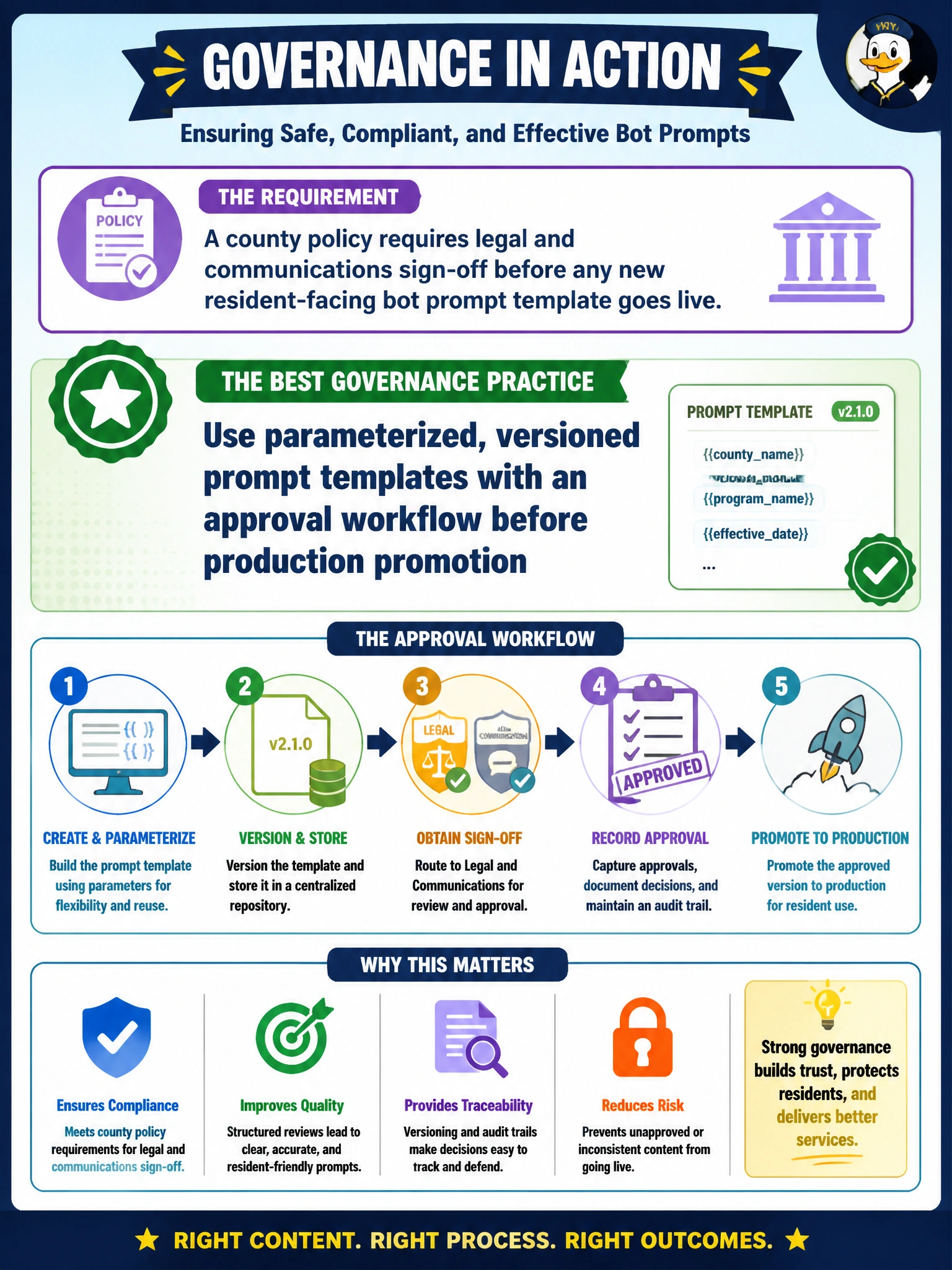
City ordinances do not sneak onto the website without counsel’s stamp—prompts for residents deserve the same gate. Parameterized templates plus an approval workflow keep the wording reviewable. Skipping reviews or waiting on a vendor brochure is not county governance.
Full Explanation
County policy that requires legal and communications sign-off before resident-facing bot prompts go live is a change-control requirement on prompt artifacts. Parameterized, versioned prompt templates with an approval workflow before production promotion satisfy that need: wording is reviewable, ownership is clear, parameters keep reusable structure while counsel reviews the fixed language, and promotion is gated. Developers cannot silently alter the resident experience. Letting developers push prompt string changes directly to production with no review gate violates the stated legal and communications requirement. Treating prompts as disposable debug text that never needs versioning or ownership denies auditability and repeatable review. Waiting for a foundation-model vendor marketing email is irrelevant to municipal counsel’s duty—vendor marketing is not legal sign-off on city-facing language. Exam caveat: governance stems that mention legal/communications approval map to versioned templates plus human approval workflows, not vendor emails or “prompts are just debug strings.” Operational check: store templates with version IDs, require dual approval records before promotion, parameterize only non-policy fields, and retain prior versions so auditors can see what residents were told on a given date.