
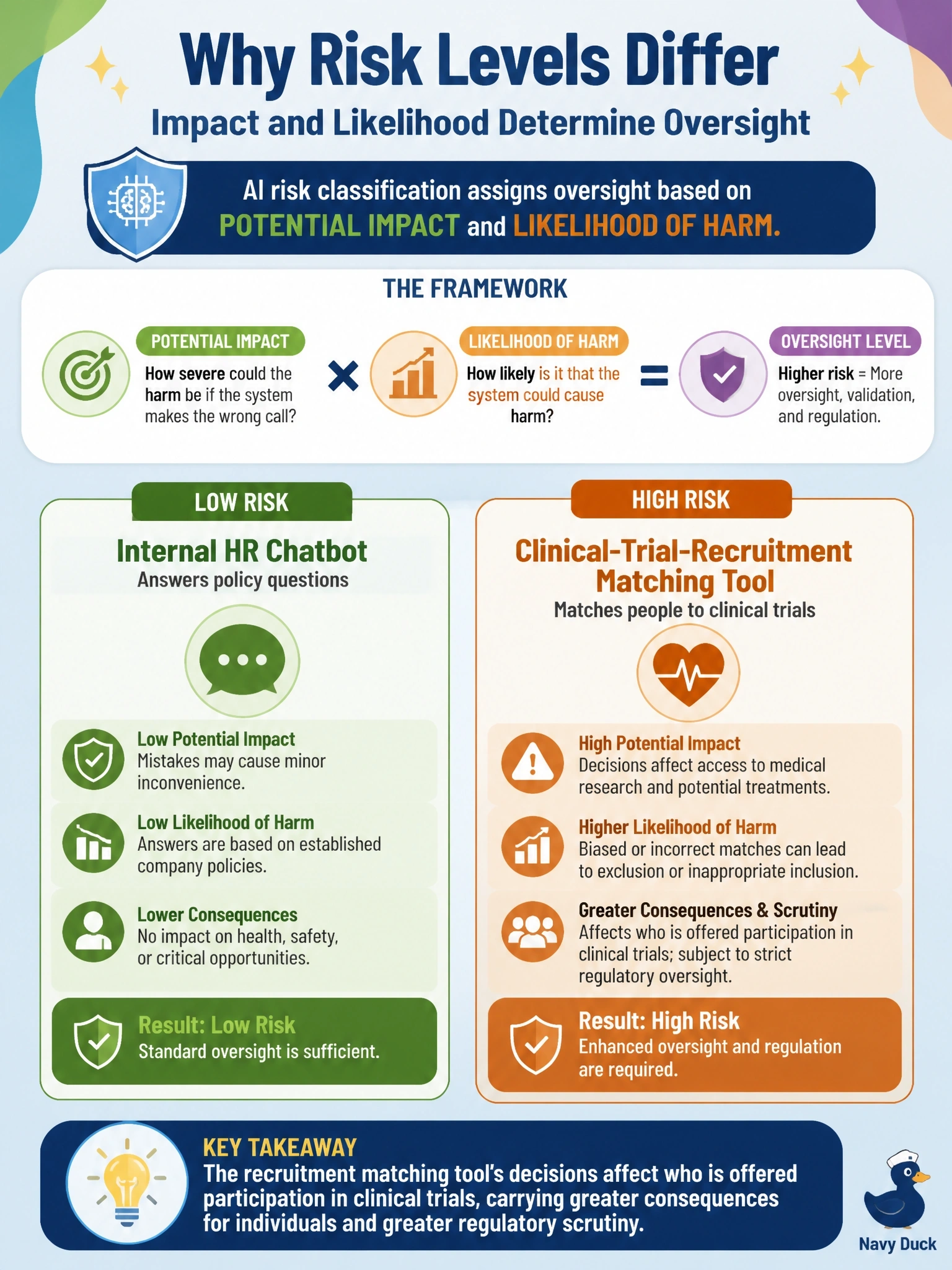
A biotech company's AI risk classification framework assigns oversight levels based on potential impact and likelihood of harm. An internal HR chatbot that answers policy questions is classified as low risk, while a clinical-trial-recruitment matching tool is classified as high risk. What is the most likely reason for this difference?
Select an answer to reveal the explanation.
Short Explanation
Sorting mail is a decent way to picture this: a chatbot answering 'what's our PTO policy' is a postcard — low stakes if you get it wrong. A tool deciding who gets into a clinical trial affects a person's medical options and sits squarely under regulator eyes, so it needs far more oversight.
Full Explanation
The recruitment matching tool's decisions determine who is offered the opportunity to participate in a clinical trial, which carries real consequences for individuals and falls under significant regulatory scrutiny — that impact and exposure is what justifies its high-risk classification compared with an HR chatbot answering routine policy questions. How many employees use the HR chatbot is a measure of internal usage volume, not of the consequences if the chatbot gives a wrong answer, so it doesn't explain the difference in risk tier. What the recruitment tool cost to build reflects an investment decision, not the severity of harm its outputs could cause. When the HR chatbot was deployed relative to the framework's adoption is a timing detail unrelated to its actual risk profile. The general principle: risk classification differences between AI use cases should be explained by potential impact and consequence, not by usage volume, cost, or deployment timing.