
A pharmaceutical company's business leaders want to understand what they are responsible for versus what their cloud AI vendor is responsible for when it comes to securing an AI system that processes research data. Which concept addresses this directly?
Select an answer to reveal the explanation.
Short Explanation
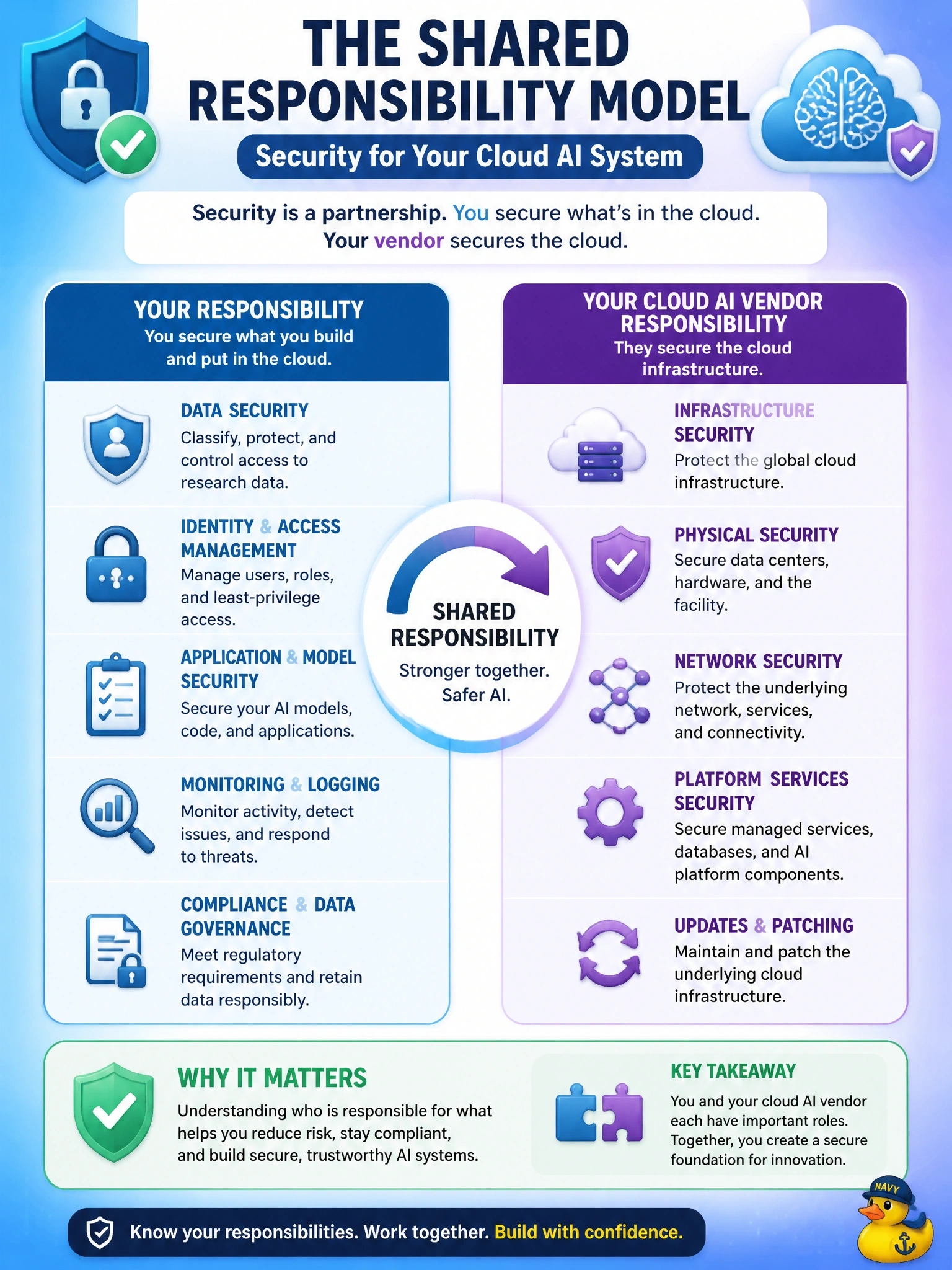
Think of it like this: your cloud AI vendor locks the server room, but you're still responsible for who holds the keys to your own research data. That split is exactly what the shared responsibility model spells out, drawing a clean line between what the vendor secures and what stays on your plate.
Full Explanation
The shared responsibility model is the concept that directly addresses the split between what a cloud AI vendor secures and what the customer remains responsible for, making it the right answer to this question. The Cloud Adoption Framework's business perspective is a genuine planning tool for aligning AI adoption with business goals, but it's about strategic readiness and alignment, not about dividing security responsibility between vendor and customer, which makes it a tempting but incorrect fit here. An ROI calculation measures the financial return of an AI investment and has nothing to do with who secures what. A KPI dashboard tracks adoption metrics over time and likewise doesn't address the security-responsibility question being asked. The general principle: when the question is specifically about dividing security duties between a cloud provider and the customer, the shared responsibility model is the applicable concept — other governance and value-measurement tools serve different purposes.