
A residential real estate brokerage traditionally earns commissions only on closed home sales. Leadership is considering how AI could open a new line of business rather than just make current agents more efficient. Which idea best represents that kind of transformation?
Select an answer to reveal the explanation.
Short Explanation
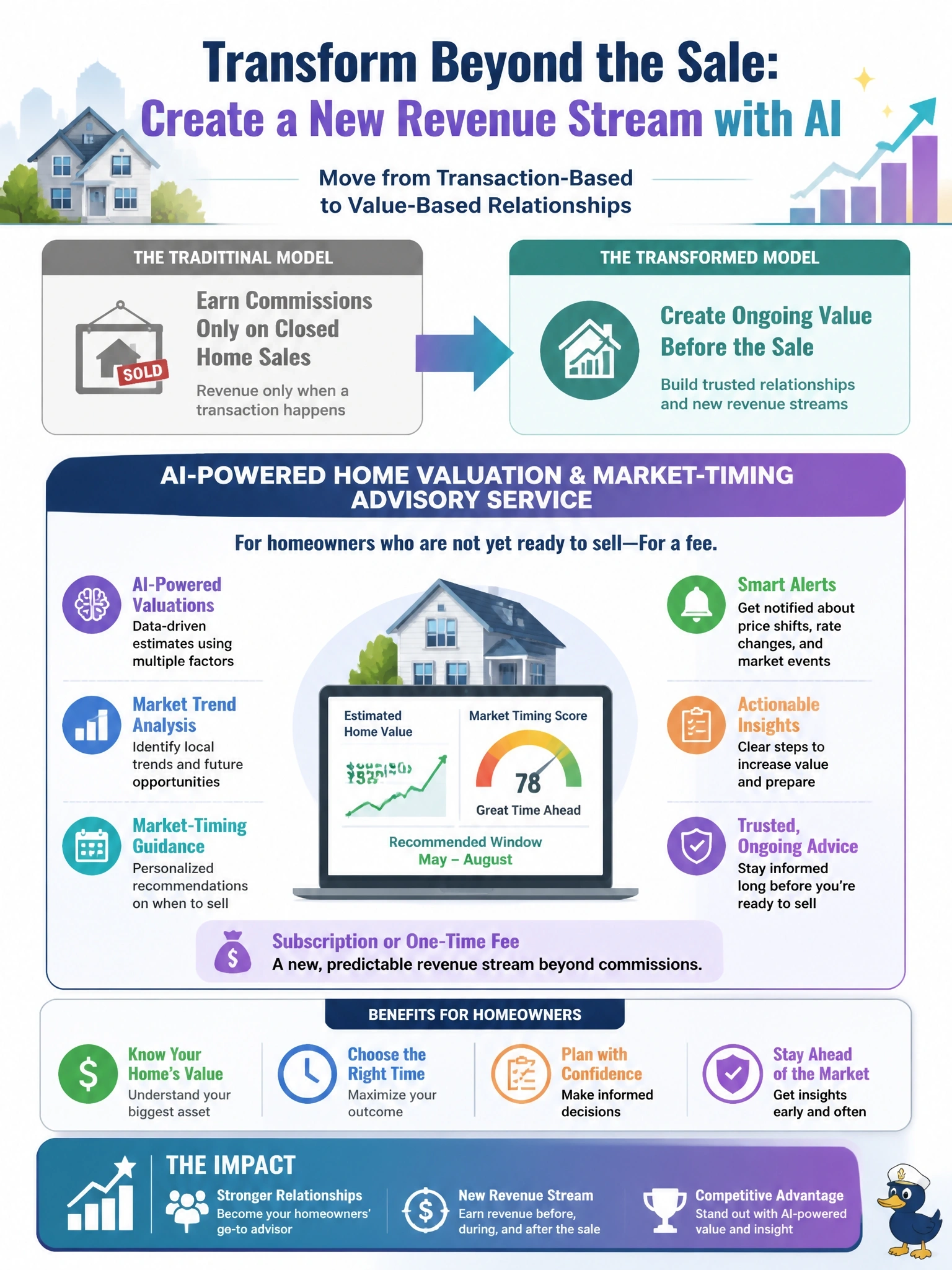
The brokerage already knows more about home values and market timing than almost anyone else in town, and that expertise is worth money on its own. Charge homeowners who aren't selling yet for a paid valuation and market-timing service, and you've turned existing know-how into a brand new revenue line instead of just a faster version of the same old commission business.
Full Explanation
Transforming a business model means reaching a customer or revenue stream the company didn't serve before. Offering a paid AI-powered valuation and market-timing advisory service to homeowners who aren't ready to sell does that: it turns the brokerage's market expertise into a standalone product, priced and sold outside the traditional commission structure, reaching homeowners who were never brokerage clients in the first place. Drafting listing descriptions faster just speeds up a task agents already perform inside the existing sales process. Automating showing scheduling replaces manual calendar coordination but still supports the same commission-based transactions. Flagging duplicate listings in the internal database is pure back-office housekeeping with zero customer-facing revenue impact. Each of those four ideas is a legitimate efficiency gain — faster writing, easier scheduling, cleaner data, quicker triage — but none of them creates a new offering, a new customer segment, or a new revenue mechanism. The generalizable principle: a transformation opportunity creates something new to sell or a new buyer to sell it to, while a process improvement just makes today's model run more smoothly. Business leaders should sort every AI idea into one of these two buckets before deciding where to invest.