
An industrial parts manufacturer is preparing to replace its manual, spreadsheet-based production scheduling process with an AI-based scheduling system. The current process, despite its flaws, is deeply embedded in how plant supervisors coordinate daily work across three shifts. Which consideration should the transition plan address first?
Select an answer to reveal the explanation.
Short Explanation
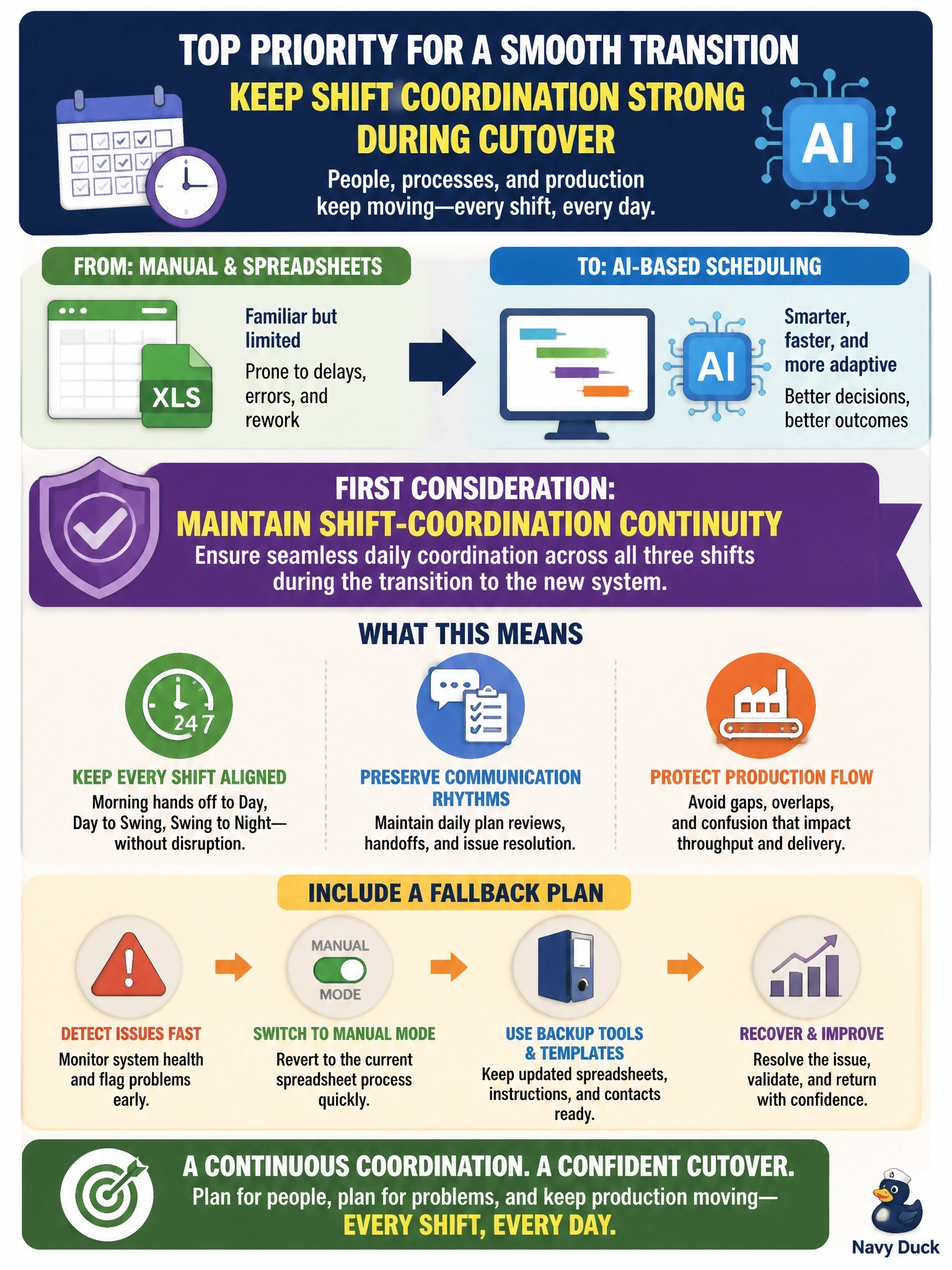
Picture ripping out the scaffolding before the building can stand on its own. Three shifts depend on that scheduling process every single day, so before you touch anything, you need a way to keep work coordinated if the new system stumbles. That's what a solid fallback plan buys you: continuity, not chaos.
Full Explanation
A process that three shifts lean on every day to coordinate work is operationally critical, so the first question a transition plan must answer is how coordination keeps running through cutover, and what happens if the new system misbehaves on day one. A fallback plan matters here because the stem gives no evidence the new system has proven itself under live plant conditions yet, so a way to revert or bridge the gap protects daily operations from a bad first week. Naming the product after the company's brand identity has nothing to do with whether shifts stay coordinated; it's a marketing decision, not an operational one. Picking a control-room color scheme is a cosmetic interface choice that never touches whether scheduling data gets to the right supervisor at the right time. Counting recent articles about industry-wide AI adoption trends is background context at best; it says nothing about this specific plant's readiness or risk. None of those three touch the actual failure mode named in the scenario, an interruption to shift coordination, which is why continuity planning has to come first. As an operational check: for any process embedded in daily coordination, ask what breaks tomorrow morning if the new system doesn't work, and make sure that answer is covered before go-live.