
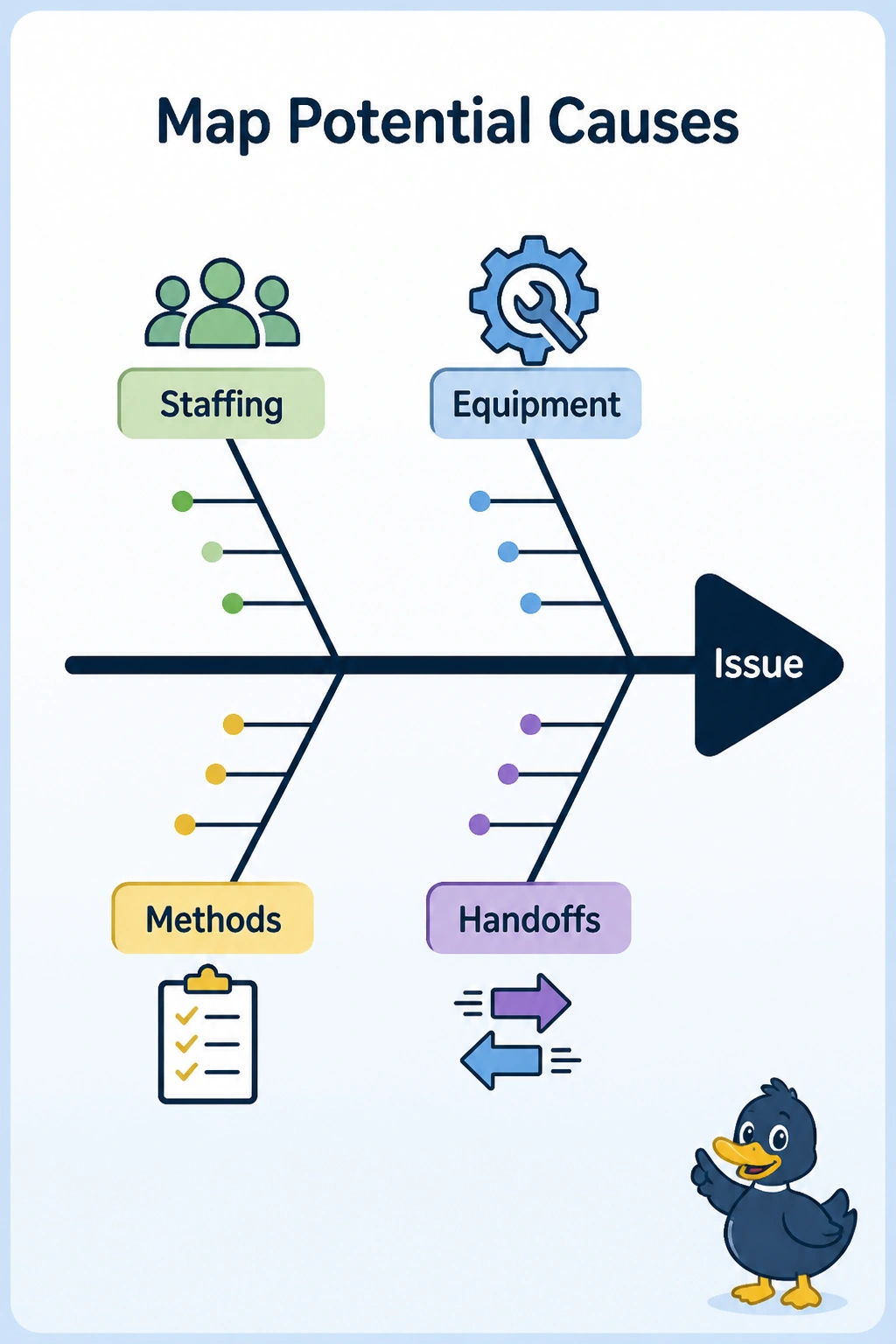
An outpatient imaging clinic is investigating why final radiology reports are frequently delivered past the target turnaround window. A cross-functional audit follow-up team wants to brainstorm and categorize potential causes across staffing, equipment, methods, and handoffs before collecting data. Which tool fits best?
Select an answer to reveal the explanation.
Short Explanation
Before you start measuring everything in sight, you need a map of what might be causing the delay. A cause-and-effect diagram lets your team sort brainstormed suspects into clean buckets like staffing and equipment. The trap is picking a measurement chart when you are still structuring ideas.
Full Explanation
Selecting "A cause-and-effect diagram grouping candidate factors by category" gives the cross-functional team a structured visual framework to capture hypotheses around major branches such as people, equipment, methods, and handoffs before designing targeted data collection. Organizing ideas visually prevents tunnel vision on a single department and helps the team see how upstream transcription or dictation delays feed downstream sign-off bottlenecks. In contrast, "A scatter diagram plotting report length against patient age" tests whether two continuous numerical variables correlate, which is premature before identifying plausible process factors. Choosing "A histogram displaying the frequency distribution of turnaround times" shows the spread and shape of current performance data rather than organizing candidate causes. Similarly, "A check sheet tallying daily report counts by imaging modality" is a structured data-collection form used to count occurrences once you already know which categories to track. Keep in mind as a caveat that a cause-and-effect diagram displays unverified theories, not proven root causes. After building the diagram, circle the top suspected branches and gather actual timestamp data to confirm which factors drive the delays.
Prefer to study offline? Printable PDF study book + test engine ($7.50, unofficial). These questions stay free here.