
An internal audit team reviewing six months of printed circuit board rework records wants to show management which few defect categories account for the vast majority of rework hours so corrective actions can be prioritized. Which quality tool best presents this relationship?
Select an answer to reveal the explanation.
Short Explanation
When you have a pile of defect data and need to spot the vital few troublemakers, a Pareto chart is your best friend. The trap is picking a control chart or scatter diagram, which show stability over time or variable correlation instead of ranking what hurts most. Rank the defect categories by rework hours so management sees where the biggest payoff lives.
Full Explanation
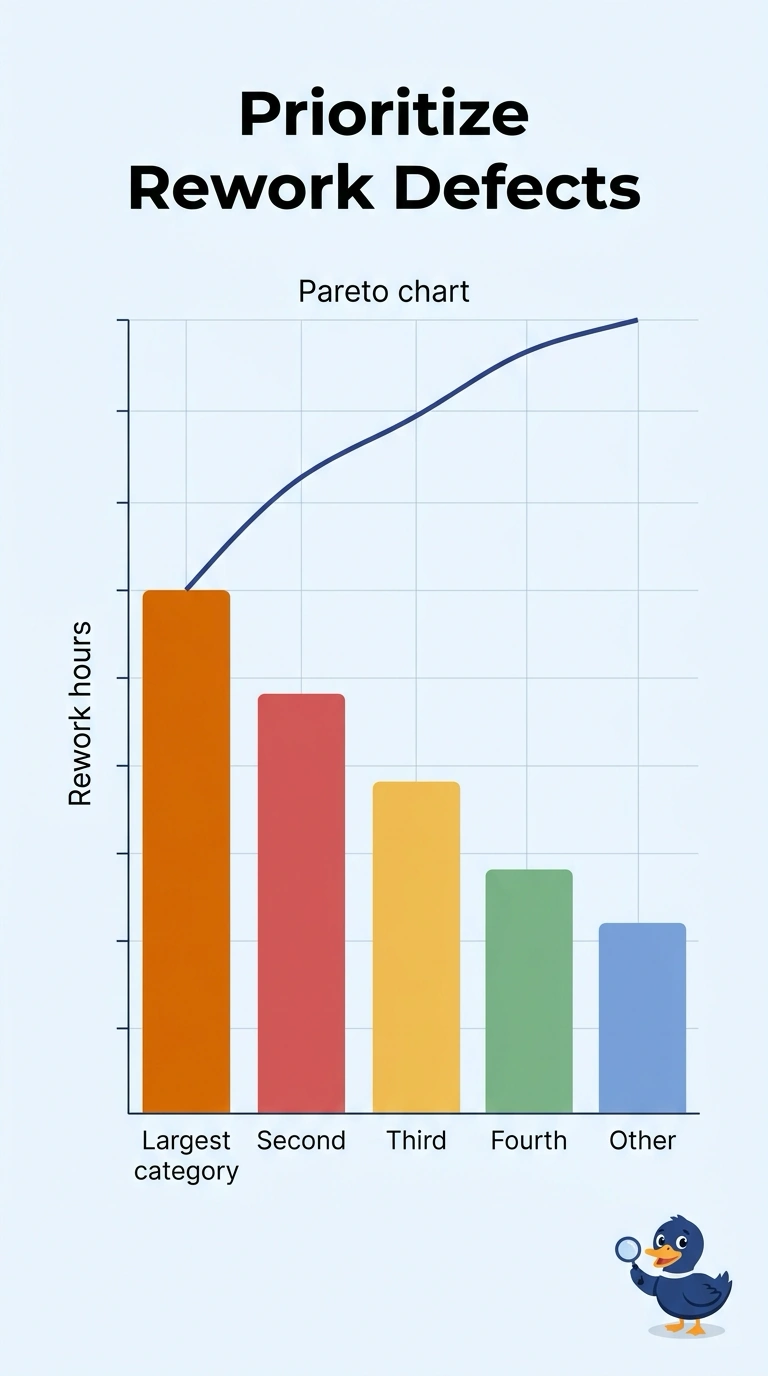
Prioritizing corrective actions requires separating the vital few drivers of loss from the trivial many. To highlight which defect types consume the most labor, the team should build A Pareto chart ranking defect categories by total rework hours. By ordering bars from highest to lowest alongside a cumulative percentage line, the chart visually demonstrates where focused root-cause work will yield the largest operational gain. Using A scatter diagram plotting board temperature against conveyor speed tests correlation between two continuous variables rather than ranking discrete defect categories. Using An individuals and moving range control chart of daily rework totals monitors process stability and special-cause variation over time, not the relative magnitude of specific defect types. Using A process flowchart mapping the hand-soldering rework station documents sequence and decision steps without quantifying which defects drive the most hours. As a caveat, ranking by defect count alone can mislead if a rare defect requires far more rework hours or scrap cost than a frequent minor flaw, so weighting by hours or cost is essential. As an operational check, verify that the rework categories are mutually exclusive and accurately coded before presenting the ranked bars to leadership.
Prefer to study offline? Printable PDF study book + test engine ($7.50, unofficial). These questions stay free here.