
A second-party audit of a sole-source specialty alloy supplier uncovers systemic weaknesses in heat-treat furnace calibration and incoming lot traceability, though no defective parts have shipped yet. How should the customer's audit program manager apply these findings?
Select an answer to reveal the explanation.
Short Explanation
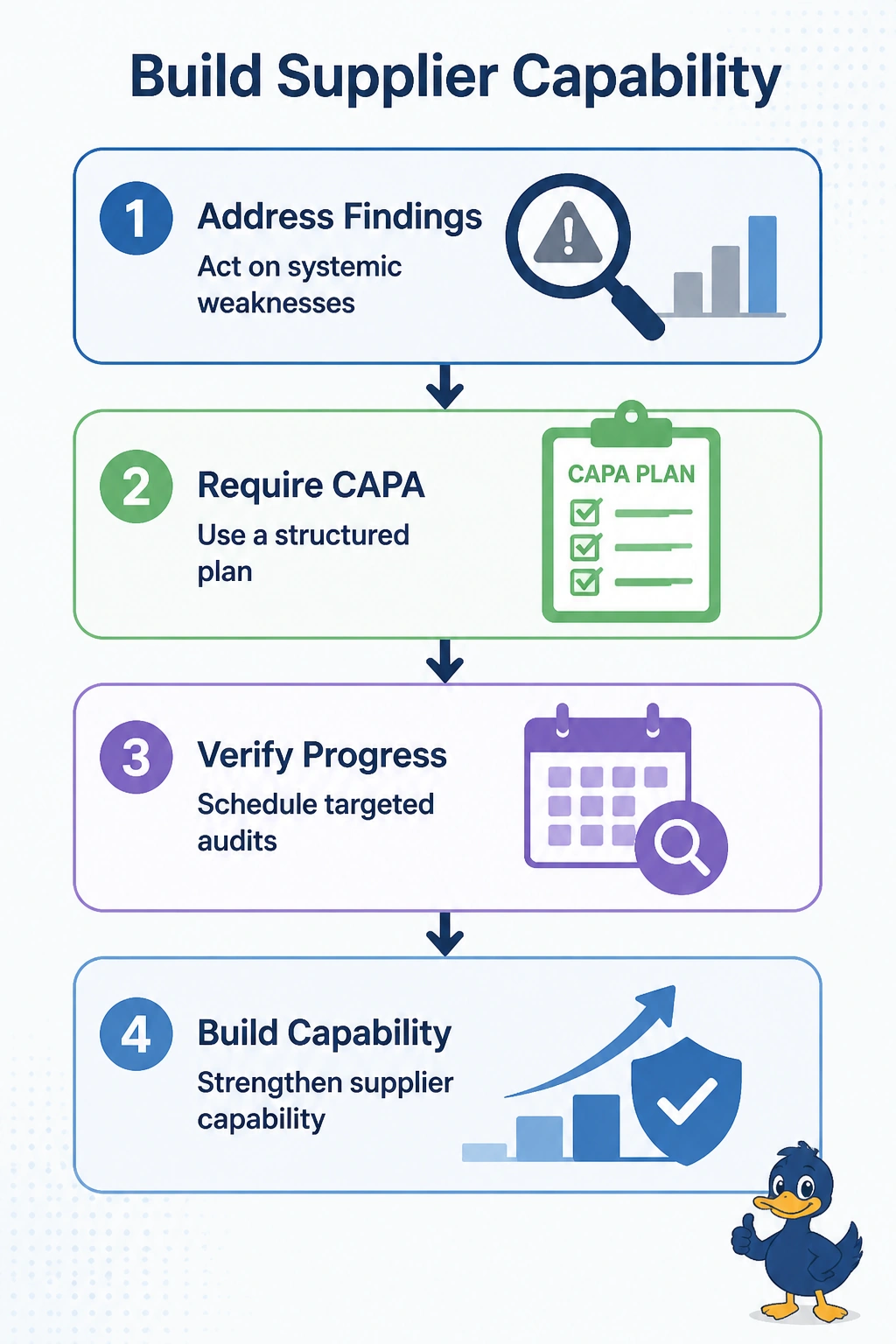
You can protect continuity and address the risk by requiring a structured CAPA plan and verifying that the supplier’s fixes work. This corrective approach builds capability before defective parts reach production.
Full Explanation
A second-party audit should drive measurable improvement while protecting continuity of supply. Requiring a structured CAPA plan and scheduling targeted verification audits addresses the systemic furnace-calibration and lot-traceability weaknesses before defective material reaches production. Because the supplier is sole-source and no defective parts have shipped, corrective action and verification balance risk reduction with operational continuity. Terminating the contract immediately and halting all internal production until an alternate vendor is qualified could cause severe disruption when remediation remains possible. Downgrading calibration findings to observations to keep the annual scorecard green compromises audit integrity and leaves critical process risks unaddressed. Waiting until defective alloy lots arrive at receiving inspection abandons preventive risk management in favor of detecting failures after they occur. One caveat: if the supplier refuses to act or presents an imminent safety hazard, escalate to procurement leadership for contingency sourcing. As a practical check, track CAPA milestones and confirm furnace-calibration records and lot traceability during the follow-up audit.
Prefer to study offline? Printable PDF study book + test engine ($7.50, unofficial). These questions stay free here.