
A newly appointed audit program manager is building next year's internal audit schedule across four manufacturing plants and calculates total auditor capacity using only scheduled on-site days. By mid-year, auditors face severe overtime and late audit reports. What should the manager do when planning program capacity?
Select an answer to reveal the explanation.
Short Explanation
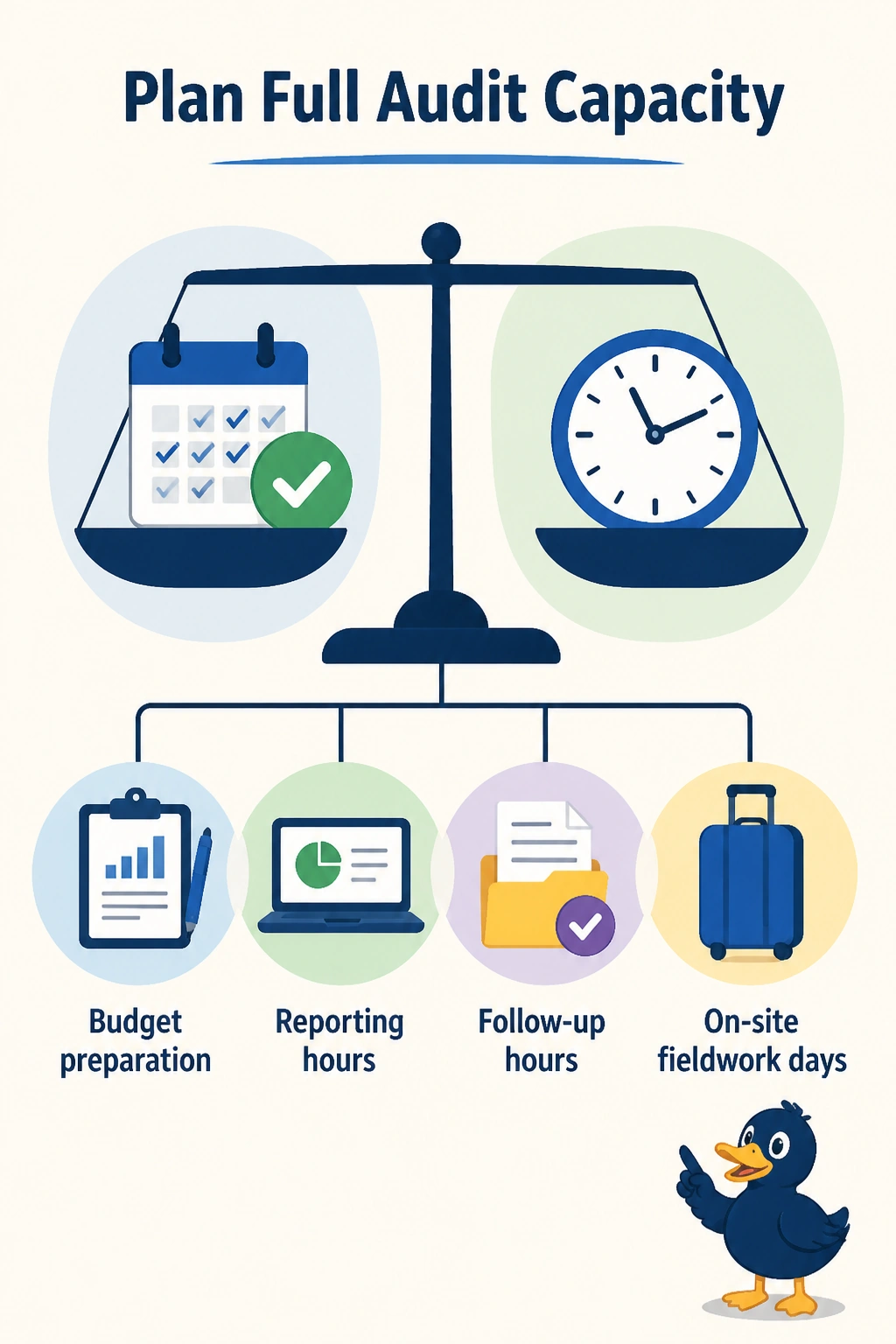
You’ll keep your schedule realistic by budgeting the full audit lifecycle, not just on-site days. Preparation, reporting, and follow-up all take auditor time, so include them alongside fieldwork.
Full Explanation
Effective audit program management requires realistic resource planning across the entire audit lifecycle. You should budget preparation, reporting, and follow-up hours alongside on-site fieldwork days because document review, checklist tailoring, team coordination, report drafting, and corrective action verification often consume as much time as physical fieldwork. Counting only hours spent on-site interviewing staff and observing processes repeats the planning error that causes the mid-year bottleneck. Excluding follow-up verification on the grounds that corrective action reviews belong solely to process owners is also wrong: auditors must independently verify corrective action implementation and effectiveness before closing findings. Estimating total hours by doubling on-site days without reviewing prior audit cycle actuals relies on an arbitrary multiplier that ignores plant complexity, shift coverage, and historical effort data. Even a well-planned budget needs a small contingency buffer for unexpected scope expansions or repeat findings. As a practical check, compare actual logged hours from the past two audit cycles across planning, fieldwork, reporting, and closure before locking next year’s capacity.
Prefer to study offline? Printable PDF study book + test engine ($7.50, unofficial). These questions stay free here.