
An audit program manager is selecting a lead auditor from several certified internal auditors to direct a four-person team during a high-stakes supplier audit. Beyond technical auditing knowledge, which qualification is most critical for the lead auditor role?
Select an answer to reveal the explanation.
Short Explanation
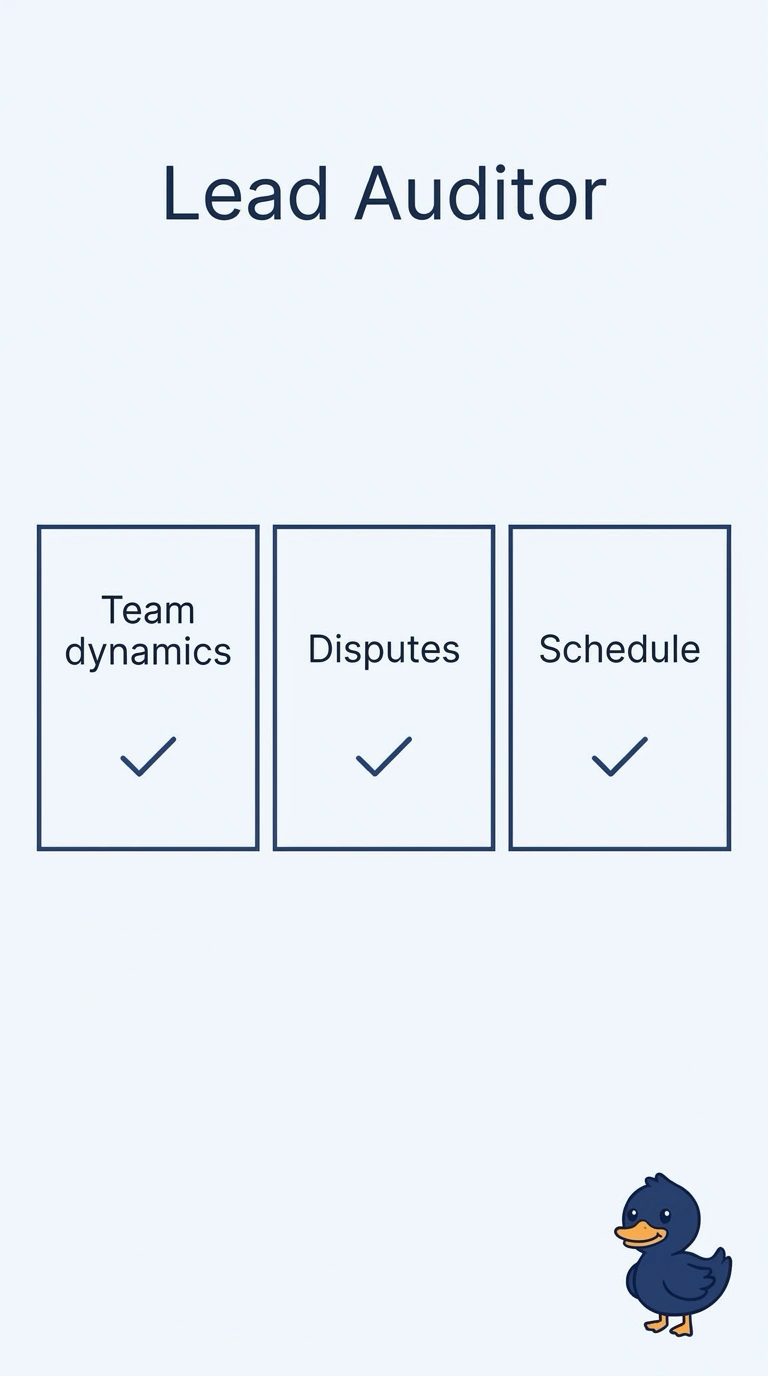
A strong solo auditor does not automatically make a strong lead auditor, and you need someone who can guide the whole team. Look for team leadership that manages dynamics, resolves disputes, and keeps fieldwork on schedule—not seniority measured only by manufacturing service or handling every interview alone.
Full Explanation
Leading a four-person team during a high-stakes supplier audit requires coordination and judgment beyond individual technical auditing knowledge. The most critical qualification is the ability to manage team dynamics, resolve disputes, and keep fieldwork on schedule. A lead auditor represents the team to auditee leadership, aligns teammates on finding classifications, and adjusts the plan when unexpected issues arise. Seniority measured strictly by total years of manufacturing service does not establish leadership, facilitation, or conflict-resolution ability. Authority to rewrite the supplier’s internal work instructions during the closing meeting confuses independent auditing with consulting and exceeds the audit team’s role. Willingness to absorb all technical interviews personally without delegating creates bottlenecks and fails to use teammates’ specialized skills. An exam caveat is that lead auditor qualification should be verified through observed leadership on a team audit, not classroom training alone. As a practical check, review the auditor qualification matrix to confirm that lead auditor criteria explicitly cover team management, meeting facilitation, and conflict resolution.
Prefer to study offline? Printable PDF study book + test engine ($7.50, unofficial). These questions stay free here.