
An audit program manager notices that internal auditors are writing numerous trivial documentation findings to meet a departmental quota of five nonconformities per audit, straining relationships with operations. How should the manager revise audit program performance metrics?
Select an answer to reveal the explanation.
Short Explanation
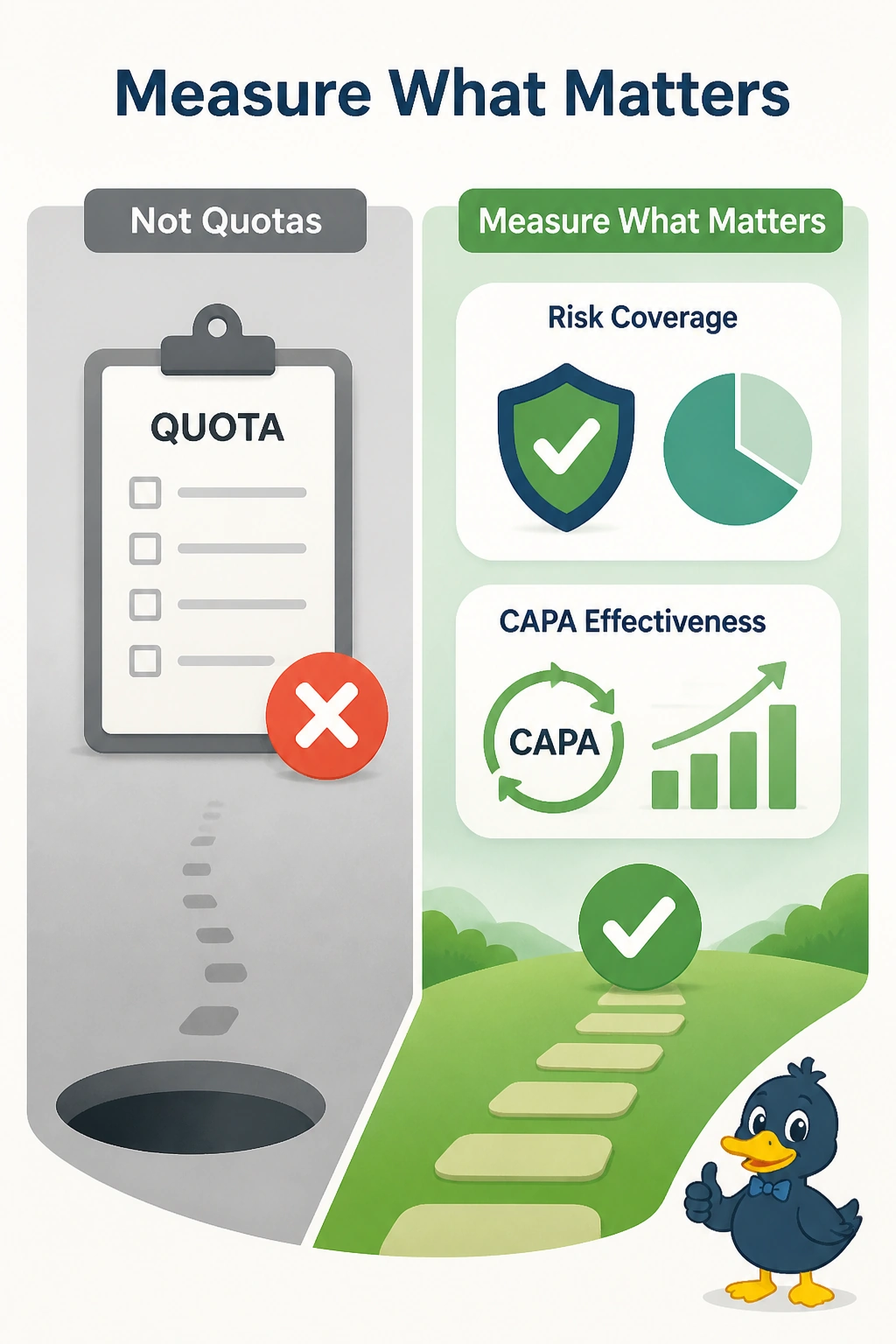
Tell auditors they need five findings a trip, and they will start ticketing crooked stapler angles! Quotas distort judgment and turn partners into adversaries. You fix this by measuring what actually matters: risk coverage, audit thoroughness, and whether corrective actions permanently stop repeat defects.
Full Explanation
Audit program metrics shape auditor behavior, so poorly designed quotas undermine objectivity and business value. Choosing to Replace finding quotas with metrics tracking risk coverage and CAPA effectiveness aligns the audit program with organizational risk reduction and continual improvement rather than arbitrary ticket counts. Deciding to Double the nonconformity quota so auditors look even more closely at records worsens the perverse incentive, flooding the CAPA system with low-value administrative noise. Conversely, choosing to Eliminate all audit findings and grade auditors solely on on-time report delivery encourages superficial reviews that rush through fieldwork just to hit calendar targets. Finally, deciding to Score auditors higher when auditee managers accept findings without a written challenge rewards popularity over rigor, encouraging auditors to soften or avoid significant findings to prevent pushback. As a caveat, shifting away from quotas requires clear guidance on finding materiality so genuine minor nonconformities are still documented objectively. As an operational check, review quarterly audit reports against operational defect trends and repeat-finding rates to confirm the program is driving measurable process stability.
Prefer to study offline? Printable PDF study book + test engine ($7.50, unofficial). These questions stay free here.