
During an interview at a medical-device distribution center, a warehouse lead smoothly describes receiving, put-away, and order picking, but completely skips how damaged returns are segregated from sellable stock. Which interviewing skill should the auditor apply next?
Select an answer to reveal the explanation.
Short Explanation
Good interviewers listen just as closely for what is left out as for what is said out loud. When a smooth walkthrough skips a risky step like damaged returns, you should probe that missing handoff right away instead of falling into the trap of assuming confidence equals compliance.
Full Explanation
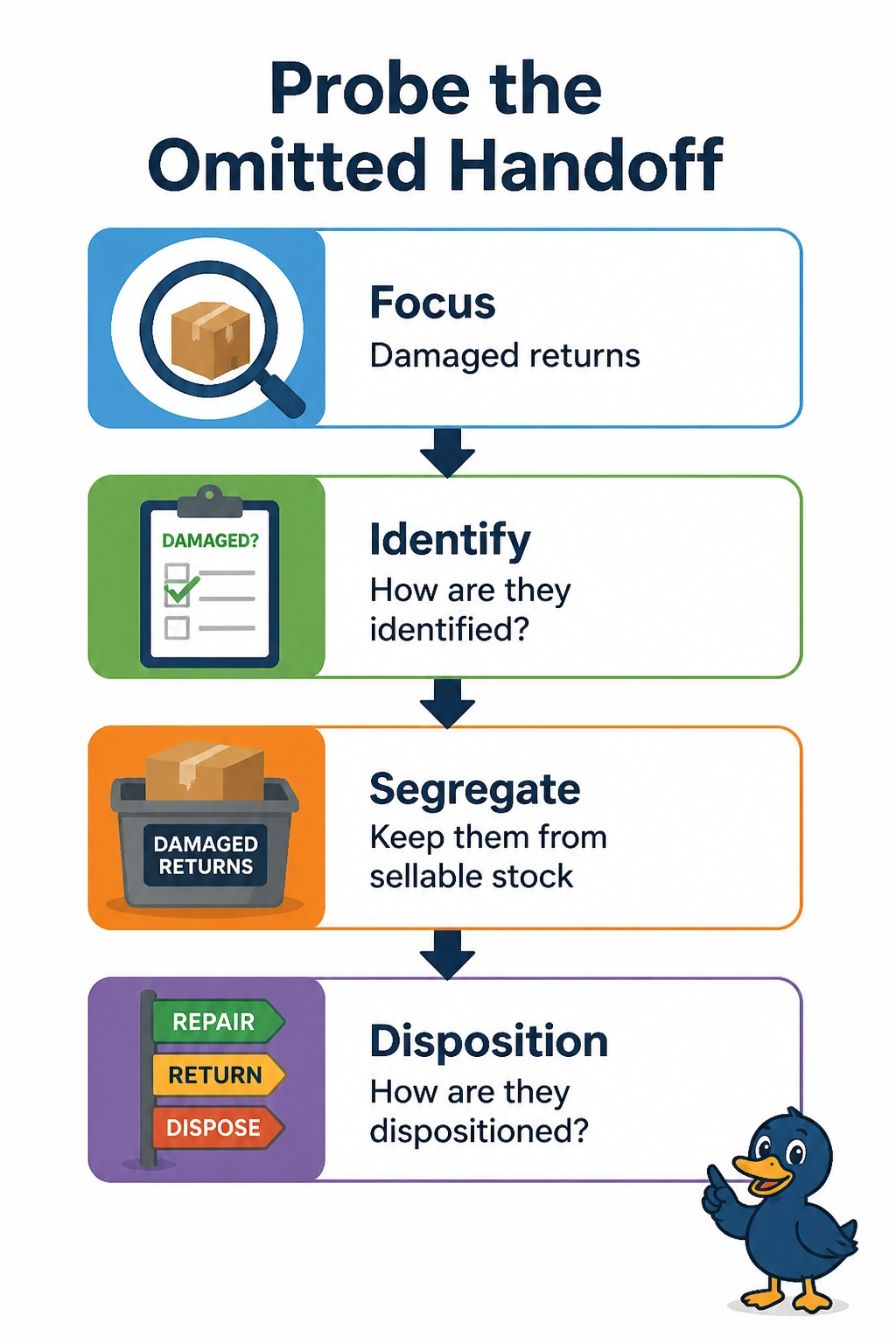
Active listening includes noticing gaps in an auditee's narrative, so the auditor should Probe the omitted handoff by asking specifically how damaged returns are identified, segregated, and dispositioned. Damaged returns pose a high risk of accidental re-shipment to customers, making targeted follow-up essential to verify actual containment controls. Choosing to Assume damaged returns are handled properly because the warehouse lead seemed confident and experienced substitutes personal demeanor for objective evidence. Choosing to Record an immediate major nonconformity for missing return controls without asking follow-up questions violates fair presentation because an omission in conversation does not prove a control is absent on the floor. Choosing to Move on to the shipping dock so the interview stays ahead of the planned schedule sacrifices risk coverage for speed. As a caveat, keep follow-up questions neutral and open-ended so the auditee describes real practice rather than feeling accused. Operational check: walk to the physical returns staging area and inspect quarantine labels, system status blocks, and recent disposition records.
Prefer to study offline? Printable PDF study book + test engine ($7.50, unofficial). These questions stay free here.