
A specialty food-flavoring manufacturer proposes conducting its annual quality and sanitation audit of a new spice-grinding supplier entirely remotely via video call to save travel costs. Allergen-dust control, equipment cleanliness, and facility pest-proofing are critical audit criteria. Why should the audit client reject a purely remote format?
Select an answer to reveal the explanation.
Short Explanation
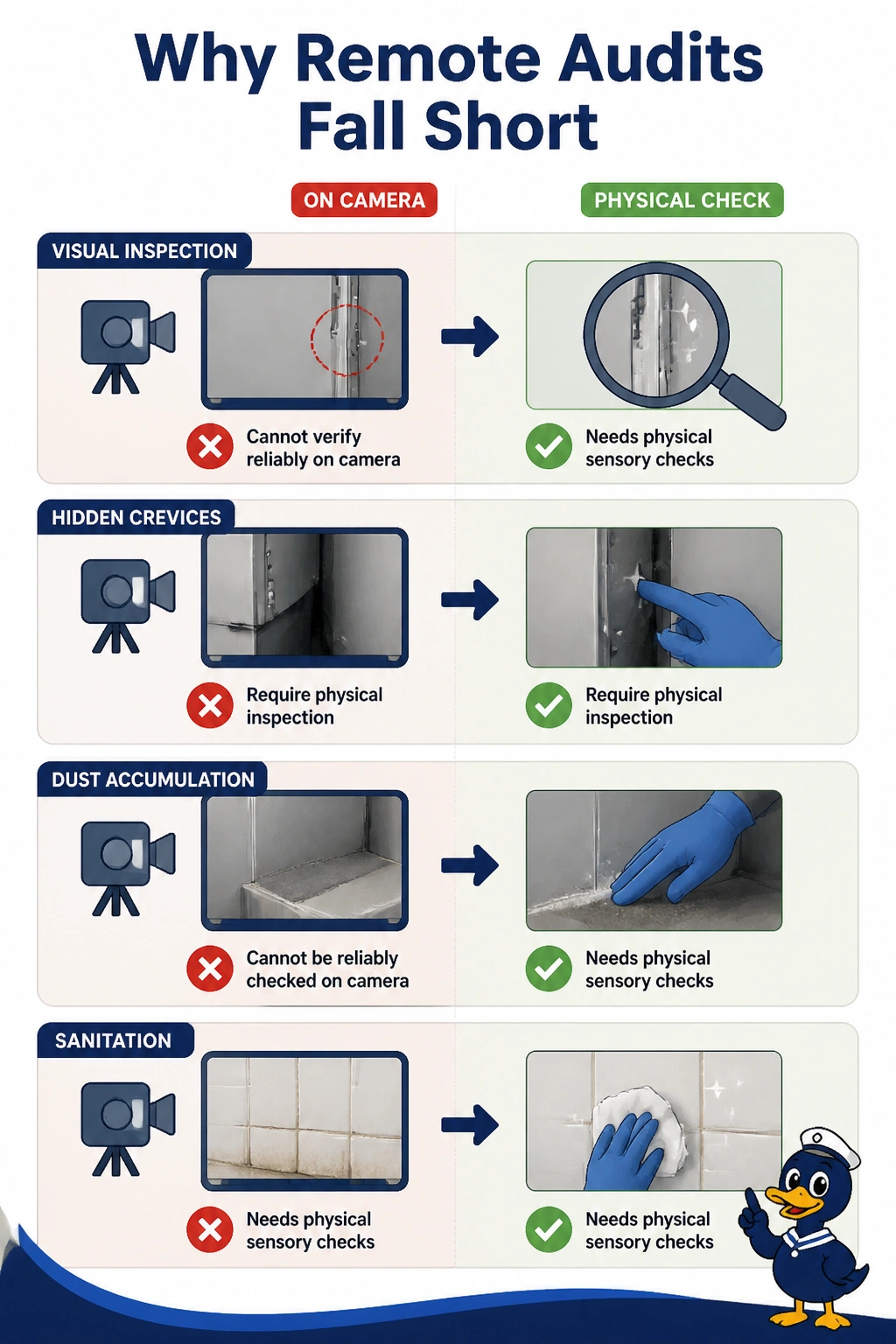
A webcam is great for checking digital files, but it cannot smell rancid residue or peek behind a spice grinder on its own. The trap is assuming remote video can replace boots-on-the-ground sensory checks when sanitation and allergen control are on the line. Reject a purely remote format whenever physical inspection of hidden areas is critical to your audit criteria.
Full Explanation
Audit method selection must match the risk and physical nature of the processes being evaluated. Selecting "Physical sensory checks such as visual inspection of hidden crevices, dust accumulation, and sanitation cannot be reliably verified on camera." recognizes that remote video restricts the auditor's field of view, lighting, and sensory perception—making it easy to miss allergen buildup, pest evidence, or poor sanitation inside equipment. By contrast, "Remote audits are prohibited by quality management frameworks and can never be used to evaluate any external supplier's documented procedures." is false; remote and hybrid audits are widely accepted when risks and technology allow. Choosing "Video conferencing prevents the auditor from reviewing electronic calibration certificates, training matrices, or signed batch records during fieldwork." overlooks that digital records are often the easiest evidence to verify remotely via screen sharing. Selecting "Conducting an audit remotely automatically converts the engagement from a second-party supplier evaluation into a third-party certification audit." confuses audit delivery method with audit party classification. Caveat: a hybrid approach can still save travel time by reviewing documents remotely before conducting a focused on-site sanitation walkthrough. Operational check: document sensory-verification requirements in the audit feasibility review before approving remote or hybrid delivery.
Prefer to study offline? Printable PDF study book + test engine ($7.50, unofficial). These questions stay free here.