
During a quality audit of a commercial food-packaging plant, the quality director asks the auditor why the report separates gaps against customer packaging specifications from gaps against federal food-safety statutes. How should the auditor explain the difference between conformance and compliance?
Select an answer to reveal the explanation.
Short Explanation
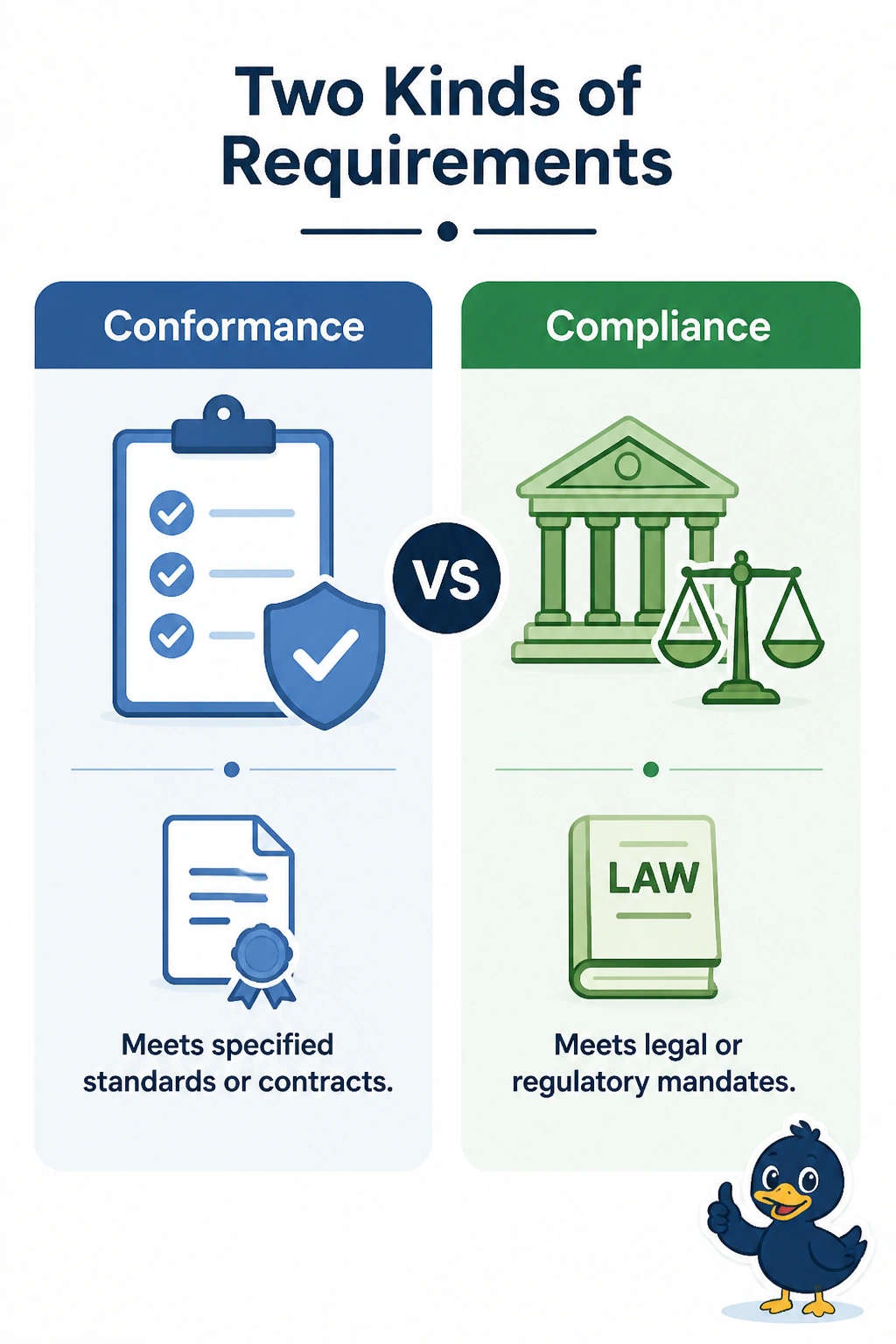
Think of conformance and compliance as close cousins, not twins—and if you mix them up, you can hide serious legal exposure. The trap is assuming both terms mean the exact same thing or tying them to the wrong kind of audit test. Keep your criteria straight: conformance tracks specs and standards, while compliance tracks the law.
Full Explanation
In this report the split follows the criterion: customer packaging specifications versus federal food-safety statutes. The two words are not exclusive opposites in the ASQ glossary. ISO management-system standards are voluntary unless a contract or a statute makes them mandatory. Separating them clarifies whether a gap breaches a voluntary quality standard or customer specification versus a binding statutory obligation that carries regulatory penalties. Claiming that Conformance applies exclusively to internal company policies, whereas compliance applies only to third-party ISO certifications reverses the legal boundary, since ISO standards are voluntary conformance benchmarks rather than laws. Stating that Conformance is verified through physical product testing, whereas compliance is evaluated solely by reviewing financial records misrepresents how both are audited, as both rely on records, interviews, and observation. Asserting that Conformance is optional for certified organizations, whereas compliance is enforced only during unannounced customer audits is false because certified systems require conformance to their chosen standard and regulatory compliance is enforced by government authorities. As a caveat, a single operational gap can violate both a customer specification and a statute at the same time. Operationally, tag each finding in the audit report to its exact contractual, standard, or statutory criterion.
Prefer to study offline? Printable PDF study book + test engine ($7.50, unofficial). These questions stay free here.