
During an internal audit of a medical-device kitting line, an auditor collects a signed training roster, a valid calibration sticker, and a batch record showing a 14 Nm torque reading where the work instruction specifies 10–12 Nm. Which item represents the audit finding?
Select an answer to reveal the explanation.
Short Explanation
Think of an audit finding as the verdict, not just a single clue! The trap is confusing raw evidence or written rules with the finding itself, which only exists when you compare the two. Match the recorded measurement against the specification to see the actual gap.
Full Explanation
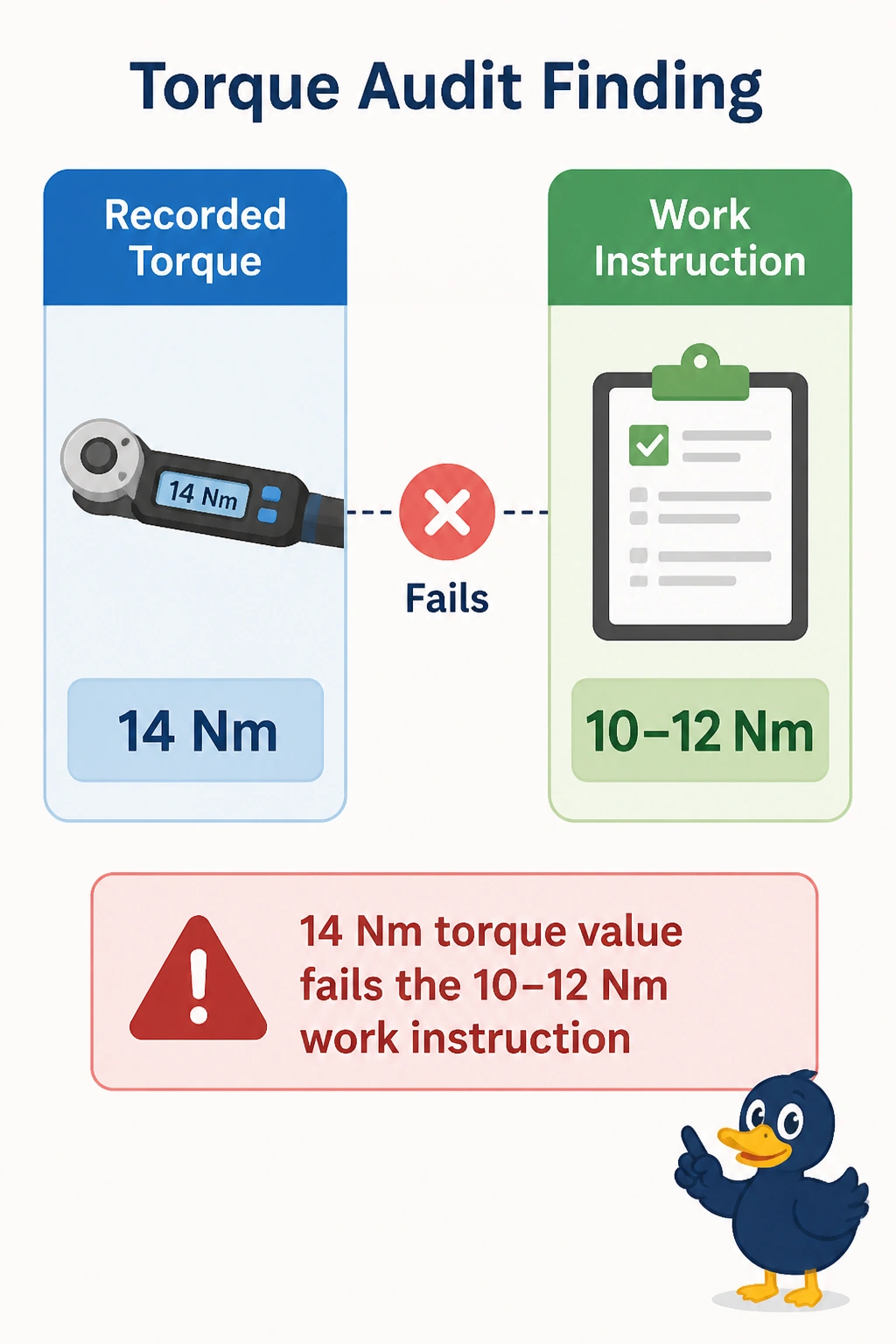
In quality auditing, an audit finding is the result of evaluating collected audit evidence against defined audit criteria. Therefore, the documented comparison showing the recorded 14 Nm torque value fails the 10–12 Nm work instruction is the audit finding because it establishes the exact gap between actual performance and the required standard. Selecting the calibration sticker and signed training roster collected at the workstation names conforming audit evidence rather than a finding. Pointing to the controlled work instruction specifying the 10–12 Nm torque tolerance identifies the audit criterion—the benchmark used for evaluation—not the result of the evaluation. Choosing the raw 14 Nm torque reading written on the production batch record isolates a single piece of audit evidence, which has no compliance meaning until it is compared against the 10–12 Nm requirement. Caveat: audit findings can indicate either conformity or nonconformity, though nonconformities require clear linkage to both the specific criterion and the supporting evidence. As an operational check, verify that the torque wrench used for the 14 Nm reading was calibrated and check adjacent batch records to determine whether this is an isolated error or a recurring pattern.
Prefer to study offline? Printable PDF study book + test engine ($7.50, unofficial). These questions stay free here.