
An audit program manager is assigning a two-person team to conduct a second-party quality audit of a specialty circuit-board supplier. One candidate auditor discloses owning a significant personal equity stake in that supplier. What should the audit program manager do?
Select an answer to reveal the explanation.
Short Explanation
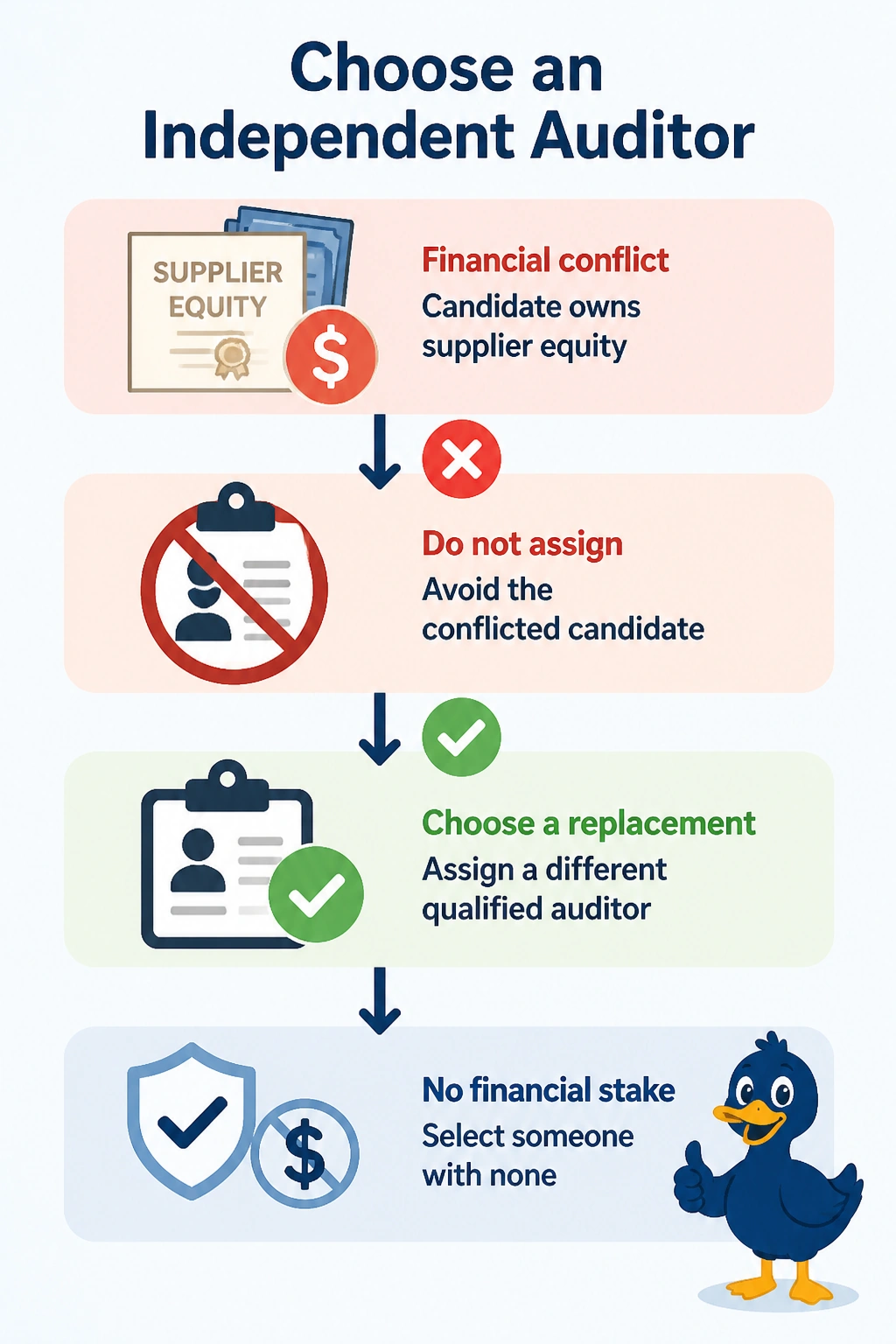
Financial ties and audit objectivity mix about as well as oil and water. Even if you intend to stay fair, owning a stake in the auditee creates a real or perceived conflict of interest that taints every finding. Reassign the audit to an independent colleague.
Full Explanation
Auditor independence requires freedom from financial or personal interests that could bias judgment or create the appearance of partiality. Choosing to Assign a different qualified auditor who has no financial stake in the supplier protects both the actual objectivity and the external credibility of the assessment. Deciding to Assign the auditor to the team anyway, provided they only review training and calibration logs still leaves a conflicted team member influencing findings and team discussions. Choosing to Allow the auditor to lead the audit after signing a standard non-disclosure agreement addresses information secrecy rather than financial bias, so the conflict remains unresolved. Selecting to Proceed with the assignment as long as the supplier's management approves in writing overlooks that the audit client and downstream customers rely on an impartial evaluation regardless of the auditee's consent. Note that minor indirect holdings through diversified mutual funds do not normally create a personal conflict, whereas direct significant equity does. Before finalizing any audit team roster, require all candidates to complete a documented conflict-of-interest check covering financial, family, and recent employment ties.
Prefer to study offline? Printable PDF study book + test engine ($7.50, unofficial). These questions stay free here.