
After an external contract auditor issues three nonconformities during a second-party supplier audit of a medical-plastic molder, the supplier's plant manager offers to hire the auditor directly next month to redesign the failed procedures. What should the auditor do to uphold professional conduct?
Select an answer to reveal the explanation.
Short Explanation
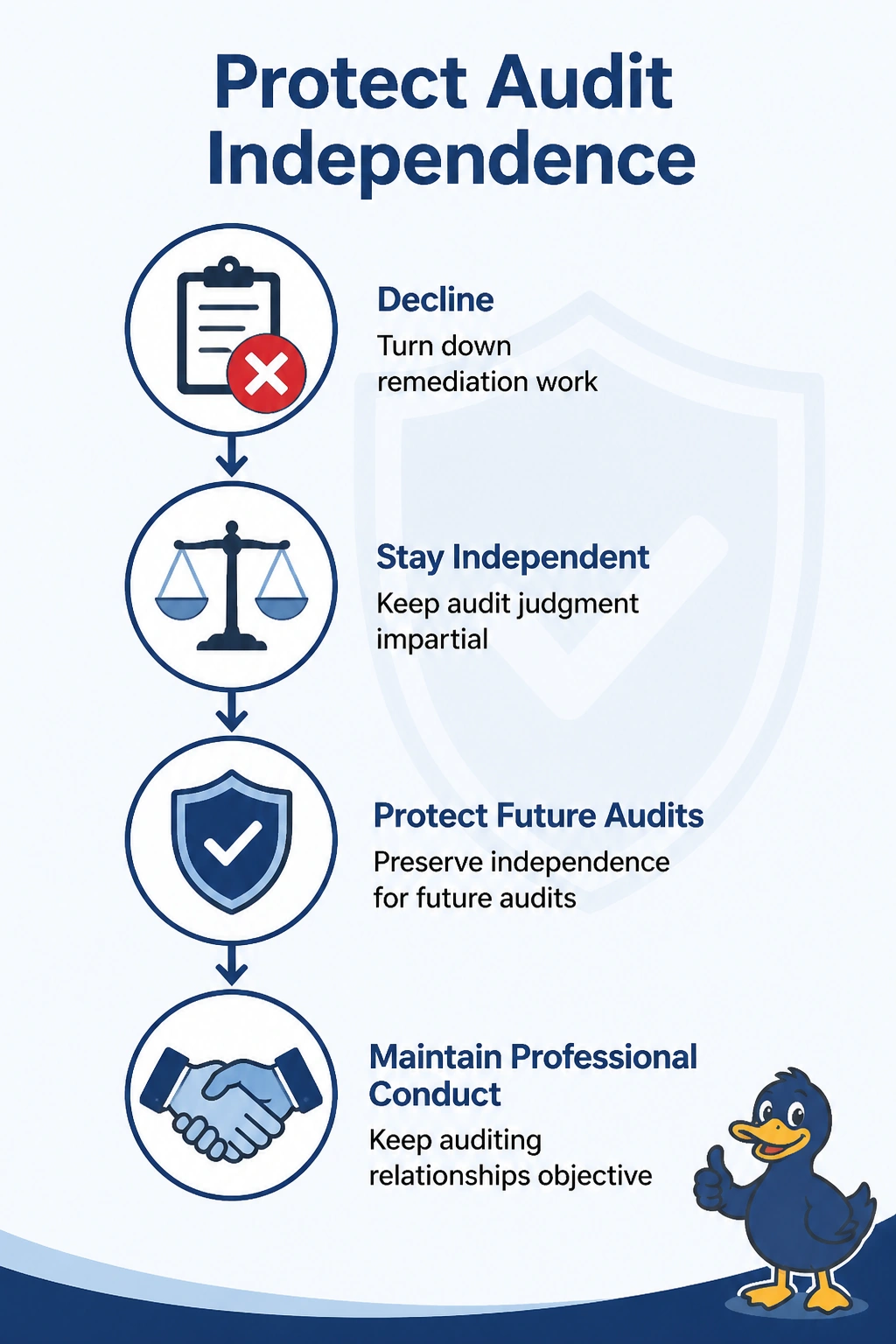
Think of an auditor like a sports referee: you cannot call the penalties on Sunday and coach the team’s playbook on Monday without risking trust. You protect independence by declining the remediation work; waiting until the report is issued or disclosing the fee does not make self-review acceptable.
Full Explanation
Declining the remediation work to preserve independence for future audits protects both objectivity and credibility under quality auditing ethics. If you design or rewrite the very procedures you later evaluate, you face a direct self-review threat: you would be judging your own work rather than providing an independent assessment. Accepting the consulting contract only after the final audit report is formally issued does not remove the risk, because the financial incentive can still color follow-up verification and compromise future impartiality. Transferring the consulting engagement to another auditor on the same audit team creates a shared-team conflict that can undermine perceived independence across the engagement. Performing the remediation work while disclosing the arrangement in the report does not cure the underlying conflict of interest; disclosure cannot turn an impaired role into an objective one. As a caveat, you may explain audit criteria and clarify what a nonconformity means without prescribing or authoring the supplier’s specific fixes. As an operational check, review your conflict-of-interest policy and confirm a documented cooling-off period before accepting advisory work with a recently audited organization.
Prefer to study offline? Printable PDF study book + test engine ($7.50, unofficial). These questions stay free here.