
During a quality system audit of a specialty chemical blender, an auditor must determine whether tank-agitation times consistently meet batch specifications. Which source of audit evidence provides the highest reliability for this verification?
Select an answer to reveal the explanation.
Short Explanation
Not all audit evidence carries the same weight: when you watch the process run and check its original system log, you get far stronger proof than a promise or a re-typed summary. The trap is mistaking a written procedure or a confident verbal claim for proof that the batch actually met specification.
Full Explanation
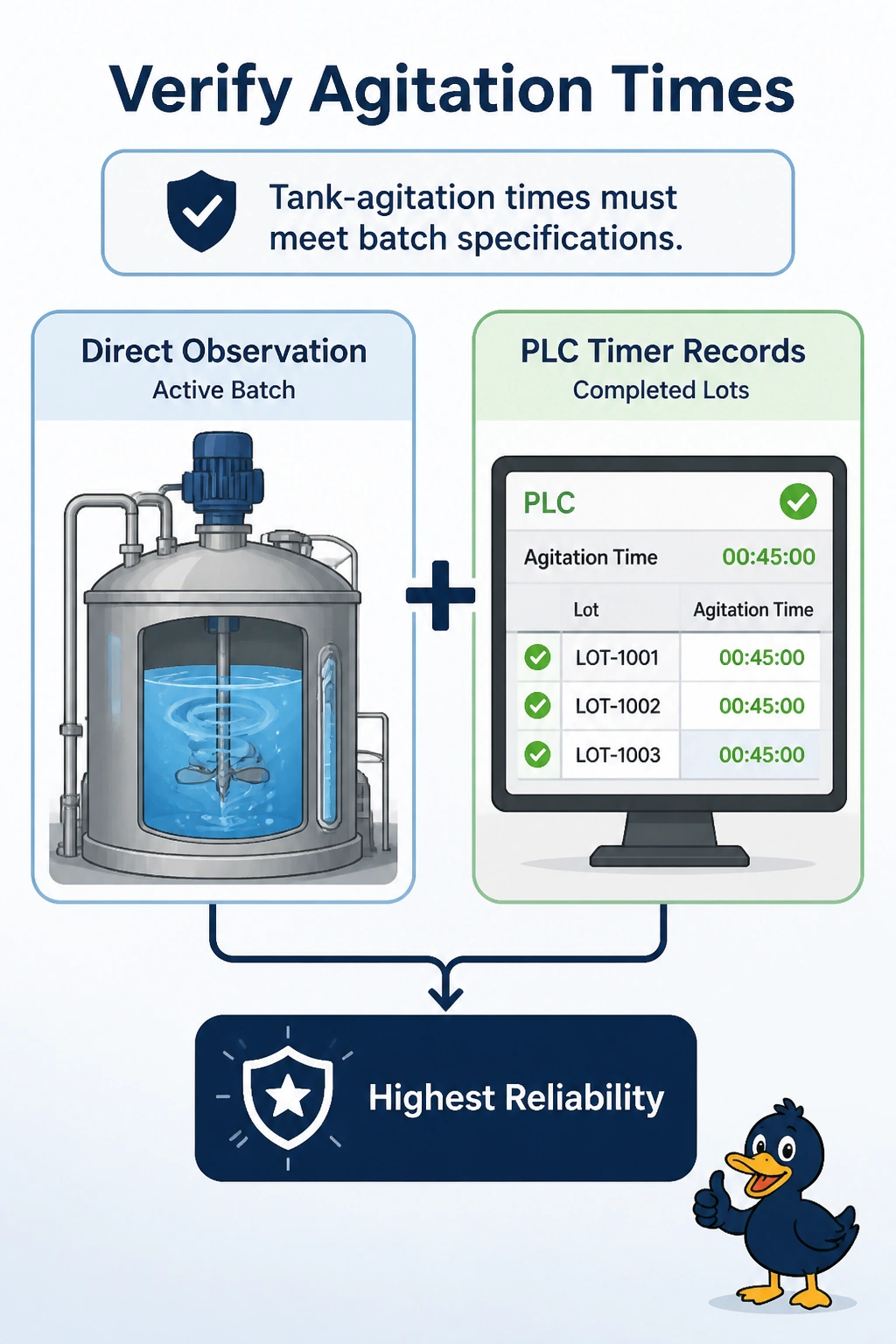
Audit evidence varies in appropriateness and reliability, and the strongest verification comes from Direct observation of an active batch combined with original automated PLC timer records from completed production lots. Watching a live run confirms current execution, while original machine-generated records provide objective, tamper-resistant evidence across prior batches. Relying on A verbal assurance from the shift lead that operators always run agitators for the full duration is the weakest form of evidence because uncorroborated testimony is subject to memory error and bias. Using A monthly summary spreadsheet manually re-typed by an administrative assistant from shift notes introduces transcription errors and lacks the authenticity of primary records. Checking The written standard operating procedure stating the required agitation time for each product code establishes the audit criterion—what should happen—rather than evidence of what actually occurred. Caveat: even automated PLC records should be checked for clock accuracy and protected access controls. As an operational check, match the PLC batch timestamps against the physical batch-ticket lot numbers for three completed runs.
Prefer to study offline? Printable PDF study book + test engine ($7.50, unofficial). These questions stay free here.