
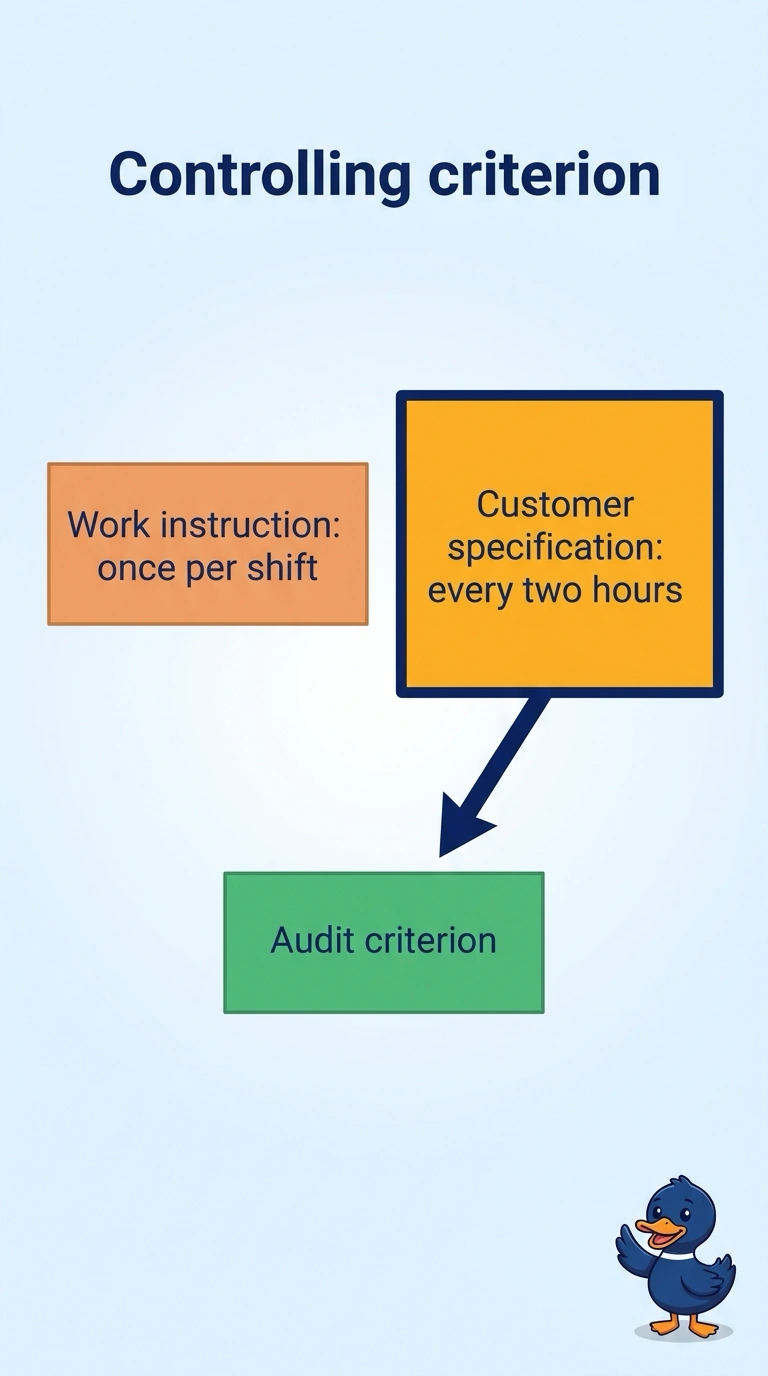
During an audit of a medical-packaging supplier, the supplier's internal work instruction allows seal-strength testing once per shift, whereas the customer's active purchase-order specification requires testing every two hours. Which benchmark must the auditor use as the controlling audit criterion?
Select an answer to reveal the explanation.
Short Explanation
An internal SOP that is looser than a signed customer contract is a trap waiting to happen. When criteria collide, you evaluate against the stricter binding commitment rather than letting a weaker internal habit win.
Full Explanation
When an internal procedure conflicts with an active customer requirement, the auditor must evaluate against The stricter customer specification, because contractual requirements govern delivery. Audit criteria encompass applicable policies, standards, regulations, and customer contracts, and an internal document cannot excuse non-fulfillment of a binding customer obligation. Relying on The internal work instruction, because internal procedures always override external requests reverses the hierarchy of obligations and would mask a clear contractual nonconformity. Proposing An informal compromise halfway between the two frequencies agreed upon during the interview is improper because auditors assess conformance against established criteria rather than negotiating new technical standards on the shop floor. Deferring to Whichever frequency the line operator prefers to follow during normal production runs abandons objective criteria altogether in favor of unverified shop-floor habits. As a caveat, the auditor should also note the internal document mismatch so the auditee updates its work instruction to align with customer terms. During audit preparation, cross-check active customer quality agreements and regulatory rules against internal SOPs before finalizing your checklist.
Prefer to study offline? Printable PDF study book + test engine ($7.50, unofficial). These questions stay free here.