
During an internal quality audit at a medical-device contract manufacturer, an auditor discovers that a supervisor backdated three sterile-barrier inspection records to cover a missed test window before a regulatory inspection. What is the most critical implication of this discovery?
Select an answer to reveal the explanation.
Short Explanation
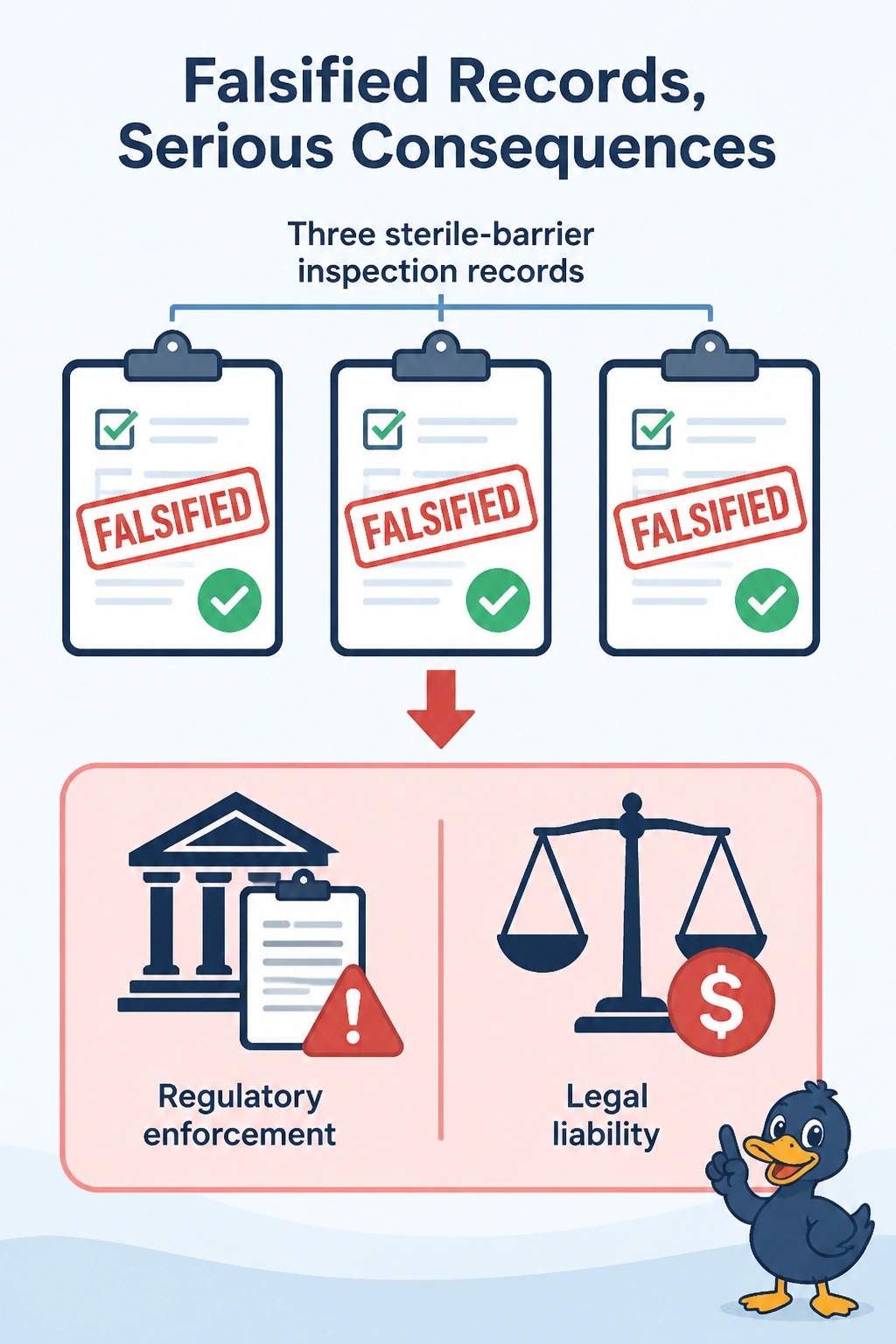
Backdating an inspection record is never just a clerical hiccup—it crosses straight into data-integrity territory. When records are altered to look compliant, you are looking at serious legal and regulatory exposure. The trap is downplaying intentional falsification as a routine paperwork error.
Full Explanation
Intentional backdating of sterile-barrier inspection logs undermines record trustworthiness and creates potential regulatory enforcement and legal liability for falsified records, including product recalls, warning letters, or criminal and civil exposure in regulated industries. Treating it as a minor documentation lapse requiring simple record re-indexing ignores both the deliberate alteration of evidence and the unverified sterility risk to patients. Labeling the issue an opportunity for improvement in electronic form layout trivializes an ethical and compliance breakdown as a mere usability tweak. Describing it as a late-entry paperwork issue because the records were completed after the shift mischaracterizes intentional backdating as a permissible late entry and misses the immediate need for containment, escalation, and product-impact assessment. An important exam caveat is that an auditor must remain objective and document exact facts—dates, timestamps, and system logs—without making personal accusations or giving legal advice. As a concrete operational check, preserve copies of the original electronic audit trail and physical logbooks immediately, and notify senior quality leadership and legal counsel through established escalation channels.
Prefer to study offline? Printable PDF study book + test engine ($7.50, unofficial). These questions stay free here.