
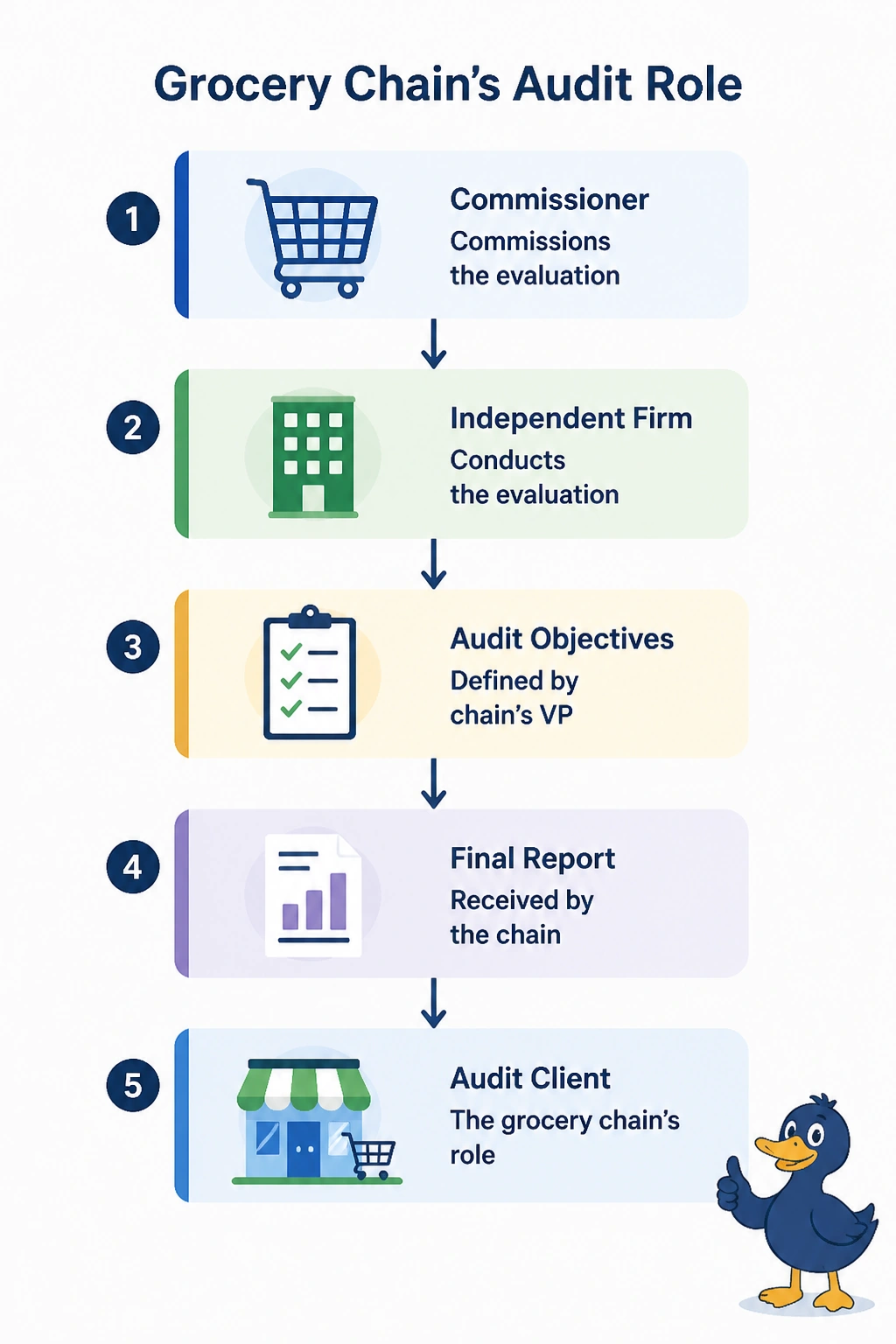
A retail grocery chain hires an independent consulting firm to evaluate the food-safety system of one of its frozen-dessert suppliers, and the chain's VP of Quality defines the audit objectives and receives the final report. In audit terminology, what role does the grocery chain hold?
Select an answer to reveal the explanation.
Short Explanation
Whoever pays the piper and sets the audit goals holds the client seat, even if another firm does the walking and talking on-site. Here, your grocery chain is requesting the audit and receiving the report. The trap is mixing up the client who commissions the audit with the supplier being examined.
Full Explanation
In standard auditing terminology, the organization that requests the audit, establishes its objectives, and receives the final report is the audit client commissioning the evaluation—even when it hires an external firm to perform the fieldwork. By contrast, the frozen-dessert supplier whose food-safety system is being examined is the auditee undergoing the compliance review. A specialist brought onto the team to provide specific product or process knowledge would serve as the technical expert advising on frozen desserts, rather than the commissioning organization. Meanwhile, the consultant appointed to manage the audit team, run meetings, and deliver conclusions acts as the lead auditor directing on-site fieldwork. One helpful exam caveat is that in a first-party internal audit, the same organization can be both the audit client and the auditee, whereas in this second-party outsourced arrangement the roles sit with two different companies. As a concrete operational check, confirm during audit initiation that the audit plan clearly names the grocery chain as the audit client, the supplier as the auditee, and the consulting firm as the audit team.
Prefer to study offline? Printable PDF study book + test engine ($7.50, unofficial). These questions stay free here.