
A 58-year-old outpatient chest radiograph in a small imaging center shows a large tension pneumothorax with mediastinal shift. The patient is mildly short of breath, vital signs are stable, and the radiologist is off-site reading remotely. The ordering nurse practitioner is available by phone. Which communication ensures the critical finding reaches the health care team for this emergency?
Select an answer to reveal the explanation.
Short Explanation
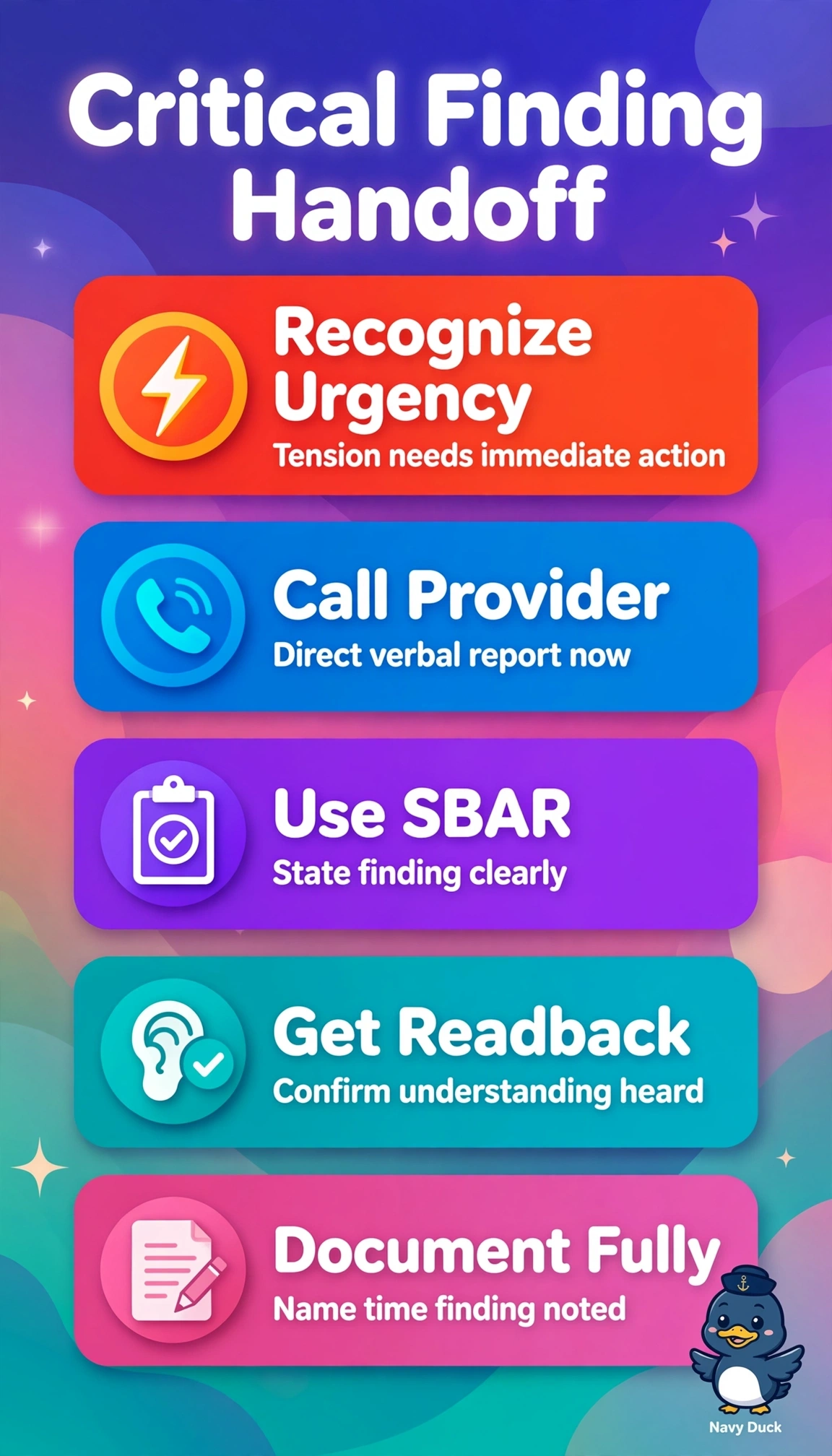
You felt the urgency — tension means speak now, not later. Closed-loop verbal handoff plus documentation is what keeps critical patients safe.
Full Explanation
A large tension pneumothorax with mediastinal shift is a critical finding requiring immediate closed-loop communication because tension physiology can deteriorate rapidly, so standards require direct verbal notification to the ordering provider now even with stable vitals and remote reading, plus documentation of receiver name, time, and finding for accountability. Sending a STAT electronic alert to the ordering provider with documentation suits many urgent results but fails by mode because messaging lacks real-time acknowledgment and may remain unread, which does not satisfy verbal exchange and confirmation required for a life-threatening emergency. Seeking remote radiologist confirmation before notifying the ordering provider reflects routine quality practice but fails by timeliness because it delays triage for a finding that already meets critical thresholds on acquisition. Giving a direct verbal report now with full documentation to the bedside nurse alone uses correct urgency, mode, and charting but fails by responsibility because the ordering nurse practitioner directs disposition and intervention, so that decision-maker must be reached. An exam caveat is that mild dyspnea and stable vitals do not downgrade tension with shift, and stems often test false reassurance by stability. A practical check is to phone the ordering provider immediately, declare a critical result, convey identifiers and finding, obtain read-back, record name and time, stay with the patient until disposition, and chart all elements.