
A student in the mold room is told to help skim dross from the pot while Cerrobend is molten. The alloy contains lead and cadmium, the splash hazard reaches the eyes and forearms, and printed safety data sheets are kept at the workbench. Which SDS section should the student use to select the eye and skin protection for this task?
Select an answer to reveal the explanation.
Short Explanation
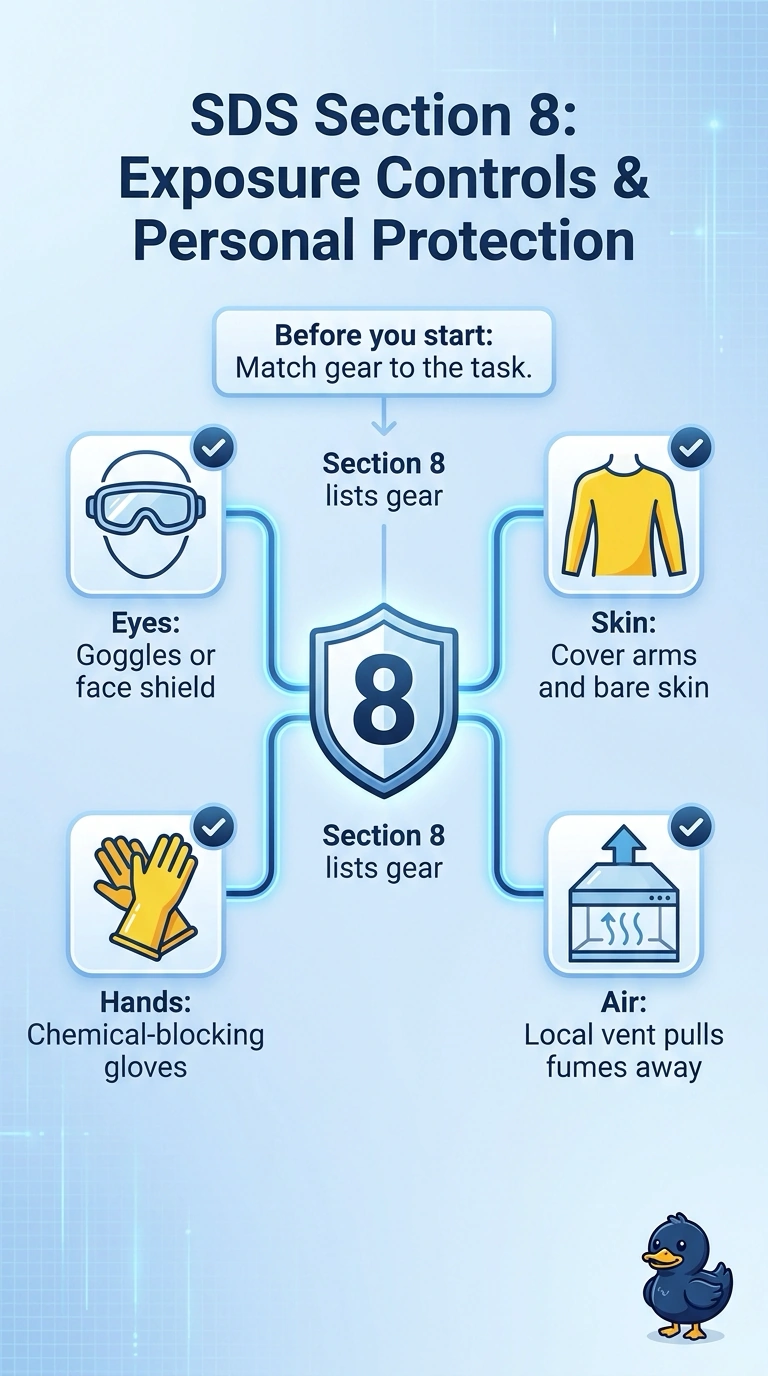
You can use Section 8 to find the eye and skin protection to wear while skimming molten Cerrobend. Section 7 covers handling and storage, Section 6 covers spills, and Section 4 covers first aid after contact, so they do not select preventive PPE for this task.
Full Explanation
Section 8, exposure controls and personal protection, is the right place to find measures intended to prevent exposure during the task, including goggles, gloves, protective clothing, and ventilation. That guidance addresses the splash hazard to your eyes and forearms while Cerrobend is molten. Section 7 covers handling and storage and can help you review precautions for working with molten alloy, but it does not provide the eye and skin PPE selection requested here. Section 6 addresses accidental releases, including containment and cleanup of lead- and cadmium-bearing spills; spill response is different from routine skimming at the pot. Section 4 provides first-aid measures, such as eye and skin flushing after contact, so it guides response rather than preventive PPE selection. Exam caveat: SDS headings are standardized, but the detail and exact recommendations can vary by product, so do not assume every SDS lists the same specific equipment. Practical check: before skimming, read Section 8 for the product and task, confirm the recommended eye and forearm protection is available and suitable for molten-metal work, and follow the workplace risk assessment and supervisor’s instructions.