
A patient on pelvic radiation reports more gas and cramping since the last visit. You review their food diary together, suggest smaller meals and fewer gas-forming foods, and answer questions about eating around treatment times. The note must show both what you assessed and what you taught for the next therapist. Which entry best documents this dietary counseling?
Select an answer to reveal the explanation.
Short Explanation
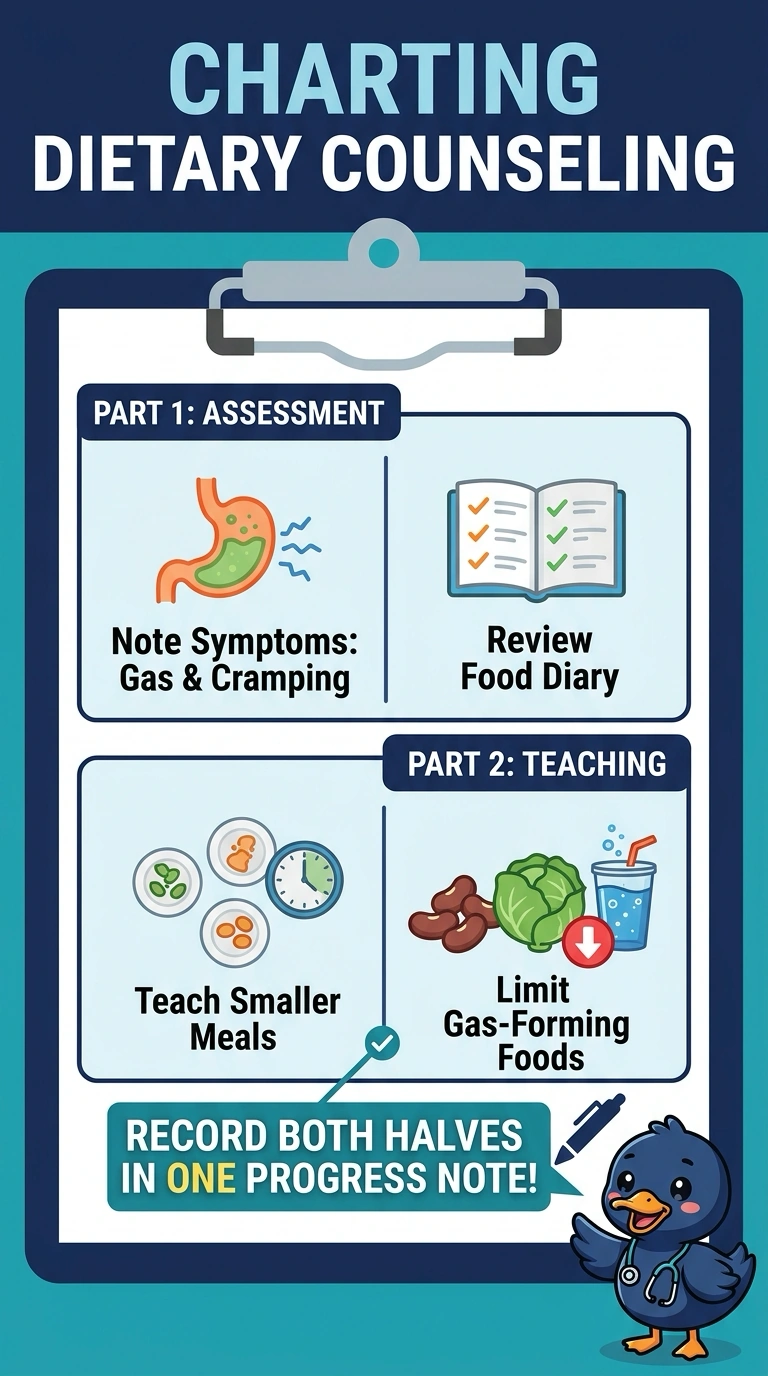
Both halves of the visit have to land in the note, because the next therapist inherits your plan. Recording the advice without the food diary leaves the starting point a mystery, so you'll want the full picture. Your entry is the handoff that keeps counseling going.
Full Explanation
A complete counseling entry carries two parts: what you assessed and what you taught, because the record must let the next therapist reproduce the plan exactly. Naming the reported gas and cramping, the food diary review, and the specific advice to eat smaller, more frequent meals while limiting gas-forming foods closes that loop between finding and fix. Charting the symptoms and the advice while dropping the food diary leaves out the assessment baseline, so a reader cannot see which eating pattern justified the recommendation in the first place. Setting nutrition goals instead of recording the instruction captures a review but never shows what was actually said at the visit, so the counseling cannot continue the way you intended. Advice logged only in general terms tells a colleague that something was discussed but gives them nothing concrete to repeat, so your message can drift from visit to visit. Expect exam choices that sound complete yet quietly omit either the assessment detail or the concrete teaching, leaving one requirement unsatisfied, even when the wording itself sounds professional. As a practical check, reread the note and ask whether a colleague could carry on tomorrow without phoning you.