
A nuclear medicine technologist draws Tc-99m unit doses behind an L-block each morning and stays with therapy patients all afternoon. The radiation safety officer is checking monitor placement before the next exchange, and both hand dose and the highest plausible whole-body dose must be on record. Which personnel monitoring arrangement should the technologist wear during the shift?
Select an answer to reveal the explanation.
Short Explanation
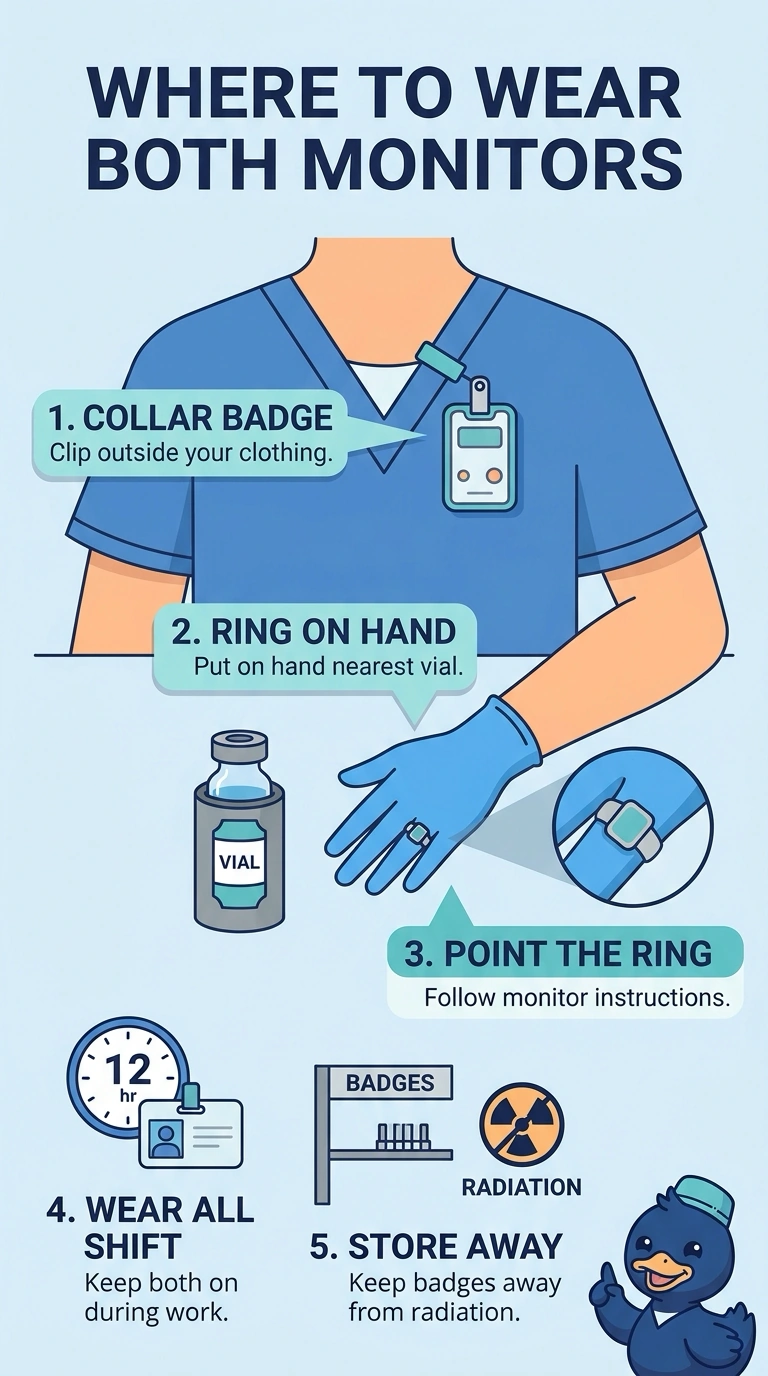
Your fingers can get more exposure than your torso when you’re handling vials, like a hand reaching closer to the source. Wear a ring monitor on the hand nearest the vial and a collar-level whole-body monitor outside your clothing to record both extremity dose and your highest plausible whole-body dose.
Full Explanation
Wear a ring monitor on the hand nearest the vial because that hand is likely to receive the highest extremity dose during unit-dose preparation. Wear the whole-body monitor at collar level outside clothing throughout the shift; this position records the highest plausible unshielded dose to the upper body. The two monitors measure different exposure locations, so neither can substitute for the other. Using a collar badge to estimate hand dose fails because it does not measure dose to the fingertips. The waist-under-apron approach fails because it records a shielded location rather than the highest plausible whole-body dose requested. Leaving the monitors in the hot lab after the shift also fails: exposure from nearby radioactive material could affect their readings, so store both in the designated low-background location. Exam caveat: follow the ring monitor manufacturer’s instructions for detector orientation; placement matters when monitoring extremity dose. Practical check: before the shift, confirm the ring is on the hand nearest the vial and the whole-body badge is at collar level outside clothing, then return both monitors to the designated low-background storage area afterward.