
A 311 team must control production CLAUDE.md edits that change system prompts. What change-control practice fits?
Select an answer to reveal the explanation.
Short Explanation
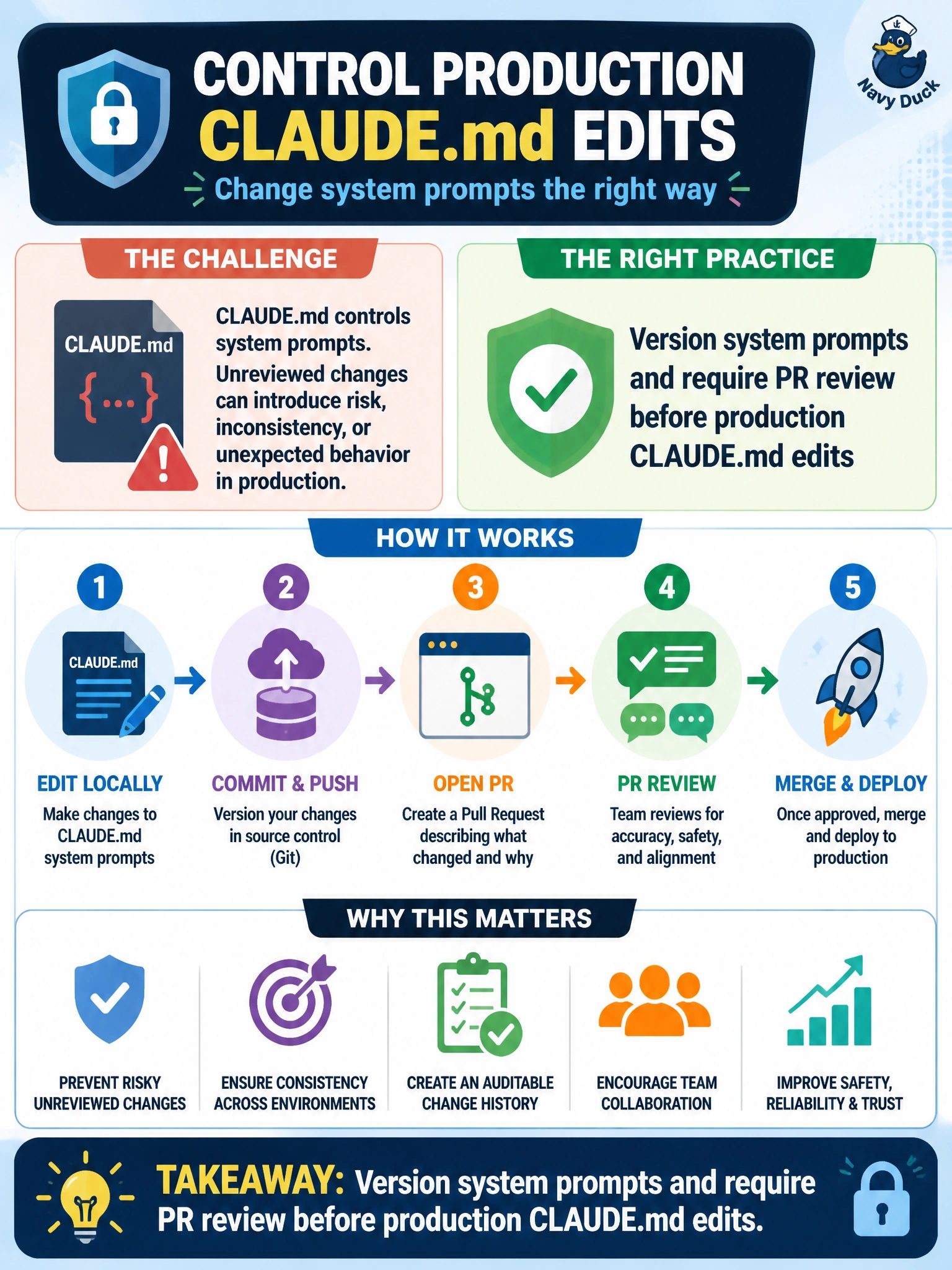
CLAUDE.md is not a sticky note on the fridge. Version the prompts and make production edits go through PR review like any other city code.
Full Explanation
Production CLAUDE.md files are system prompts for 311 assistants and deserve the same change control as application code. Versioning system prompts and requiring PR review before production CLAUDE.md edits works because reviews catch unsafe instructions, tone regressions, and policy conflicts before residents feel them, while history enables blame and rollback. 311 teams can experiment in branches without live-editing production guidance. Recording CLAUDE.md prompt edits in release notes after deployment to production fails because it only documents changes after they are live; residents can already be affected by unsafe prompts before anyone reads the notes, and there is no gate to stop a bad prompt from reaching production. Drafting system prompt revisions in shared docs for comment before manual copy fails because optional commenting and manual copying are not enforced controls; reviewers cannot block a merge, and manual steps create untracked drift between the doc and the production file. Requiring passing application unit tests before deploying CLAUDE.md prompt updates is insufficient because unit tests verify application behavior, not prompt safety, tone, or policy alignment; a green test suite cannot catch a harmful system prompt and does not replace human review. Exam caveat: PR review is necessary but not sufficient—pairs should include policy or operations reviewers for resident-facing prompt changes, not only engineering syntax checks. Operational check: store CLAUDE.md in git, protect the production branch, require pull-request approval for prompt edits, and link prompt releases to 311 regression tests for common request types.