
An architect is designing an autonomous research agent using the ReAct (Reason + Act) prompting pattern. The agent must search academic databases, extract key findings, and compile a synthesized report. What is the essential structural element that distinguishes a correctly implemented ReAct agent from a standard tool-use agent?
Select an answer to reveal the explanation.
Short Explanation and Infographic
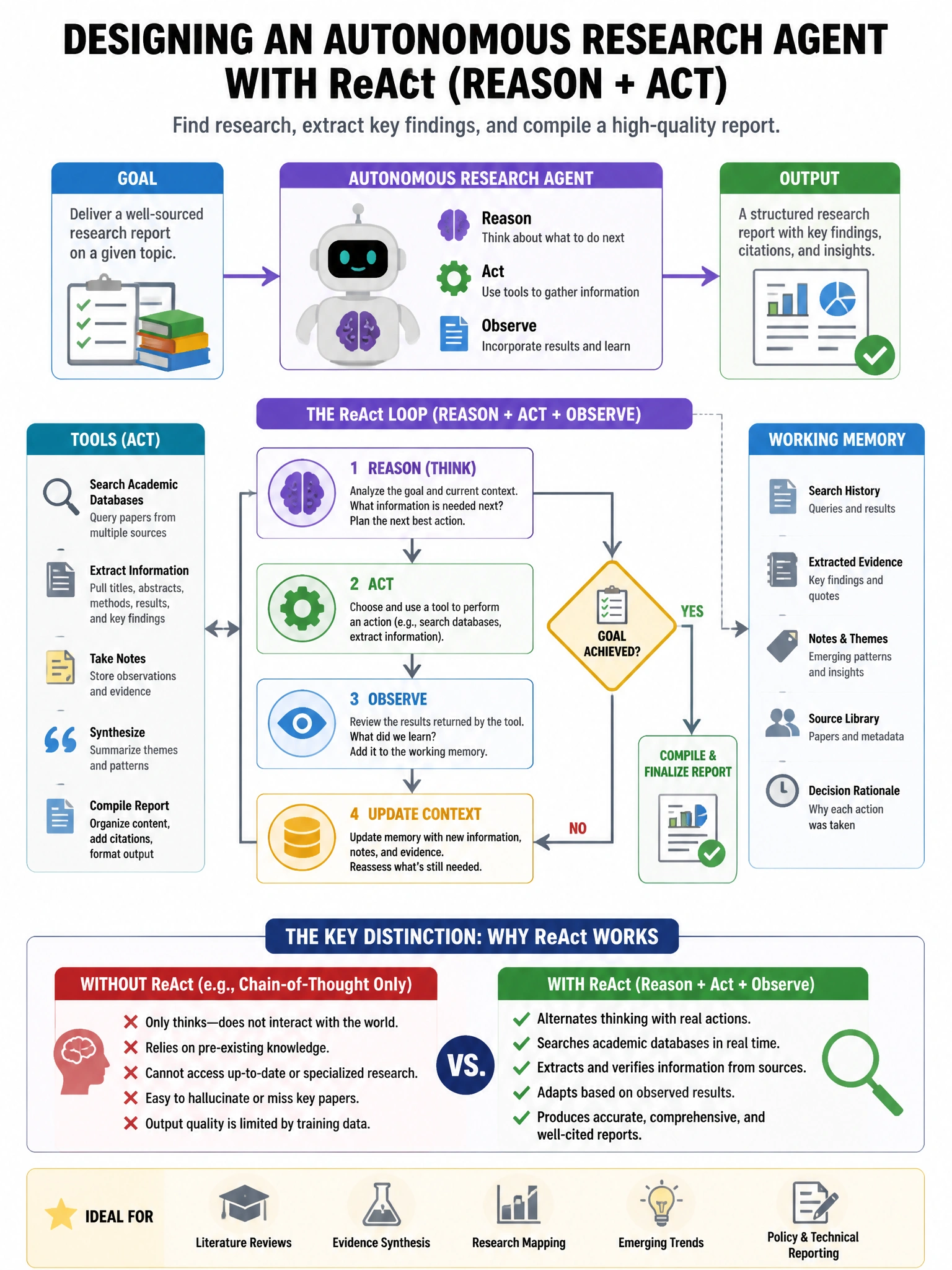
Here's the deal — a is correct because the ReAct pattern structures agent behavior as an explicit Thought → Action → Observation loop. Each cycle has Claude express its current reasoning (Thought), select and call a tool (Action), and then receive and interpret the result (Observation) before beginning the next Thought.
Full explanation below image
Full Explanation
A is correct because the ReAct pattern structures agent behavior as an explicit Thought → Action → Observation loop. Each cycle has Claude express its current reasoning (Thought), select and call a tool (Action), and then receive and interpret the result (Observation) before beginning the next Thought. This explicit labeled structure helps the model stay on task, provides a human-readable audit trail, and prevents premature termination. B is wrong because ReAct does not require completing all reasoning before any tool calls — the cycle is iterative, and each observation informs the next reasoning step. C is wrong because ReAct is a prompting and interaction design pattern implemented at prompt time and in the message structure, not a post-processing layer. D is wrong because tool_choice: required forces tool selection but does not implement the Thought/Observation labeling structure that defines ReAct — it would create an agent that always calls tools but without structured reasoning cycles.