
An organization is deploying Claude for internal HR use cases including sensitive conversations about performance improvement plans and disciplinary actions. What privacy architecture is most appropriate?
Select an answer to reveal the explanation.
Short Explanation and Infographic
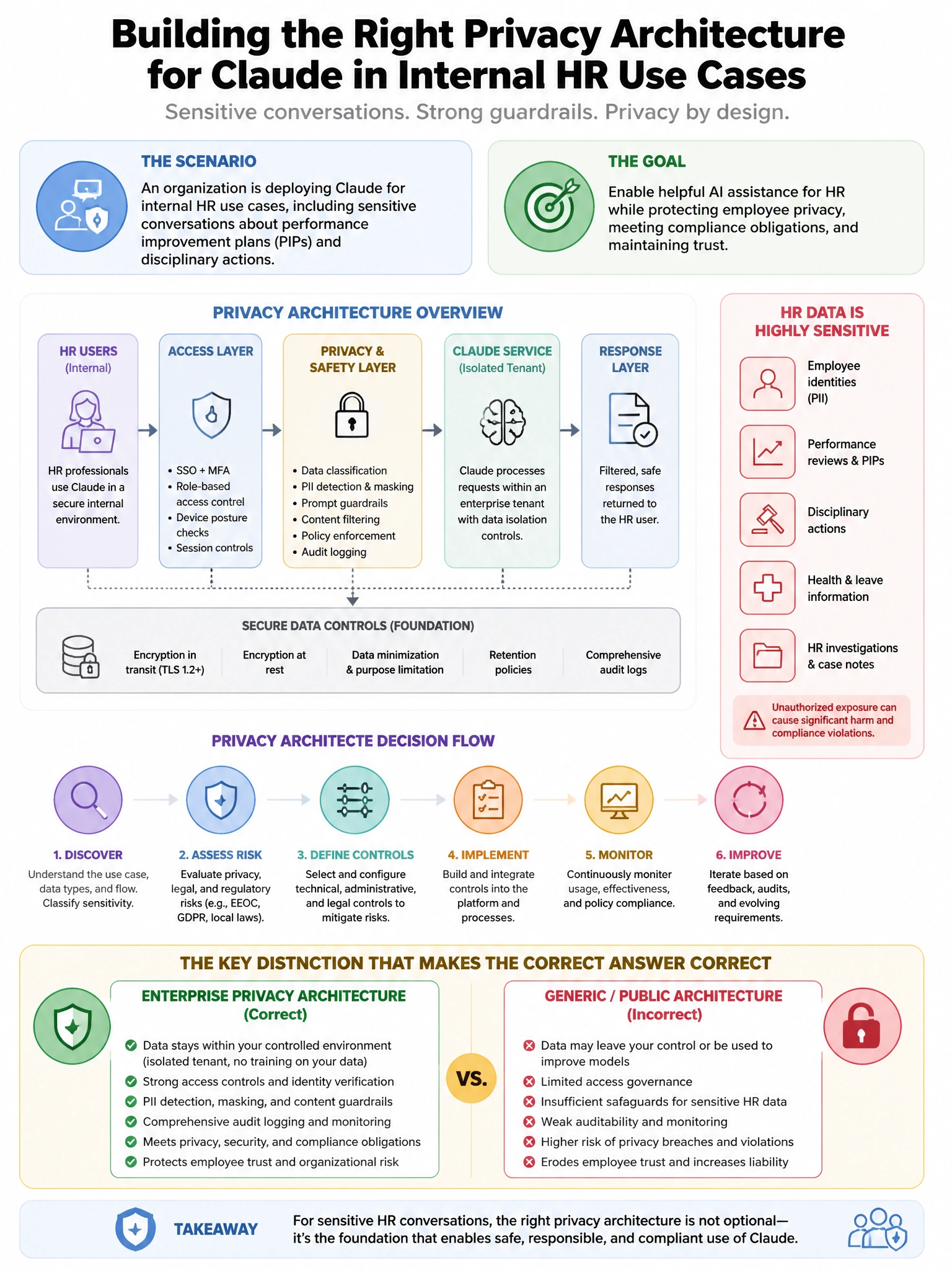
Here's the deal — handling sensitive HR conversations requires a privacy-first architecture: (1) minimize data retention through appropriate API settings and internal data governance, (2) implement RBAC to ensure only authorized HR personnel can access conversation logs, (3) anonymize or pseudonymize PII before API transmission where feasible, and (4) maintain transparent notice to employees (legally required in many jurisdictions including under GDPR). Option A (central searchable database) creates a high-risk data store that could expose sensitive employee information and may violate data minimization principles under GDPR and similar regulations.
Full explanation below image
Full Explanation
Handling sensitive HR conversations requires a privacy-first architecture: (1) minimize data retention through appropriate API settings and internal data governance, (2) implement RBAC to ensure only authorized HR personnel can access conversation logs, (3) anonymize or pseudonymize PII before API transmission where feasible, and (4) maintain transparent notice to employees (legally required in many jurisdictions including under GDPR). Option A (central searchable database) creates a high-risk data store that could expose sensitive employee information and may violate data minimization principles under GDPR and similar regulations. Option C oversimplifies — Anthropic's API data policies apply regardless of third-party claims, and the organization still handles conversation data within its own systems. Option D (cross-session reference) without employee knowledge or consent violates privacy expectations and consent norms fundamental to HR confidentiality.