
An architect is designing a document analysis system that must process 150-page legal contracts (approximately 180,000 tokens) in a single pass, extracting key clauses and cross-referencing obligations across sections. Which Claude model configuration is most appropriate?
Select an answer to reveal the explanation.
Short Explanation and Infographic
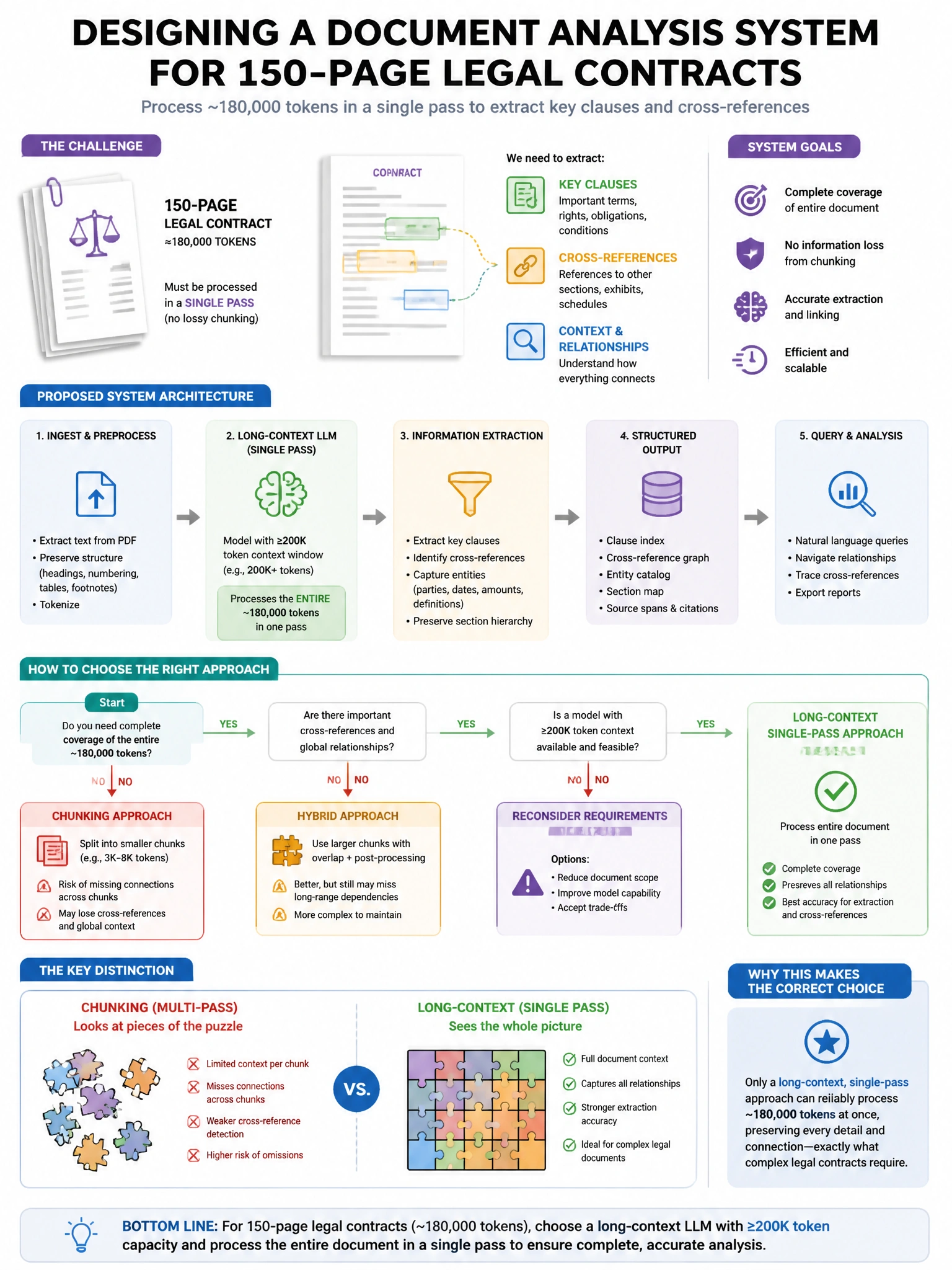
Here's the deal — claude models with the 200K context window can process approximately 150,000-200,000 tokens in a single pass, making them ideal for long legal contracts where cross-referencing clauses requires global document awareness. Processing the entire contract in one call preserves context about how obligations interact across sections — critical for legal analysis.
Full explanation below image
Full Explanation
Claude models with the 200K context window can process approximately 150,000-200,000 tokens in a single pass, making them ideal for long legal contracts where cross-referencing clauses requires global document awareness. Processing the entire contract in one call preserves context about how obligations interact across sections — critical for legal analysis. Option B (map-reduce with 4,096-token chunks) loses cross-document context and risks missing obligations that span pages. Option C (sliding window) introduces complexity and still risks boundary artifacts at overlap points. Option D (parallel segments) breaks cross-clause relationships that legal analysis depends on.