
Claude tends to use markdown formatting (headers, bullet points, bold) by default in many responses. When is this PROBLEMATIC?
Select an answer to reveal the explanation.
Short Explanation
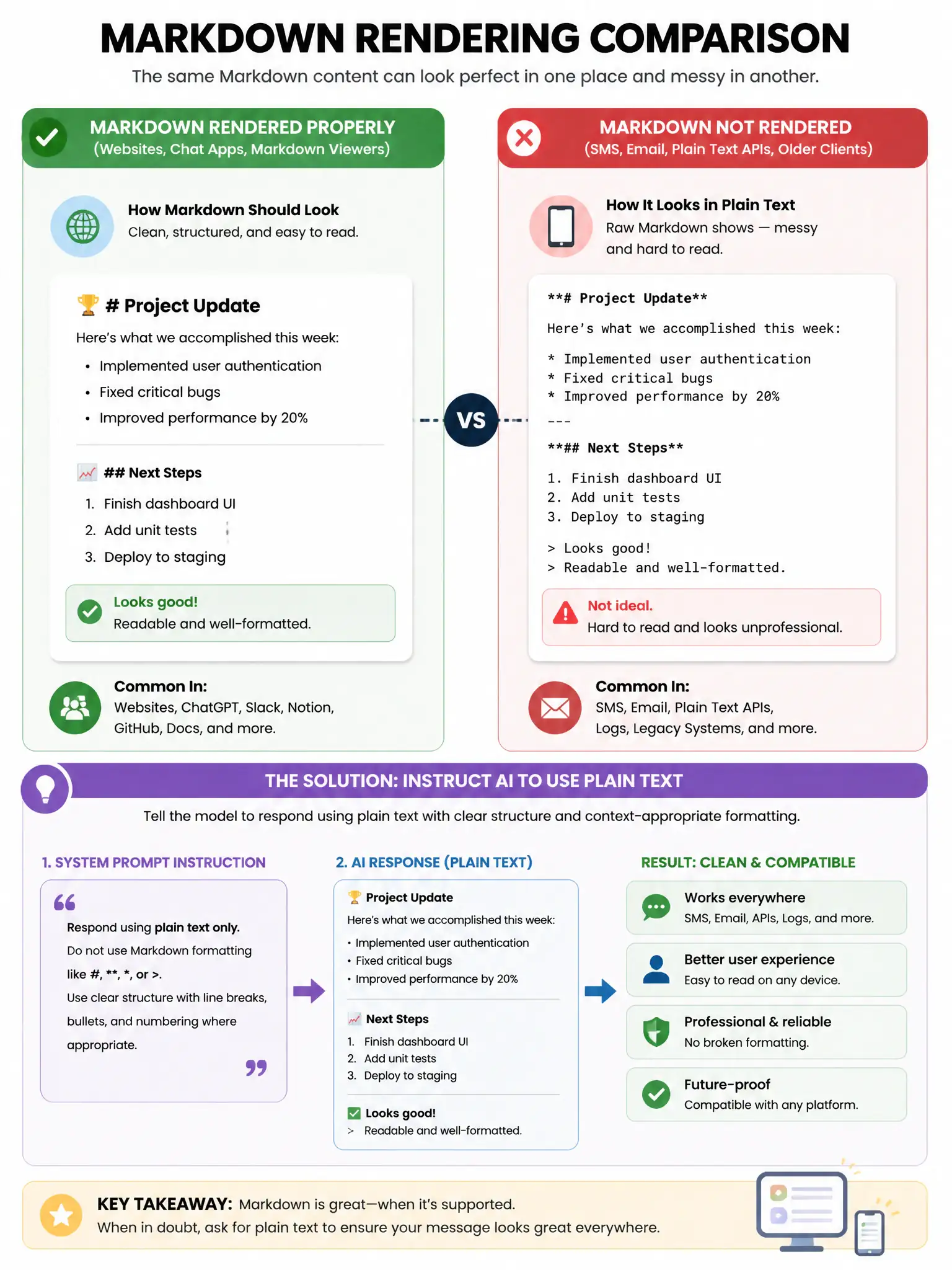
Markdown is great in interfaces that render it — terrible in interfaces that don't. If users see 'bold' instead of bold text, your system prompt needs to say 'respond in plain text without markdown.'
Full Explanation
Claude uses markdown by default in many contexts because it's commonly displayed in rendered interfaces. However, when building applications that display Claude's output as plain text (mobile apps, email, SMS, terminal outputs, APIs returning to non-rendering systems), unrendered markdown creates visual noise: asterisks around bold text, hash symbols before headings, underscores in emphasis. The fix is simple: instruct Claude in the system prompt to avoid markdown formatting: 'Respond in plain text without any markdown formatting.' The claim that markdown is never appropriate and you should always request plain text is too absolute — markdown is appropriate in many contexts. The concern that markdown formatting increases token usage so significantly it should be avoided for cost reasons is wrong — the token overhead from markdown symbols is negligible. The claim that markdown is only available in Claude Opus and not other models invents a false model restriction.