
In a Retrieval-Augmented Generation (RAG) system using Claude, what is the correct sequence of operations?
Select an answer to reveal the explanation.
Short Explanation
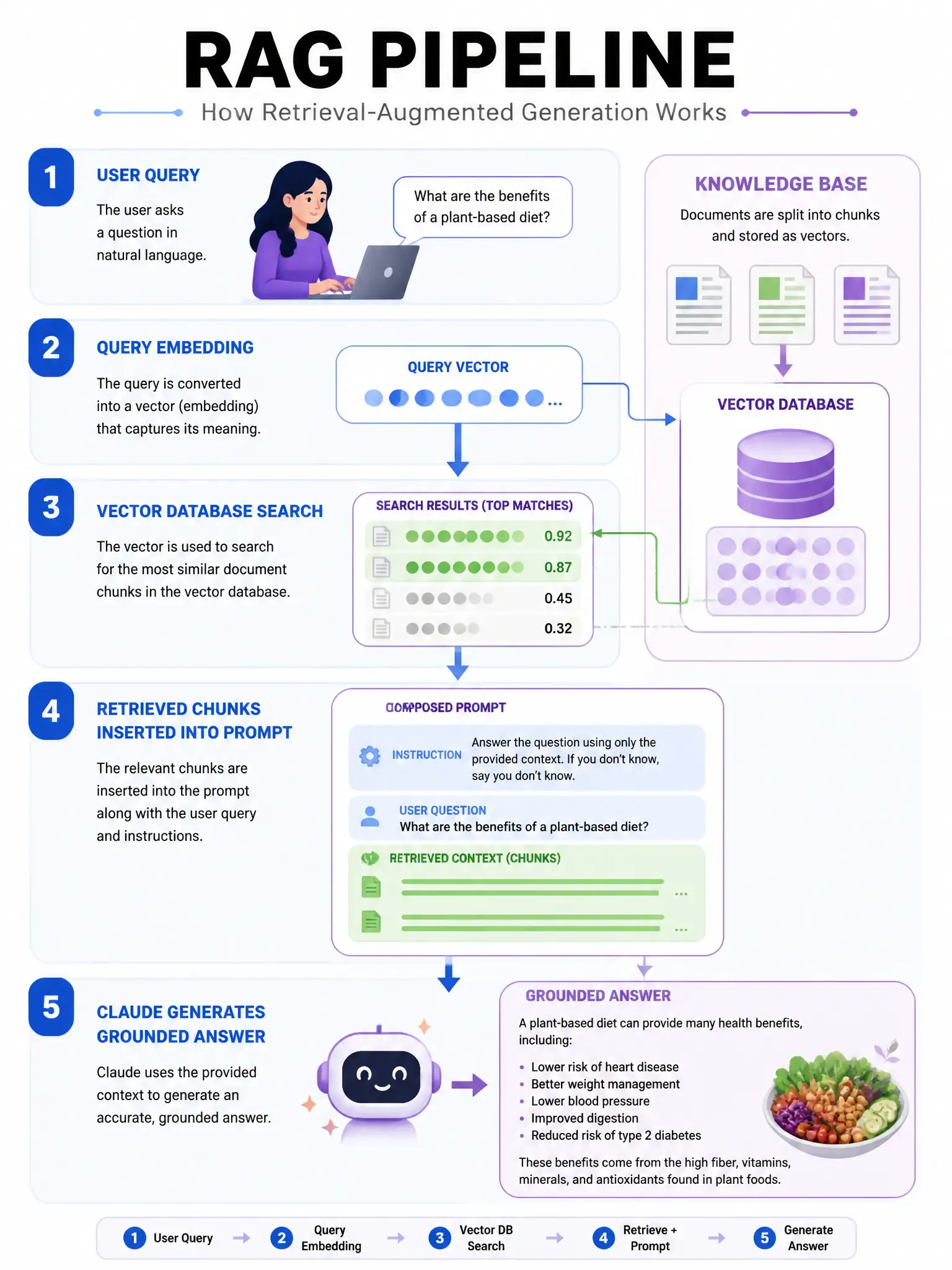
RAG works like a smart librarian: your question gets matched to relevant documents, those documents get handed to Claude, and Claude answers using those specifics.
Full Explanation
RAG systems work in sequence: a user query is embedded into a vector using an embedding model, that vector searches a vector database for semantically similar document chunks, the retrieved chunks are included in the Claude API prompt as context, and Claude generates a grounded answer using that context. The correct sequence is user query, embed query, retrieve relevant chunks, include in Claude prompt, generate answer. This gives Claude current, specific information without fine-tuning or internet access. Generating an answer, then retrieving documents to verify it, reverses the flow illogically. Uploading documents directly to Claude's training and fine-tuning per query describes fine-tuning, not RAG. Automatically searching the internet, retrieving pages, and including them in context describes browsing, which Claude doesn't do by default.