
Anthropic describes a tension between Claude being safe and Claude being helpful. How does Anthropic primarily approach this tension?
Select an answer to reveal the explanation.
Short Explanation
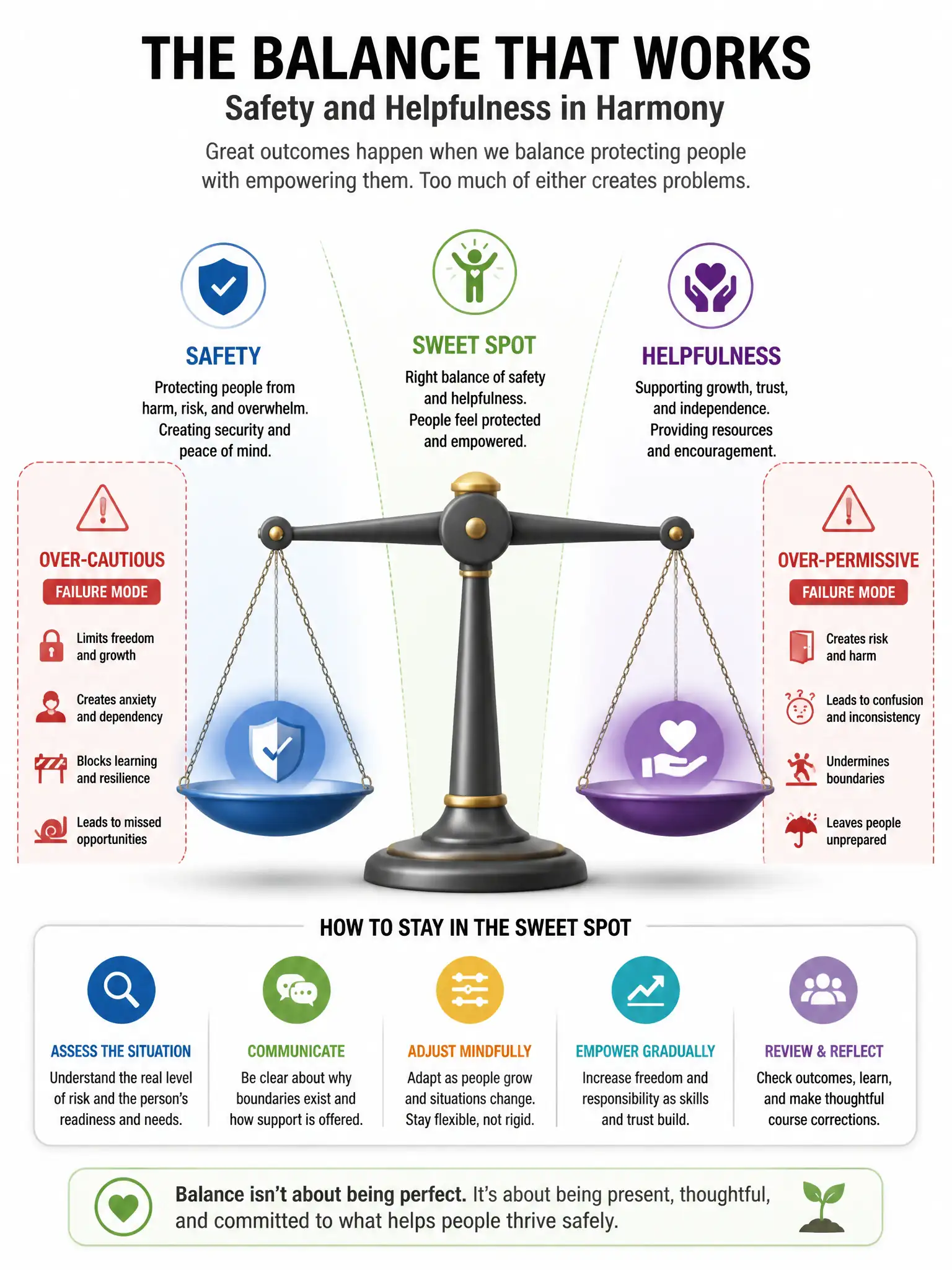
Anthropic treats both safety and helpfulness as important. If Claude refuses too much, that's a failure too, not a safe default. You want it genuinely helpful and genuinely safe.
Full Explanation
Anthropic's philosophy recognizes that both excessive restriction and excessive permissiveness are failure modes. An overly cautious Claude that refuses benign requests fails users and undermines trust in AI. An insufficiently cautious Claude that helps with harmful requests causes real harm. The goal is accurate judgment: being helpful with the vast majority of legitimate requests while declining genuinely harmful ones. The option saying safety always completely overrides helpfulness and Claude refuses anything that could potentially be misused describes over-refusal, which Anthropic explicitly identifies as a problem. The option saying helpfulness always overrides safety and Claude should help with any request regardless of harm potential describes unsafe behavior. The option saying operators choose which to prioritize and there is no default balance is wrong because Anthropic sets a default balance that operators can adjust within bounds.