
Anthropic's Claude model family includes several tiers. Which statement BEST describes the relationship between Haiku, Sonnet, and Opus?
Select an answer to reveal the explanation.
Short Explanation
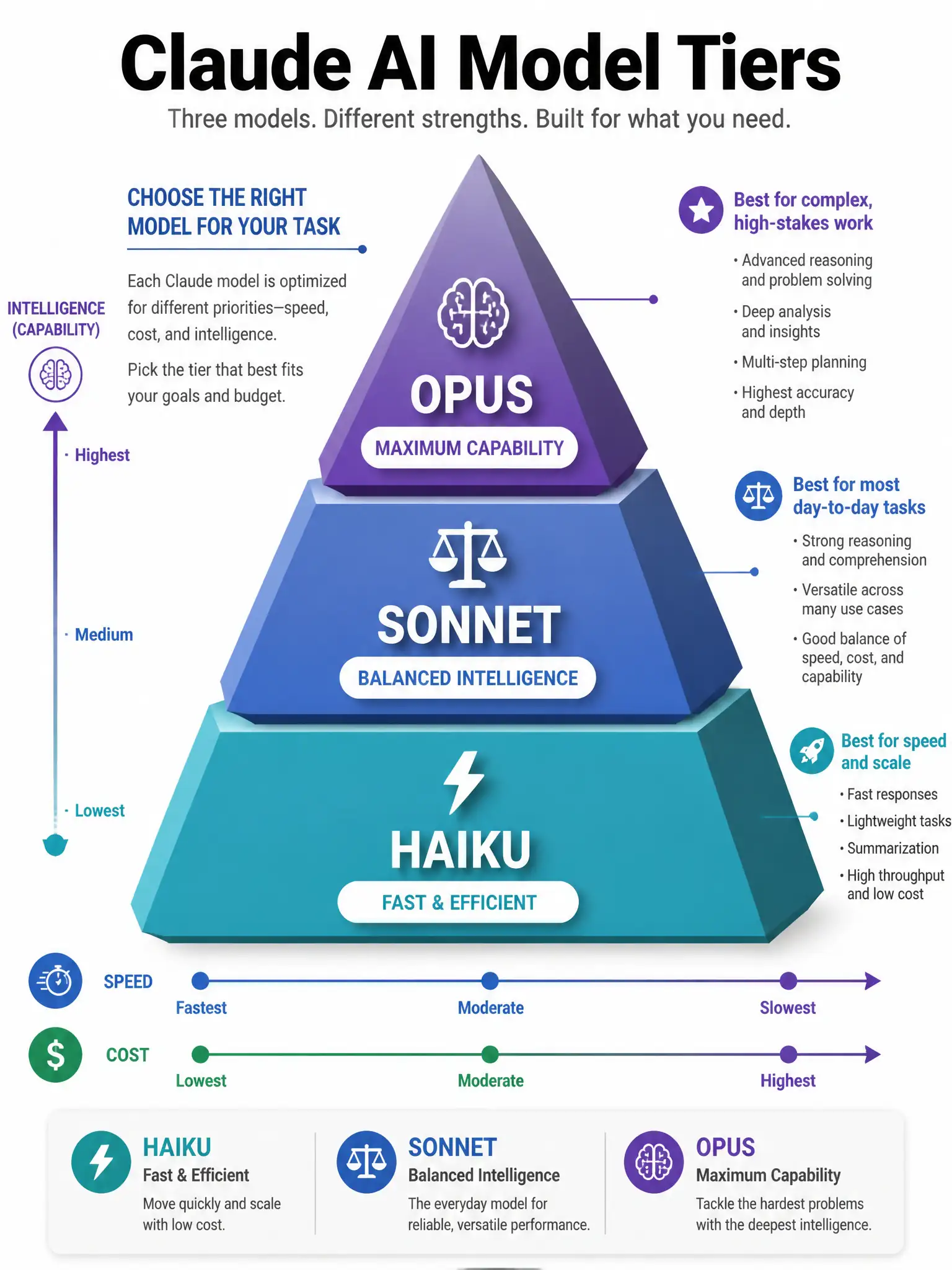
Think of it like a car lineup — Haiku is your efficient commuter, Sonnet is the mid-range sedan, and Opus is the flagship with all the horsepower. You pick Haiku when you need speed and low cost, Sonnet when you need a balance, and Opus when you need the most capability.
Full Explanation
The Claude model family is tiered by capability and cost. Haiku is designed for speed and cost-efficiency, making it ideal for high-volume, latency-sensitive tasks like classification or simple Q&A. Sonnet strikes the balance between intelligence and speed, handling complex reasoning at reasonable cost. Opus sits at the top — the most capable model for the most demanding tasks like nuanced analysis, complex coding, and agentic workflows. The statement that reverses the hierarchy is wrong because it makes Haiku the most capable and Opus the fastest and cheapest. The statement claiming identical capabilities is wrong because the models differ significantly in capability. The statement saying Sonnet is deprecated is incorrect; Sonnet is actively used and recommended for most production workloads.