
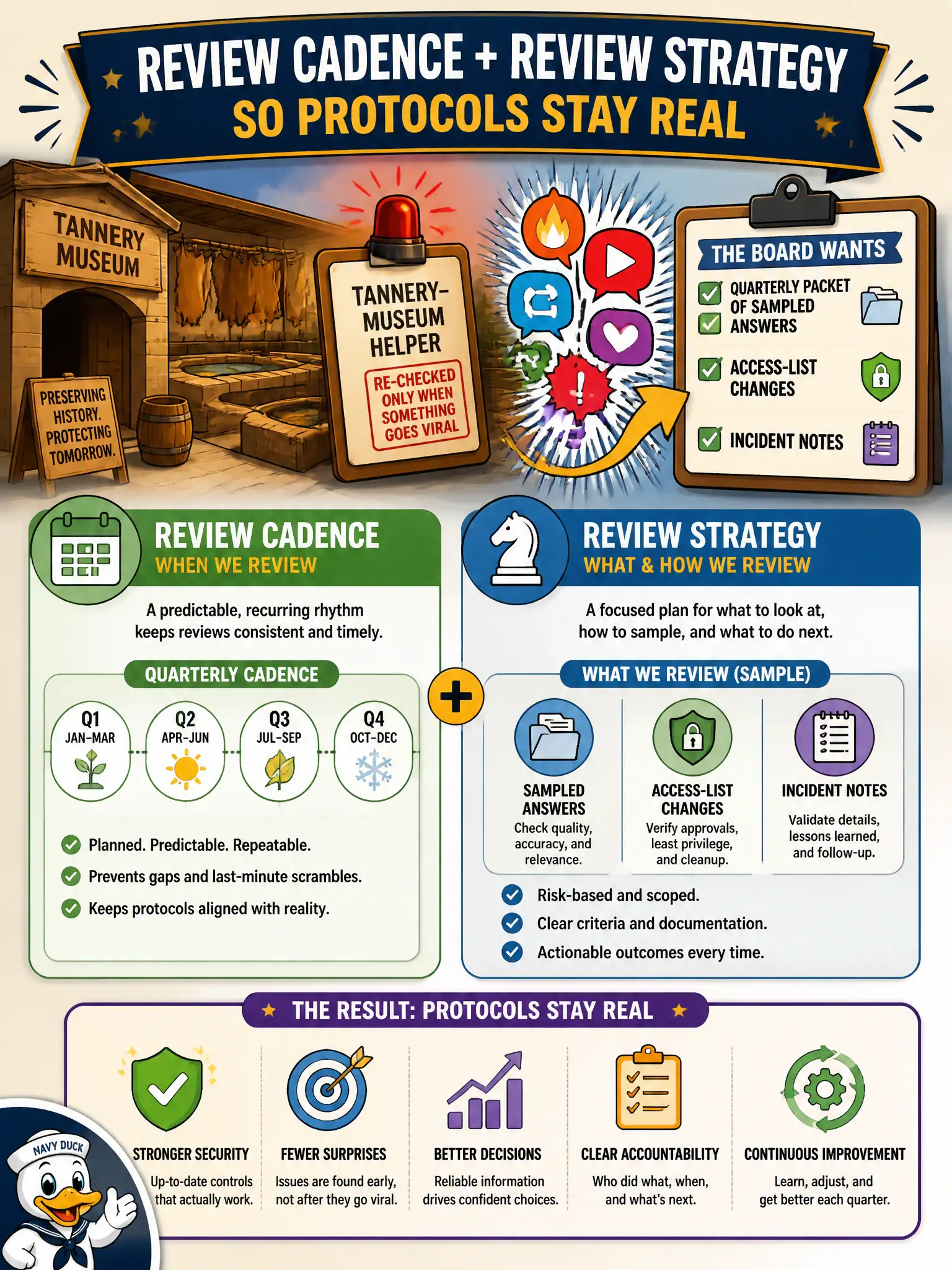
A historic tannery-museum helper is re-checked only when something goes viral. The board wants a quarterly packet of sampled answers, access-list changes, and incident notes. Which practice is that?
Select an answer to reveal the explanation.
Short Explanation
Think of a quarterly packet of sampled answers, access-list changes, and incident notes. That is a review cadence. Checking only when something goes viral is not a strategy.
Full Explanation
The historic tannery-museum helper re-checked only when something goes viral is reactive, not governed. The board’s quarterly packet of sampled answers, access-list changes, and incident notes is a review cadence and review strategy: scheduled, structured evidence that protocols remain real in production. Cadence keeps sampling quality, access hygiene, and incident learning on the calendar instead of waiting for public embarrassment to force a look.
Review only after a viral incident fails by concept: optional cadence means most drift, toxic replies, and access mistakes are discovered too late. Amazon Inspector only fails because host CVE scans are useful but are not a quarterly sample of answers, access-list changes, or incident notes. A dashboard title fails because charts are not incident notes and do not constitute a complete review packet for the board.
Exam caveat: cadence should scale with risk—public museum helpers may need monthly answer sampling even if the formal board packet remains quarterly. Operational check: schedule owners for the quarterly packet, pull answer samples and access-list diffs, attach incident notes with remediations, and track open items to closure before the next review cycle.