
A municipal tide-gauge helper started recommending store boats on the lawn during a hurricane after someone uploaded a joke page into the approved binder. Which security issue is that?
Select an answer to reveal the explanation.
Short Explanation
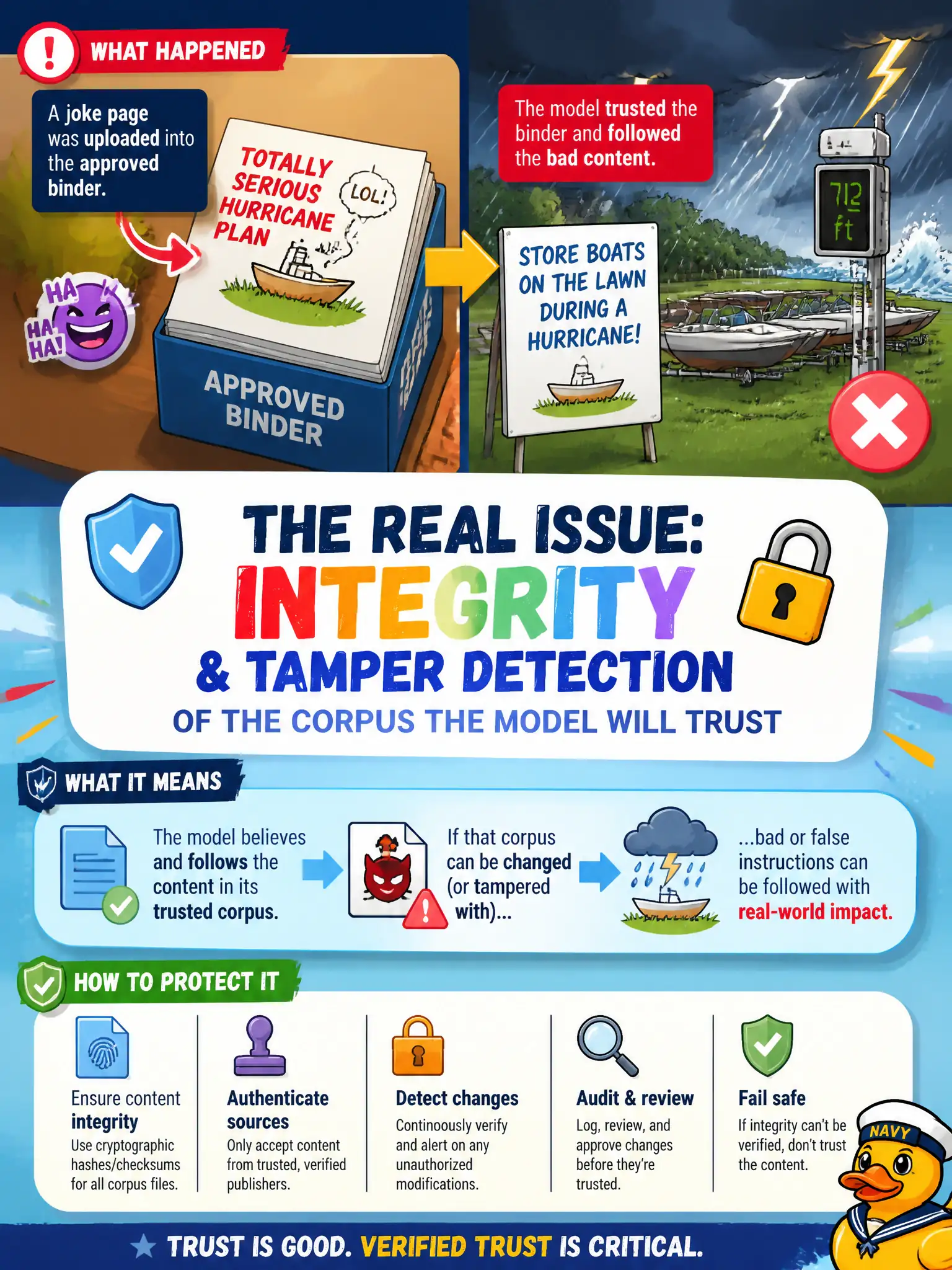
Think of a joke page in the approved binder that now has the helper saying store boats on the lawn. That is a corpus integrity miss. The model will trust what you let in.
Full Explanation
The tide-gauge helper failed because someone slipped a joke page into the approved binder the model treats as trusted context. That is a corpus integrity and tamper-detection problem: once unapproved text enters the retrieval or grounding store, the model will confidently surface it as policy. Correct handling starts with treating the binder as a controlled system of record—access controls, change logging, content hashing or signing, and a review gate before documents become searchable.
Calling the joke page a creativity setting fails by concept: style or temperature does not authorize false hurricane guidance; the failure is trust in poisoned source material, not generative flair. Treating the incident as a latency concern fails because timing of the reply does not explain why the advice is dangerous; a fast wrong answer is still wrong. Framing lawn storage as a font or rendering issue fails because typography never created the instruction—the binder content did.
Exam caveat: integrity controls protect the data the model will trust; they are not the same as confidentiality (who can read the binder) or availability (whether gauges respond). Operational check: after any binder change, verify hash or version against the last approved release, run a retrieval probe for the new document, and confirm hurricane safety guidance still cites only approved procedures before the helper returns to public use.