
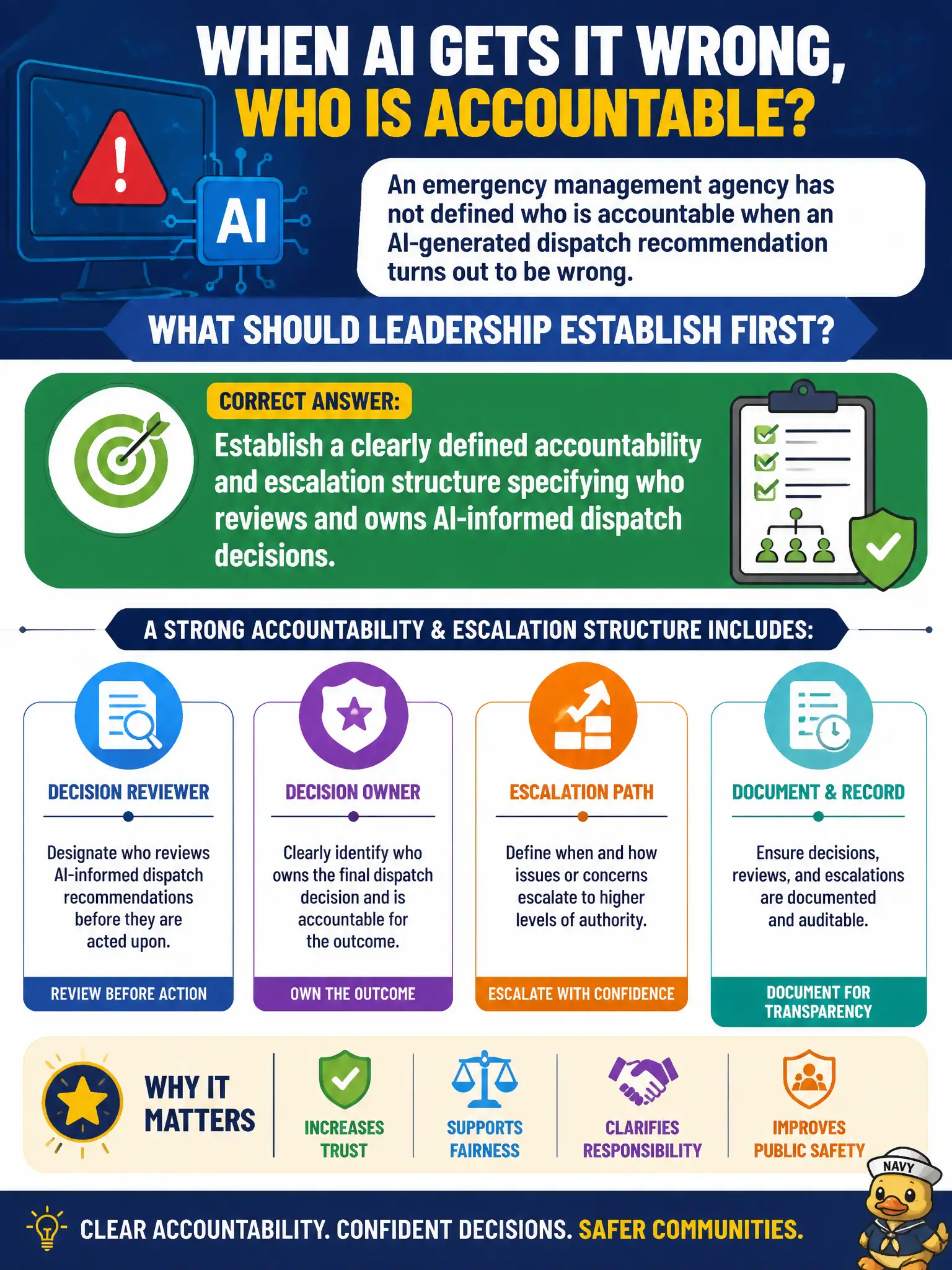
An emergency management agency has not defined who is accountable when an AI-generated dispatch recommendation turns out to be wrong. What should leadership establish first?
Select an answer to reveal the explanation.
Short Explanation
When everyone's a little bit responsible, nobody really is. Spell out exactly who reviews the AI's call and who owns the outcome, so accountability doesn't evaporate the moment something goes sideways.
Full Explanation
A defined accountability and escalation structure ensures a specific human role owns the decision and review process, which is foundational to responsible AI governance in high-stakes public-safety contexts. Leaving accountability diffuse across a team creates ambiguity that surfaces exactly when it's needed most, during a post-incident review when someone must explain what happened. Assigning accountability to the vendor misunderstands that vendors supply the tool, not the operational judgment to act on its output, and the agency retains responsibility for decisions made using it. Postponing the definition until after an incident means the structure gets built under crisis pressure instead of deliberate design, and reviews get bogged down disputing who was responsible rather than what went wrong. Scope caveat: accountability structures should be documented and rehearsed, not just written into policy. Operational check: confirm dispatch supervisors can name, without hesitation, who signs off on overriding an AI recommendation during a live incident.