
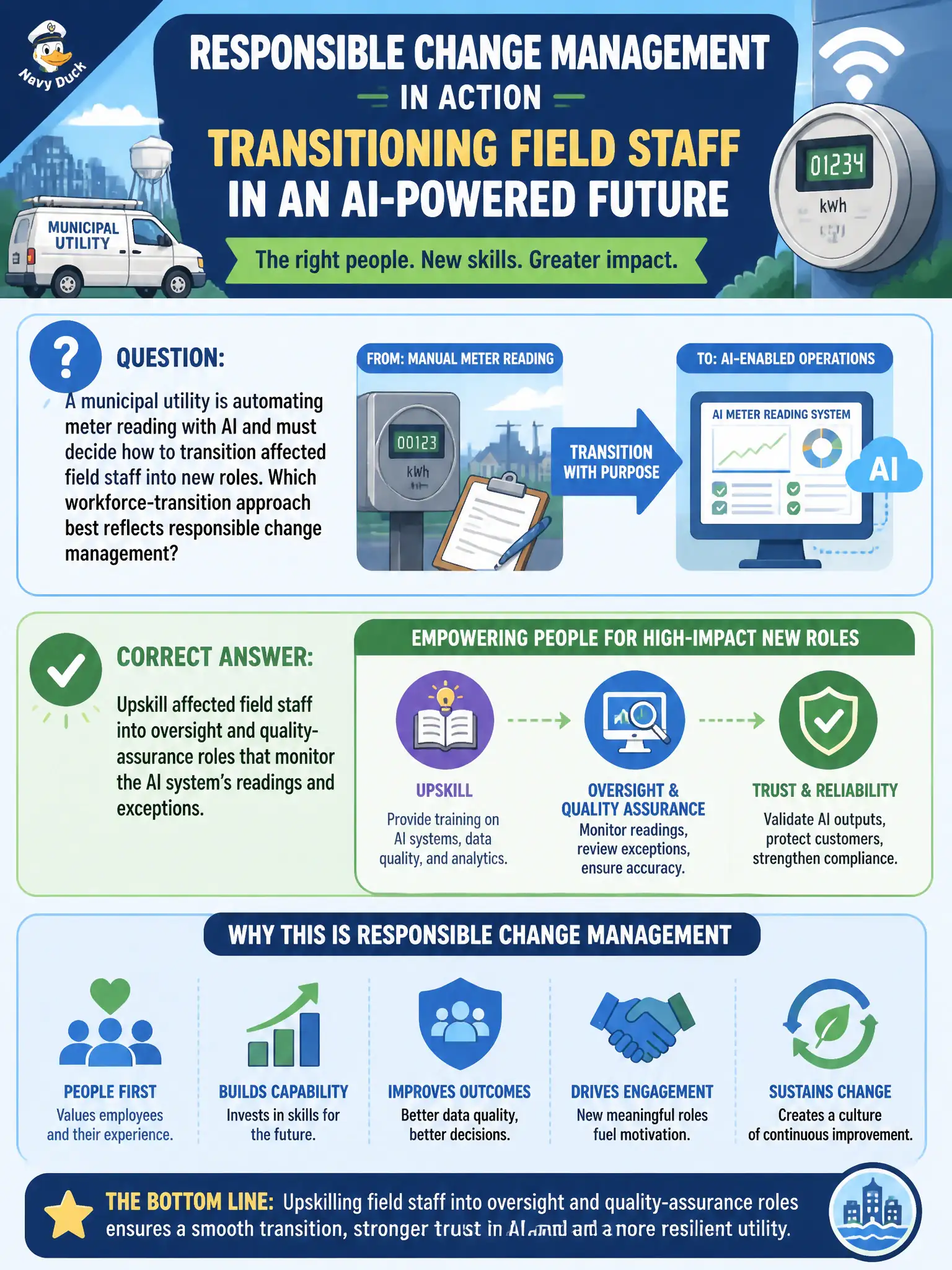
A municipal utility is automating meter reading with AI and must decide how to transition affected field staff into new roles. Which workforce-transition approach best reflects responsible change management?
Select an answer to reveal the explanation.
Short Explanation
Automation doesn't have to mean unemployment, it can mean a promotion into a new kind of work. Move field staff into watching over the system's exceptions and accuracy, and their field expertise becomes exactly what keeps the AI honest.
Full Explanation
Upskilling redirects existing field expertise toward oversight and quality assurance, preserving institutional knowledge while satisfying the human-oversight expectation built into responsible AI deployment. Layoffs discard field expertise the utility still needs to validate AI output and discourage cooperation during future technology rollouts. Reassignment without relevant training strands staff in roles disconnected from their skills, wasting both their expertise and the transition opportunity the automation created. Deferring the staffing decision until complaints surface turns a plannable transition into a reactive crisis, handled under public pressure instead of deliberate planning. Scope caveat: oversight roles need real escalation authority, not just a monitoring title with no influence over outcomes. Operational check: verify reassigned staff receive documented training on exception-handling procedures before the AI system goes live.