
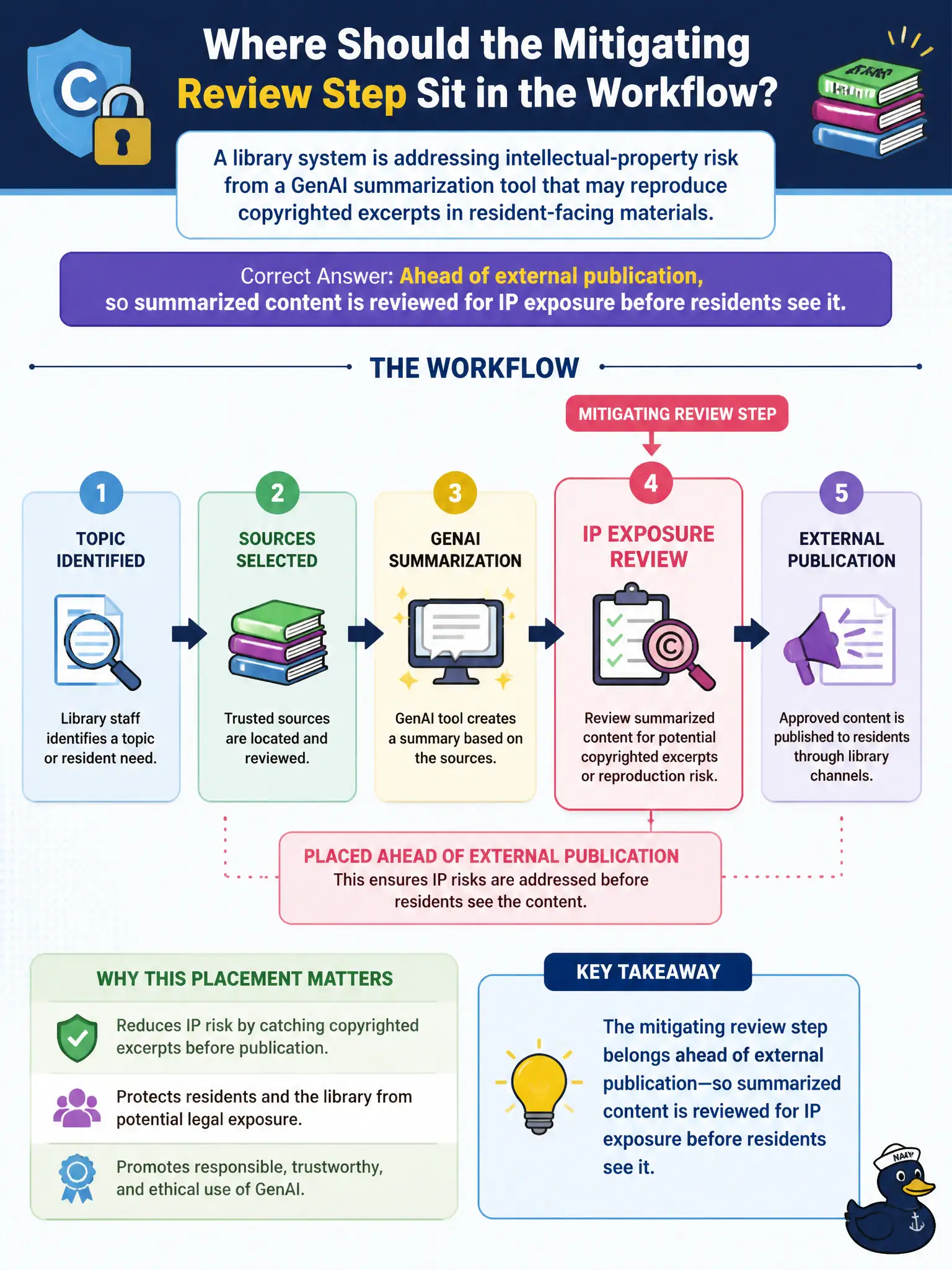
A library system is addressing intellectual-property risk from a GenAI summarization tool that may reproduce copyrighted excerpts in resident-facing materials. Where should the mitigating review step sit in the workflow?
Select an answer to reveal the explanation.
Short Explanation
Catching a copyrighted excerpt after it's already live on the public website is like calling the fire department after the building's already burned. A review step placed ahead of publication is what actually stops the exposure instead of just documenting it after the fact.
Full Explanation
The value of a review control depends entirely on its position in the workflow relative to the risk it is meant to catch, and IP exposure from reproduced copyrighted material is a risk that occurs at the moment content becomes public. Placing the review step ahead of external publication means summarized content is checked for reproduced excerpts before residents ever see it, which is the only point in the process where the exposure can actually be prevented rather than merely discovered. Reviewing after publication only documents that a problem already occurred; the copyrighted material has already reached the public, and any correction happens after the harm. Folding the check into an annual collection-development audit ties IP review to a cycle that may run months after content was published, leaving a long exposure window in between. Waiting for a formal takedown request makes the copyright holder responsible for catching the library's own compliance gap, which is both reactive and reputationally costly, since it means the exposure was already public before anyone acted. A scope caveat: a pre-publication review step still needs clear criteria for what counts as excessive reproduction versus fair-use-style summarization, or reviewers will apply inconsistent standards. A concrete operational check is to require documented sign-off on an IP-exposure review before any GenAI-summarized content is pushed to a public-facing channel.